RTI INTERNATIONAL
Philippines Remote Learning Study: Findings Brief 4: Student Engagement
Remote learning in the Philippines during the 2020-2021 school year due to the COVID-19 pandemic presented significant challenges for learners and their home learning partners (HLPs).
2021 · 6 pages
Sign in to readA free account is required to download.
Abstract
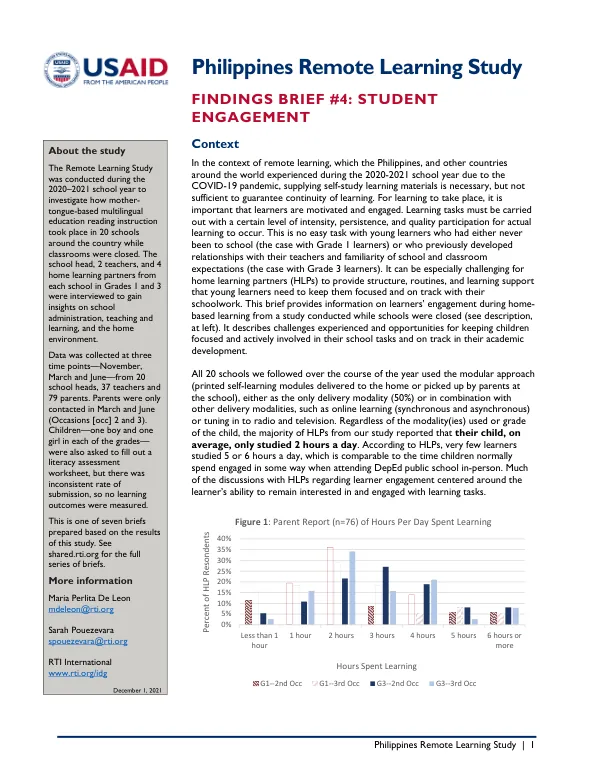
To ensure continuity of learning, it was essential that learners were motivated and engaged. However, young learners, particularly those in Grade 1, faced difficulties in maintaining focus and interest in learning tasks. The majority of HLPs reported that their child spent an average of 2 hours per day studying, with very few learners studying 5 or 6 hours a day. This was comparable to the time children normally spent engaged in some way when attending DepEd public school in-person. Discussions with HLPs centered around the learner's ability to remain interested in and engaged with learning tasks. Home learning partners played a crucial role in supporting their child's engagement, especially at the early stage of learning. Most HLPs of Grade 1 children spent one or two hours per day facilitating learning, while most Grade 3 HLPs spent one or two hours per day supporting learning. However, there was a noticeable decline in the time spent by Grade 3 HLPs from mid-year to end-of-year, with the majority spending less than 3 hours per day supporting learning. Learner comfort levels, focus, and motivation varied among HLPs. Some reported that their children were active in their learning, independent readers, and confident. However, others faced challenges keeping their children focused, especially when children did not listen and preferred to play while at home. By the end of the year, the majority of HLPs (75%) said that their children were either "somewhat comfortable" or "very comfortable" learning from home. Maintaining connections between learners and their teachers was crucial for effective home learning. Teachers used various strategies to connect with their learners, such as sending reminders and requesting attendance through social media groups. However, some HLPs noted that their child was unwilling to listen because they preferred instruction from their teachers. The study found that most HLPs agreed or strongly agreed that their children had the materials they needed to learn to read in the three languages of the curriculum. However, there was a slight tendency for Grade 1 survey respondents to say they did not have the resources they needed. Several HLPs noted that when their child did not understand or could not do the modules, they became bored, tired, and even cried. In conclusion, remote learning in the Philippines presented significant challenges for learners and their HLPs. Maintaining learner engagement and motivation was crucial for effective home learning. Teachers and HLPs played a vital role in supporting learners, and strategies such as regular communication and provision of necessary resources were essential for ensuring continuity of learning. The study highlights the importance of addressing the challenges faced by learners and HLPs during remote learning. By understanding the needs and concerns of learners and HLPs, educators and policymakers can develop effective strategies to support remote learning and ensure that learners continue to receive quality education despite the challenges posed by the pandemic.
Related documents