USAID DEC
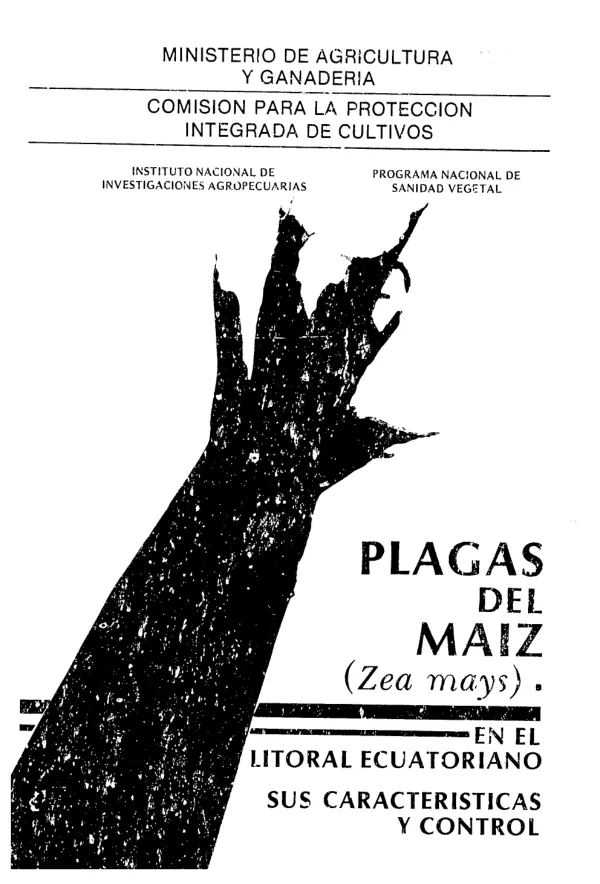
Plagas del Maiz (Zea mays) en el Litoral Ecuatoriano, sus Caracteristicas y Control
The agricultural pest Spodoptera frugiperda, commonly known as the fall armyworm, is a significant problem in maize and other economically important crops in Ecuador and various countries in America.
2010 · 78 pages
Sign in to readA free account is required to download.
Abstract
This species is found in the tropics and subtropical regions of warm climates. The fall armyworm belongs to the order Lepidoptera, superfamily Noctuidea, family Noctuidae, genus Spodoptera, and species frugiperda. The insect was first described as Alacna frugiperda by Smith and Abbot in 1797. In 1832, Geyer classified it as Trigoniaophora, and in 1852, Guenee redescribed the species and designated it as Laphygma machra. In 1856, Walker described variants, placing it in three species, Laphygma inepla, Prodenia signifera, and Prodenia play. The fall armyworm has its origin in the tropics of the American continent, including the Caribbean and Pacific islands. It is widely distributed in this continent and has been reported in Canada, the United States, Mexico, El Salvador, Guatemala, Honduras, Panama, Costa Rica, Colombia, Venezuela, Guyana, Ecuador, Peru, Chile, Brazil, Jamaica, Bolivia, Argentina, and others. The fall armyworm has a complete or holometabolic metamorphosis, with four stages: egg, larva, pupa, and adult. The eggs are oval, yellowish-green, and about 0.39 mm in diameter. The larvae are greenish-yellow with a reddish-brown head and a white stripe on the back. They have a distinctive "Y" shape on the head and a white stripe on the back. The larvae go through five instars and take about 12 days to develop. The pupae are reddish-brown to dark brown and have a distinctive shape. The adult moths are dark brown with a yellowish-brown head and a white stripe on the back. The females are larger than the males and have a more prominent abdomen. The fall armyworm is a significant pest of maize and other crops in Ecuador and other countries in America. It causes damage to the leaves, stems, and ears of maize, leading to reduced yields and lower quality crops. The pest is difficult to control, and integrated pest management strategies are necessary to manage its populations. In Ecuador, the fall armyworm is a major pest of maize, and its control is a priority for farmers and agricultural authorities. The pest is found in the coastal region of Ecuador, where maize is a major crop. The fall armyworm is a significant economic problem in Ecuador, and its control is essential to maintain food security and ensure the sustainability of maize production. The fall armyworm is a complex pest that requires a comprehensive management strategy. This strategy should include a combination of cultural, chemical, and biological control methods. Cultural control methods, such as crop rotation and sanitation, can help reduce the populations of the fall armyworm. Chemical control methods, such as insecticides, can be used to control the pest, but they should be used judiciously to avoid harming beneficial insects and the environment. Biological control methods, such as the use of natural enemies, can also be effective in controlling the fall armyworm. Natural enemies, such as parasitic wasps and predators, can be used to control the pest populations. Biological control methods are a sustainable and environmentally friendly way to manage the fall armyworm. In conclusion, the fall armyworm is a significant pest of maize and other crops in Ecuador and other countries in America. Its control is essential to maintain food security and ensure the sustainability of maize production. A comprehensive management strategy that includes cultural, chemical, and biological control methods is necessary to manage the fall armyworm populations.
Related documents
Documents in this collection
 2023
2023USAID DEC
Population LGBTIQ Rapid Assessment Span
Open record 2014
2014USAID DEC
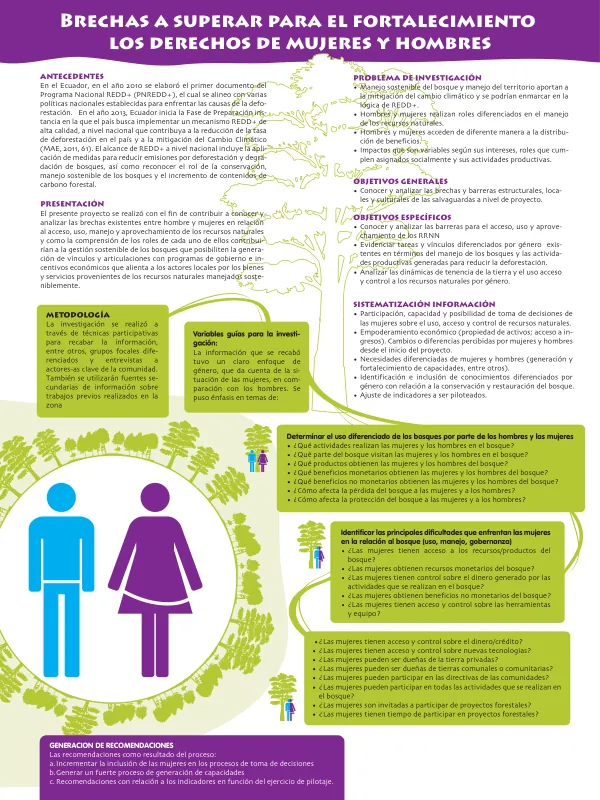
Estrategia Consensuada con autoridades de gobierno para reducir la deforestación y presión sobre el bosque, amparada en las políticas y el marco legal de bosques, áreas protegidas y territorios indígenas del Ecuador
Open record