USAID
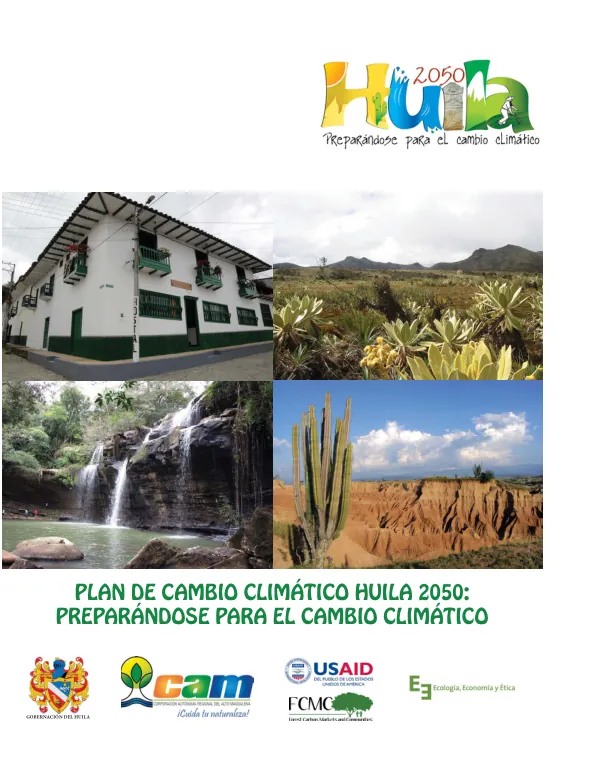
Plan de Cambio Climático Huila 2050: Preparándose para el cambio climático
The Plan de Cambio Climático Huila 2050 is a document prepared by the Gobernación del Huila in Colombia.
2014 · 153 pages
Sign in to readA free account is required to download.
Abstract
The plan aims to prepare the region for the impacts of climate change. The document was developed in collaboration with various stakeholders, including the Corporación Autónoma Regional del Alto Magdalena, E3 Ecología, Economía y Ética, and the Programa de Carbono Forestal, Mercados y Comunidades (FCMC). The plan is based on a thorough analysis of the context and challenges facing the region. The document highlights the importance of addressing climate change, which is expected to have significant impacts on the environment, economy, and society in the region. The plan identifies key sectors and activities that are vulnerable to climate change, including agriculture, water resources, and infrastructure. The plan proposes a range of strategies and actions to address climate change in the region. These include the development of a climate change adaptation plan, the implementation of sustainable land use practices, and the promotion of renewable energy sources. The plan also emphasizes the importance of involving local communities and stakeholders in the decision-making process. The document highlights the need for a coordinated and integrated approach to addressing climate change in the region. It emphasizes the importance of collaboration among government agencies, civil society organizations, and the private sector to develop and implement effective climate change adaptation and mitigation strategies. The plan identifies several key areas for action, including the development of a climate change adaptation plan, the implementation of sustainable land use practices, and the promotion of renewable energy sources. The plan also emphasizes the importance of involving local communities and stakeholders in the decision-making process. The document highlights the importance of addressing climate change in the region, which is expected to have significant impacts on the environment, economy, and society. The plan proposes a range of strategies and actions to address climate change, including the development of a climate change adaptation plan, the implementation of sustainable land use practices, and the promotion of renewable energy sources. The plan emphasizes the importance of involving local communities and stakeholders in the decision-making process. It highlights the need for a coordinated and integrated approach to addressing climate change in the region, which requires collaboration among government agencies, civil society organizations, and the private sector. The document identifies several key areas for action, including the development of a climate change adaptation plan, the implementation of sustainable land use practices, and the promotion of renewable energy sources. The plan also emphasizes the importance of addressing the needs of vulnerable populations, including women and indigenous communities.