USAID
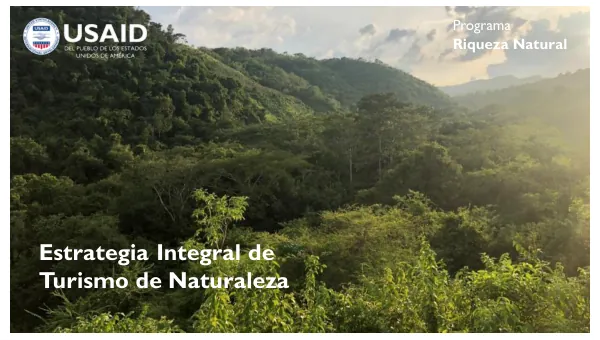
Programa Riqueza Natural: Estrategia Integral de Turismo de Naturaleza
The Riqueza Natural Program of USAID is a comprehensive strategy for nature-based tourism.
2020 · 32 pages
Sign in to readA free account is required to download.
Abstract
The program focuses on the development of nature-based tourism as a strategy for biodiversity conservation. The program aims to address the challenges and limitations of nature-based tourism in Colombia. Colombia's tourism sector experienced significant growth in 2019, with a 9.1% increase in tourism revenue. The sector contributed 2% to the country's GDP and generated USD 6.751 million in foreign exchange through travel and air transportation. The number of visitors to Colombia increased by 2.7% to 4.5 million in 2019. Nature-based tourism accounted for 67.59% of the country's service exports and contributed 10.3% to the world's GDP. However, the nature-based tourism sector in Colombia faces several challenges, including a lack of environmental knowledge, limited access to appropriate materials, and a shortage of trained human talent. The country has a limited number of guides, with only 0.5 guides per tourist operator. The tourism industry also lacks organizational capacity, with many operators and guides lacking formal training. The program identifies several key components necessary for the development of a comprehensive nature-based tourism strategy. These components include awareness, knowledge, capacity building, linkages with markets, and the role of the state. The program aims to address the challenges and limitations of nature-based tourism by strengthening these components. The Riqueza Natural Program proposes a model for nature-based tourism that includes several key elements. These elements include a focus on sustainable tourism practices, the development of community-based tourism initiatives, and the promotion of eco-friendly tourism products. The program also aims to strengthen the capacity of local communities to manage and conserve their natural resources. The program's recommendations include the development of a national strategy for nature-based tourism, the establishment of a network of protected areas, and the promotion of sustainable tourism practices. The program also recommends the development of training programs for tourism operators and guides, as well as the establishment of a certification program for sustainable tourism products. The COVID-19 pandemic has had a significant impact on the tourism sector in Colombia, with many tourism-related businesses experiencing significant declines in revenue. The program notes that the pandemic has highlighted the need for the tourism sector to be more resilient and adaptable to changing circumstances. The program recommends that the tourism sector prioritize sustainability and community engagement in order to build a more resilient and equitable tourism industry.