CATHOLIC RELIEF SERVICES ORGANIZATION
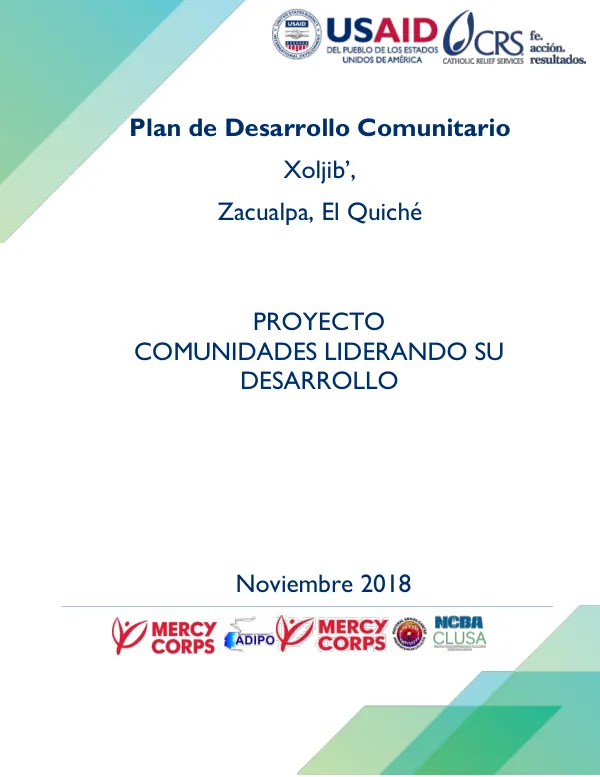
Plan de Desarrollo Comunitario: Comunidades Liderando su Desarrollo
Xoljib’, Zacualpa, El Quiché, is a community located in the western highlands of Guatemala.
2018 · 85 pages
Sign in to readA free account is required to download.
Abstract
The community development plan, titled "Comunidades Liderando su Desarrollo," was initiated in November 2018 with the support of the American People through the United States Agency for International Development (USAID). The plan was developed by Catholic Relief Services (CRS) and its partners, including Mercy Corps, ADIPO, Pastoral Social Cáritas San Marcos, and Pastoral Social Cáritas Arquidiócesis Los Altos. The community of Xoljib’ has a rich history and cultural heritage. The community has undergone significant changes over the years, with various projects and initiatives having a positive or negative impact on their development. The community has a strong sense of identity and a clear vision for their future. They have identified several key areas of focus, including education, healthcare, economic development, and environmental conservation. The community of Xoljib’ is located in a remote area of El Quiché, with limited access to basic services such as healthcare, education, and sanitation. The community has a high level of poverty, with many households struggling to meet their basic needs. The community has a strong sense of social organization, with a clear system of governance and decision-making. However, the community has also experienced conflict and social unrest in the past, which has had a negative impact on their development. The community development plan aims to address the key challenges facing the community, including poverty, lack of access to basic services, and environmental degradation. The plan focuses on several key areas, including education, healthcare, economic development, and environmental conservation. The plan also aims to strengthen the community's social organization and governance structures, and to promote community-led development. The plan identifies several key problems facing the community, including poverty, lack of access to basic services, and environmental degradation. The plan also identifies several key opportunities for development, including the potential for sustainable agriculture, eco-tourism, and community-led economic development. The plan prioritizes several key areas for action, including education, healthcare, and economic development. The community development plan is based on a thorough analysis of the community's strengths, weaknesses, opportunities, and threats (SWOT analysis). The plan identifies several key strengths, including the community's strong sense of social organization and their commitment to community-led development. The plan also identifies several key weaknesses, including the community's limited access to basic services and their high level of poverty. The plan identifies several key opportunities, including the potential for sustainable agriculture and eco-tourism. The plan also identifies several key threats, including environmental degradation and social conflict.
Related documents