DEVELOPMENT ALTERNATIVES, INC./FINNET
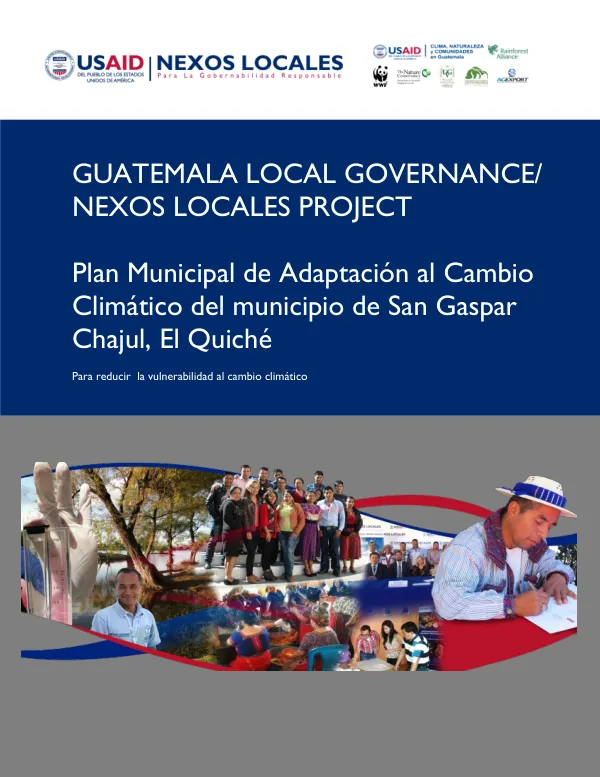
Plan Municipal de Adaptación al Cambio Climático del municipio de San Gaspar Chajul
The Plan Municipal de Adaptación al Cambio Climático del municipio de San Gaspar Chajul, El Quiché, was developed with the participation of various stakeholders, including civil society organizations, government entities, and private sector representatives.
2016 · 38 pages
Sign in to readA free account is required to download.
Abstract
The plan aims to reduce the municipality's vulnerability to climate change. The main climate-related threats identified by the participants include drought, frosts, soil erosion, landslides, forest fires, and strong winds. These threats have negative impacts on the municipality's natural and productive systems, including water supply systems, maize and bean crops, coffee and cardamomo crops, pepper crops, livestock, and mixed forests. The impacts of these threats on the municipality's viability attributes are related to the effects of extreme meteorological phenomena. Droughts and their subsequent temperature increases have the potential to reduce water flows, put the vital liquid supply for human consumption at risk, and drastically reduce the yield of staple crops such as coffee, cardamomo, and pepper. This also affects the family income of farmers due to the reduction in harvests, a consequence of the water deficit. Additionally, constant heavy rainfall, sometimes accompanied by hail, generates significant impacts on road infrastructure and housing. The temperature drops that occur in December, January, and February produce frosts, affecting the yield of crops located in the highest-altitude areas of the municipality. However, despite the high severity and irreversibility of these impacts, their scope is limited to areas close to the most important rivers, the road network, and the highest-altitude communities. The plan includes proposals from various actors represented in the planning process, who contributed ideas for the implementation of adaptation and climate change vulnerability reduction measures. Six strategic lines were identified and prioritized to achieve a desired condition within 20 years for each of the focal objects, proposing activities that generate expected results in the first two years and then the expected results at five years. The plan has been designed to be implemented by the municipality, which, through inter-institutional coordination and the signing of agreements on financial and technical cooperation, will lead the execution of the proposed activities within each of the strategic lines. To facilitate inter-institutional coordination, the plan identifies and proposes responsible parties, estimates costs and times for each activity and expected result, which will also be useful for monitoring and evaluating the progress and achievement of goals. The municipality of San Gaspar Chajul is currently classified as having a medium vulnerability index to climate change, ranking 74th. It is expected to move to a low vulnerability index by 2050, mainly due to the reduction in heavy rainfall, which is expected to decrease significantly. However, the municipality will be more exposed to droughts and forest fires. The majority of the municipality's economic activities are related to natural resources, with agriculture being one of the most important. This activity depends on ecosystem services provided by forests, such as water regulation and erosion protection. In the last five years, climate variability has been evident in the municipality, with extreme weather events such as the tropical storm Agatha, which caused floods and landslides. On the other hand, prolonged heatwaves have caused significant reductions in the yield of the municipality's main crops. These conditions increase the demand for public and private investments in the territory, which will allow the municipality to recover from previous losses. Given the limited financial resources, it is essential that each investment generates benefits and progress in the short term, ensuring that they remain operational in the medium and long term. This can only be achieved by incorporating climate projections into the design of the investments, making the necessary adjustments to the actions traditionally carried out by the different government entities. Under these circumstances, the Municipal Adaptation Plan to Climate Change and Risks represents an important tool for guiding the municipality's actions.