USAID DEC
Post-Earthquake Analysis of the Interruption of the Legislative and Executive Powers within the Haitian Constitutional and Legal Framework
Sign inTHE INTERNATIONAL FOUNDATION FOR ELECTORAL SYSTEMS
Post-Earthquake Analysis of the Interruption of the Legislative and Executive Powers within the Haitian Constitutional and Legal Framework
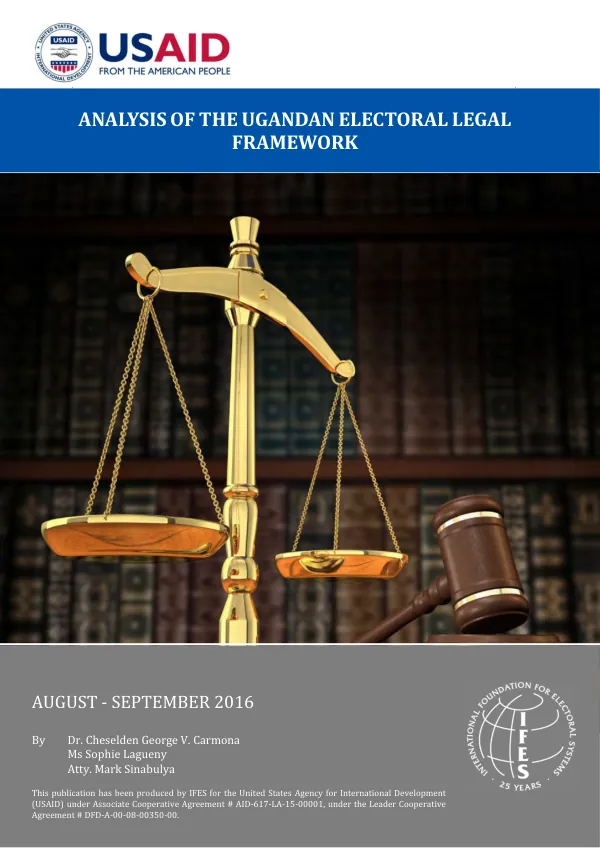
The Ugandan electoral legal framework provides a reasonable basis for the conduct of democratic elections.
2010 · 372 pages
Sign in to readA free account is required to download.
Abstract
The Constitution guarantees and protects basic electoral rights, which are either reiterated or affirmed in international and regional agreements and conventions. Recent amendments to the Constitution and electoral laws have sought to make the electoral process more transparent, inclusive, and responsive to the challenges of previous elections. However, the legal framework is fragmented, with five principal electoral laws regulating the electoral process, and many electoral offenses scattered in various provisions of these laws. The country's electoral laws are in need of consolidation and harmonization into a single comprehensive electoral code. This code can be drafted to include specific chapters addressing the differing features and procedures of local, parliamentary, and presidential elections. Additionally, there are aspects of the legal framework that are not entirely in accord with international standards, including the procedure for the appointment of electoral commissioners, the weak financial autonomy of the Electoral Commission, and the absence of complete independence in regulating the elections. The legal framework also contains ambiguities, with the absence of explicit statutory powers making the Electoral Commission hesitant or unwilling to enforce laws that seek to protect the rights of electoral contestants or to hold the government and other political participants accountable for their violations of clear Constitutional and legal mandates. Furthermore, the roles of other government institutions in ensuring free and fair elections are not clearly defined, and critical provisions for ensuring free and fair elections are missing or inadequate. The study analyzed the major electoral laws that govern or regulate the different aspects of the electoral process and proposed changes to the electoral legal framework, including amendments to the Constitution. The proposals for reform range from Constitutional amendments to the passage of new laws and changes to specific provisions of existing electoral legislation. A compilation of all available reform-related documents was included in the report, and the proposals/amendments found in these documents were compiled and incorporated into various tables divided into categories related to elections. The purpose of this assessment was to undertake an independent, non-partisan, and impartial review of the legal electoral framework of Uganda in order to determine legal gaps and ambiguities that can significantly affect the conduct of efficient, credible, and peaceful elections. The study used international electoral standards to analyze the major electoral laws and proposed changes to the electoral legal framework. The analysis of the Ugandan electoral legal framework revealed several key findings. Firstly, the country's electoral laws are fragmented, with five principal electoral laws regulating the electoral process. Secondly, the legal framework is in need of consolidation and harmonization into a single comprehensive electoral code. Thirdly, there are aspects of the legal framework that are not entirely in accord with international standards, including the procedure for the appointment of electoral commissioners and the weak financial autonomy of the Electoral Commission. The study also identified several areas where the legal framework is ambiguous or inadequate. For example, the absence of explicit statutory powers makes the Electoral Commission hesitant or unwilling to enforce laws that seek to protect the rights of electoral contestants or to hold the government and other political participants accountable for their violations of clear Constitutional and legal mandates. Furthermore, the roles of other government institutions in ensuring free and fair elections are not clearly defined. The study concluded that the Ugandan electoral legal framework provides a reasonable basis for the conduct of democratic elections, but that it is in need of consolidation and harmonization into a single comprehensive electoral code. The study also identified several areas where the legal framework is ambiguous or inadequate and proposed several changes to the electoral legal framework, including amendments to the Constitution.
Related documents