JHPIEGO
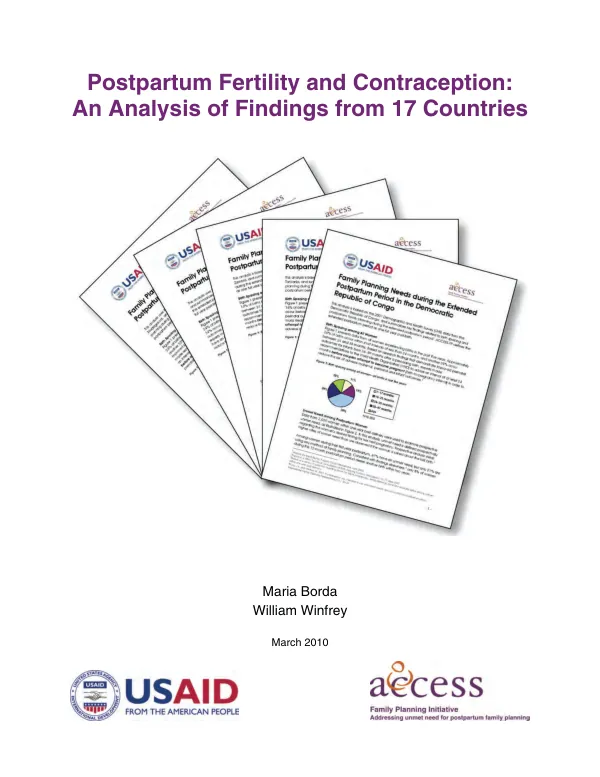
Postpartum Fertility and Contraception: An Analysis of Findings from 17 Countries
The ACCESS-FP program is a five-year, global initiative sponsored by the United States Agency for International Development (USAID).
2010 · 50 pages
Sign in to readA free account is required to download.
Abstract
The program focuses on meeting the family planning and reproductive health needs of women in the postpartum period. Interventions are designed to complement those of the ACCESS Program in the promotion and scale-up of postpartum family planning through community and clinical interventions. ACCESS-FP works to reposition family planning through integration with maternal, newborn, and child health programs, including the prevention of mother-to-child transmission of HIV. The program's analysis of findings from 17 countries reveals that breastfeeding is a significant factor influencing fertility-influencing behaviors. Women who are fully breastfeeding are less likely to experience a return of menses, with 71% of women fully breastfeeding at 3.0-5.9 months postpartum experiencing amenorrhea. In contrast, women who are not fully breastfeeding are more likely to experience a return of menses, with 55% of women not fully breastfeeding at 3.0-5.9 months postpartum experiencing a return of menses. The analysis also shows that the return of menses is a critical factor in the uptake of family planning during the extended postpartum period. Women who have experienced a return of menses are more likely to use family planning services, with 63% of women who have experienced a return of menses using modern family planning services at 3.0-5.9 months postpartum. In contrast, women who have not experienced a return of menses are less likely to use family planning services, with 45% of women who have not experienced a return of menses using modern family planning services at 3.0-5.9 months postpartum. The analysis also examines the relationship between the use of maternal health services and family planning use. Women who have used maternal health services are more likely to use family planning services, with 72% of women who have used maternal health services using modern family planning services at 3.0-5.9 months postpartum. In contrast, women who have not used maternal health services are less likely to use family planning services, with 52% of women who have not used maternal health services using modern family planning services at 3.0-5.9 months postpartum. The findings of the analysis have significant implications for the design and implementation of postpartum family planning programs. The results suggest that programs should focus on promoting breastfeeding and providing access to maternal health services in order to increase the uptake of family planning services among postpartum women. Additionally, programs should take into account the complex relationships between fertility-influencing behaviors, family planning use, and maternal health services in order to develop effective interventions.
Related documents