USAID DEC
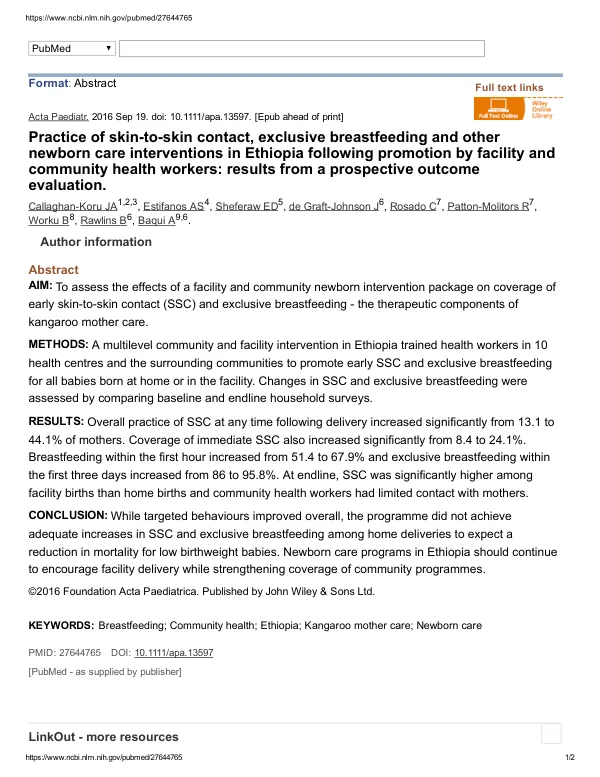
Practice of skin-to-skin contact, exclusive breastfeeding and other newborn care interventions in Ethiopia following promotion by facility and community health workers: results from a prospective outcome evaluation.
Sign inUSAID DEC
Practice of skin-to-skin contact, exclusive breastfeeding and other newborn care interventions in Ethiopia following promotion by facility and community health workers: results from a prospective outcome evaluation.
A multilevel community and facility intervention in Ethiopia trained health workers in 10 health centers and surrounding communities to promote early skin-to-skin contact and exclusive breastfeeding for all babies born at home or in the facility.
2016 · 2 pages
Sign in to readA free account is required to download.
Abstract
The intervention aimed to increase coverage of these practices among newborns. The intervention resulted in a significant increase in the practice of skin-to-skin contact at any time following delivery, from 13.1% to 44.1% of mothers. Coverage of immediate skin-to-skin contact also increased significantly, from 8.4% to 44.1%. Breastfeeding within the first hour increased from 51.4% to 67.9%, and exclusive breastfeeding within the first three days increased from 86% to 95.8%. The program achieved significant improvements in targeted behaviors, but it did not achieve adequate increases in skin-to-skin contact and exclusive breastfeeding among home births to expect a reduction in mortality for low birthweight babies. The program's results suggest that facility births had higher rates of skin-to-skin contact than home births, and that community health workers had limited contact with mothers. The study's findings indicate that newborn care programs in Ethiopia should continue to encourage facility births while strengthening coverage of community programs. The results also highlight the importance of addressing the gaps in coverage of skin-to-skin contact and exclusive breastfeeding among home births to reduce mortality rates for low birthweight babies. The intervention's success in increasing skin-to-skin contact and exclusive breastfeeding among facility births suggests that these practices can be effective in reducing mortality rates for newborns. However, the program's limitations in achieving adequate increases in these practices among home births underscore the need for continued efforts to strengthen community programs and improve access to facility births for all mothers.
Related documents
Documents in this collection
 2019
2019USAID DEC
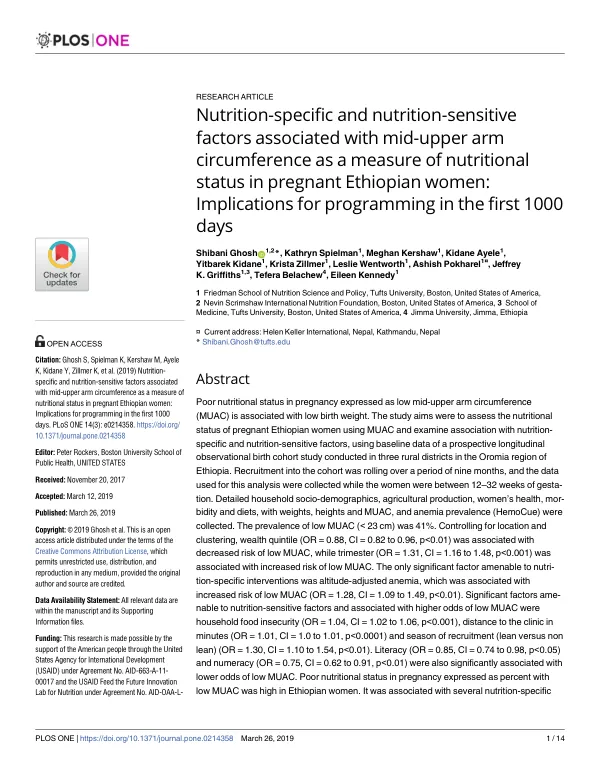
Nutrition-specific and nutrition-sensitive factors associated with mid-upper arm circumference as a measure of nutritional status in pregnant Ethiopian women: Implications for programming in the first 1000 days
Open record 2015
2015USAID DEC