USAID DEC
Prévention du VIH/sida
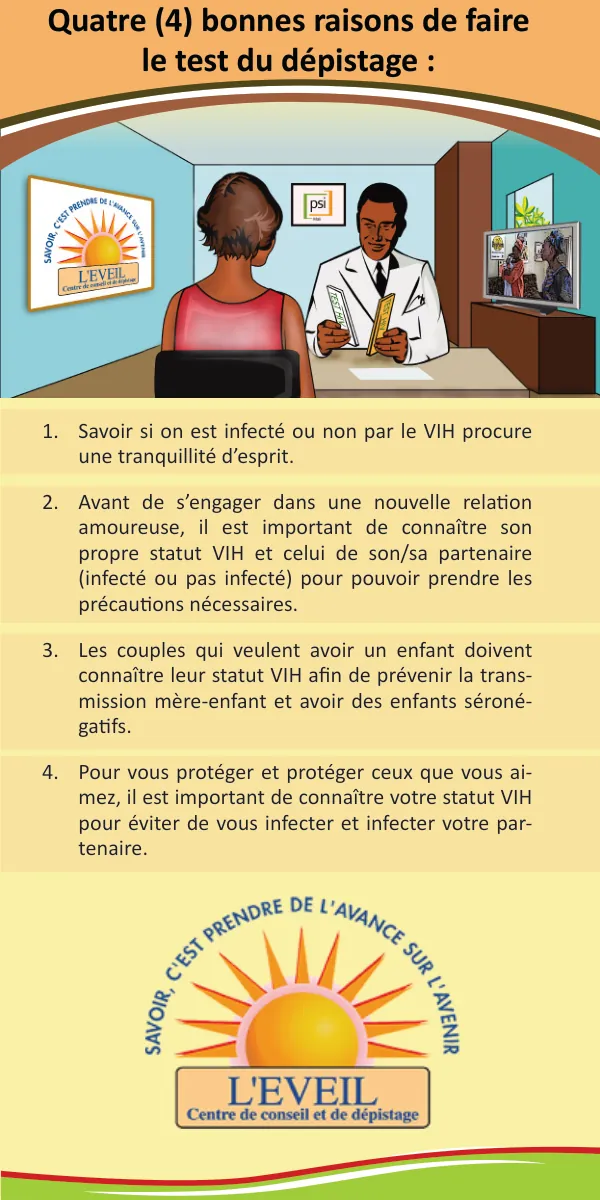
The importance of knowing one's HIV status is emphasized as a means of achieving peace of mind.
2014 · 4 pages
Sign in to readA free account is required to download.
Abstract
This knowledge is crucial before entering into a new romantic relationship, allowing individuals to take necessary precautions. Couples planning to have children must also be aware of their HIV status to prevent mother-to-child transmission and ensure seronegative offspring. Four key reasons for undergoing HIV testing are highlighted. These include engaging in sexual relationships with multiple partners, receiving or giving money or gifts in exchange for sex, having a history of sexually transmitted infections (STIs), and engaging in unprotected sex or oral sex. To mitigate these risks, individuals are advised to abstain from sex, undergo HIV testing with their partner and maintain fidelity, or consistently use condoms. Fidelity, abstinence, and condom use are presented as effective methods of HIV prevention. Fidelity, or having a single partner who is also faithful, is a reliable approach when both partners are uninfected. Abstinence, or refraining from all sexual activity, is the most effective prevention method. For those who cannot adhere to these approaches, consistent and correct condom use can also provide protection against HIV. In Mali, the organization Vies saines. Résultats mesurables. (Healthy Lives. Measurable Results.) operates under the Hamdallaye ACI 2000 umbrella, providing HIV testing and prevention services. The organization emphasizes the importance of HIV testing and prevention, highlighting that anyone can contract HIV and that everyone can take steps to protect themselves. A single unprotected sexual encounter can put individuals at risk of HIV transmission, while consistent and correct condom use can provide protection against HIV, STIs, and unwanted pregnancies.