USAID. MISSION TO PERU
PRISMA/JHU identification of high risk families for child mortality in Peru
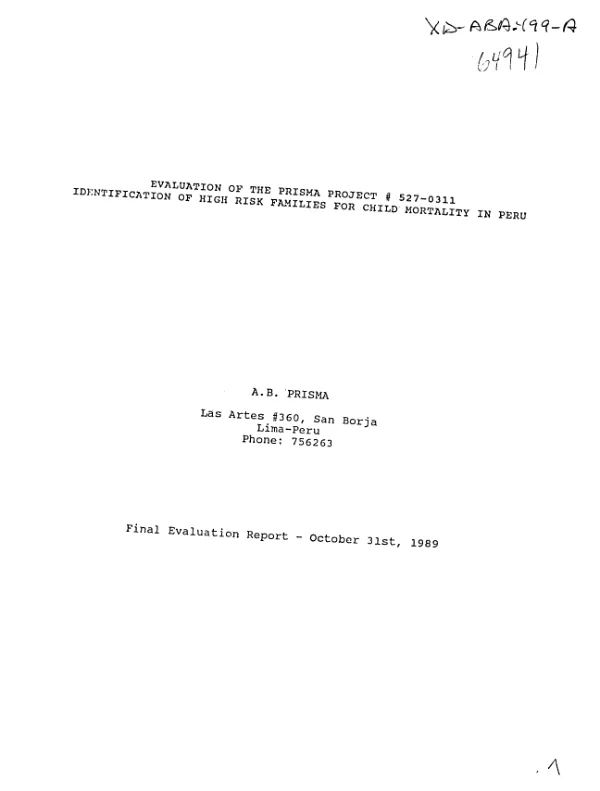
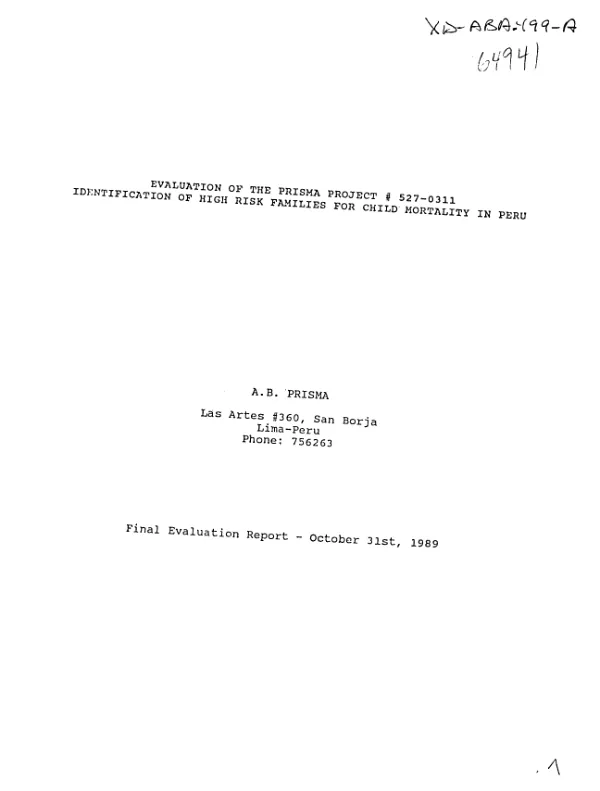
Summarizes the final evaluation (XD-ABA-499-A) of a project to train community health workers (CHW"s) and other health promoters in child survival interventions and in the use of a methodology to target families at high risk of child mortality and malnutrition.
1990
Sign in to readA free account is required to download.
Abstract
Proyectos en Informatica, Salud, Medicina, y Agricultura (PRISMA), a Peruvian PVO, worked with Johns Hopkins University to implement the project. Internal evaluation covered the period 6/86-10/89. While the project met its training targets and was successful in providing localized service delivery, the results of its methodology development activities, the prime focus of the present evaluation, are less clear. The project identified risk factors by conducting a case-control study in a pueblo joven in Lima. These factors include: (1) parents" education (father less than 7 years, mother less than 6 years); (2) a child aged 0-2 who was breastfed less than 2 months; (3) total number of live births greater than 2; (4) less than a 24-month interval between the last 2 births; (5) maternal height of 148 cm or less; (6) a severe problem during pregnancy occurring during last 2 years; and (7) birth weight of last child less than 2.7 kg. An additional study found the following risk factors to exist in rural areas: non- ownership of land; a house in which the kitchen and bedroom were located in the same room; fever during pregnancy; and a father"s periodic use of alcohol. Nevertheless, the effectiveness of this risk score methodology on infant mortality and morbidity could not be determined. A population treated on the basis of the methodology did not have a higher health status than did one treated with a blanket approach The lack of differences between the two groups may have been due to the low frequency of the mortality indicator used, the small size of the samples, the short intervention period used, and the project-related benefits that helped both groups and possibly masked the effects of the risk score application. Though the project design did not indicate a successful methodology as an objective, if such a conclusion was sought, more rigorous researc and less service delivery should have been carried out. While there are certain interventions where the risk model is appropriate and necessary (e.g., food supplementation), there are others (e.g., immunizations) where the risk model is inappropriat or unfeasible. Therefore, cost benefit studies should be conduct before deciding upon a risk factor or blanket approach to service delivery.
![Mid-term evaluation report : Central Potosi child survival project, Cotagaita and Puna health districts[, Bolivia] -- (CS-XV new grant RFA 938-99-A-0500-15)](https://covers.devme.ai/gen/61236.webp)