ASSOCIATION FOR THE DEVELOPMENT OF AFRICAN EDUCATION
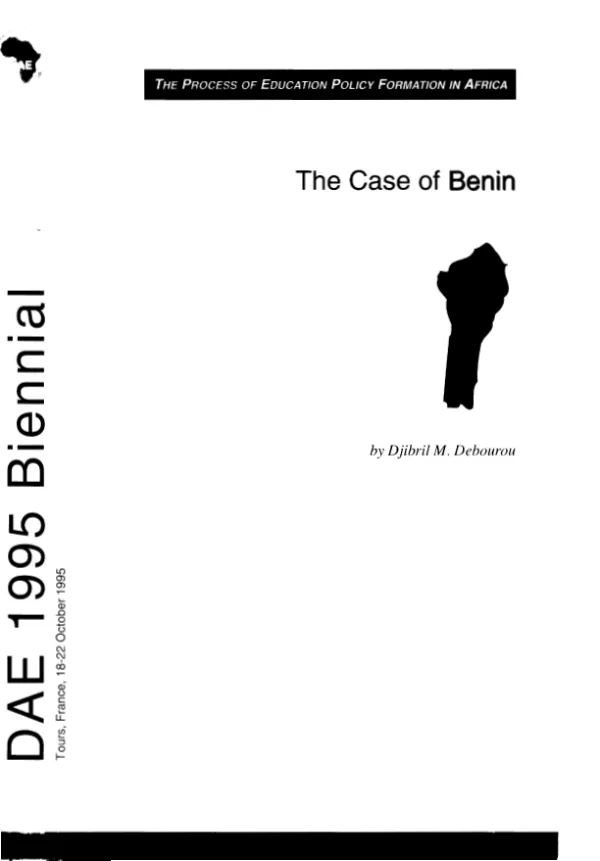
Process of education policy formation in Africa : the case of Benin
Benin"s educational sector underwent a considerable amount of reform beginning with the country"s transition in 1989 to a multiparty democratic system following 17 years of militarist-Marxist rule.
Debourou, Djibril M. · 1970
Sign in to readA free account is required to download.
Abstract
This case study explores the many facets of that reform, beginning with a discussion of the legacy of colonialism, which had created an academic elite, and then of the unsuccessful New School reform in 1972, which aimed to establish free and compulsory education for the entire country, including the rural poor, and to more closely match education with the needs of the marketplace. Section 2 examines the 1989 political crisis, while Section 3 examines the key components of the educational policy reform efforts between 1989-91; these include the Educational Policy Analysis Project, the National Conference, the Etats Generaux for Education, a comprehensive audit by the National Education Ministry, the Declaration of Education Policy, and reforms currently in place. Section 4 examines aspects of Benin"s educational reform process, covering its strengths and weaknesses, donor coordination, compromise, and the role of education in the national debate. Section 5 reviews the current status of the reforms. Conclusions are drawn in Section 6. (1) Benin had at its disposal a body of knowledge, which informed its educational dialogue and policy making. (2) Procedural innovations made by the National Education Ministry have effected procedures in other ministries. A mechanism must be found through which these ministries can be inspired to support educational reform, which will, in turn, ensure its sustainability. (3) Benin"s constitutional commitment to compulsory primary education serves as a guide for potential donors. However, Benin"s leaders must make a commitment to this constitutional philosophy. (4) The dialogue that initiated educational reform in Benin must be maintained and must involve all parties by providing training to those who need it and giving real responsibility to officials and parents. (5) Responsibility for donor coordination lies entirely with the Beninise government.