ICF MACRO INTERNATIONAL
Programa Integrado de Salud Materna e Infantil (MCHIP)
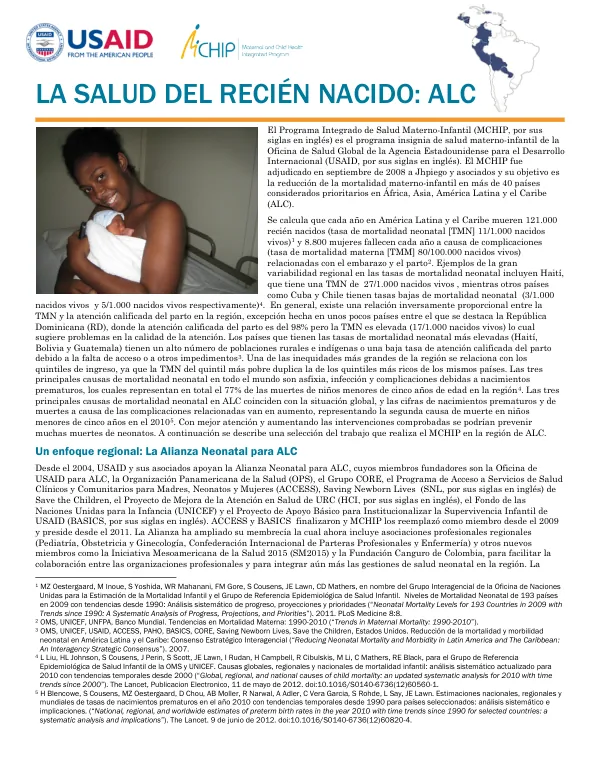
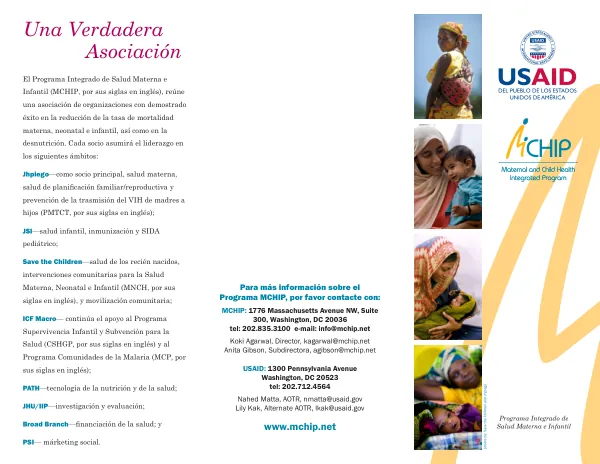
The Maternal and Child Health Integrated Program (MCHIP) is a collaborative effort among several organizations with a proven track record of reducing maternal, neonatal, and infant mortality rates, as well as malnutrition.
2011 · 2 pages
Sign in to readA free account is required to download.
Abstract
The program's primary goal is to address the main causes of mortality in these areas through evidence-based interventions. MCHIP is led by Jhpiego, with JSI, Save the Children, ICF Macro, PATH, JHU/IIP, Broad Branch, and PSI serving as key partners. MCHIP is designed as a "Leader with an Associated Corporate Agreement" (LWA) by the United States Agency for International Development (USAID). This designation allows MCHIP to receive funding from USAID missions and regional departments through traditional field support and other mechanisms. Additionally, MCHIP can accept Associated Awards, which are corporate agreements or grants developed by missions, regional departments, or global offices with the lead organization and overseen directly by the mission, department, or office. MCHIP employs the "what works" approach to scale up its work with missions, national and local governments, non-governmental organizations, communities, and associated agencies. Based on the context of each country and identified gaps in service delivery at the family, community, and system levels, MCHIP designs program strategies to ensure that services reach women and their families. The program's approach is guided by five interconnected principles: intensifying proven interventions, maximizing resources through strategic integrated programming, building on existing efforts and partnerships, focusing on learning programs, and adopting a global leadership role. MCHIP supports programs in maternal, neonatal, infant, immunization, family planning, malaria, and HIV/AIDS, and promotes opportunities for integration. The program's technical areas of cross-cutting include water, sanitation, hygiene, urban health, and health system strengthening. MCHIP helps countries identify and focus on innovations that will save lives by developing evidence-based interventions through the strengthening of government health systems, non-governmental organizations, and other local partners. The program ensures a combination of interventions throughout the life cycle and continuous home-to-hospital care. Each partner assumes leadership in developing programs around specific technical areas, allowing MCHIP to respond to needs and achieve a more integrated approach to services while considering epidemiology, system capacity, effectiveness, coverage, cost, cultural acceptability, and other factors. MCHIP ensures that learning from its efforts is presented in forums that offer the best opportunities to influence country programs and incorporate effective, viable, and impactful interventions, as well as global evidence-based approaches. The program's geographic focus is on 30 countries, with a primary goal of reducing maternal, neonatal, and infant mortality rates. MCHIP's approach is designed to be adaptable to the specific needs of each country, with a focus on scaling up proven interventions and building on existing efforts and partnerships.
Related documents