USAID DEC
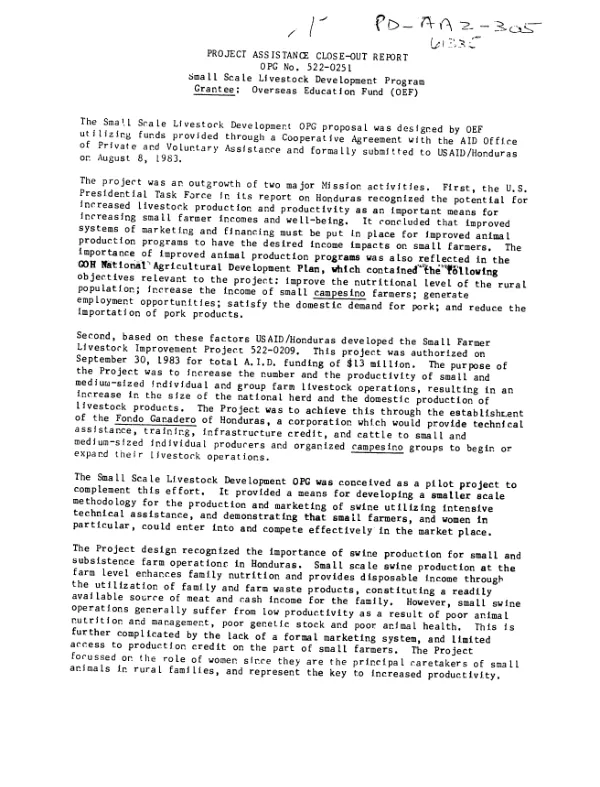
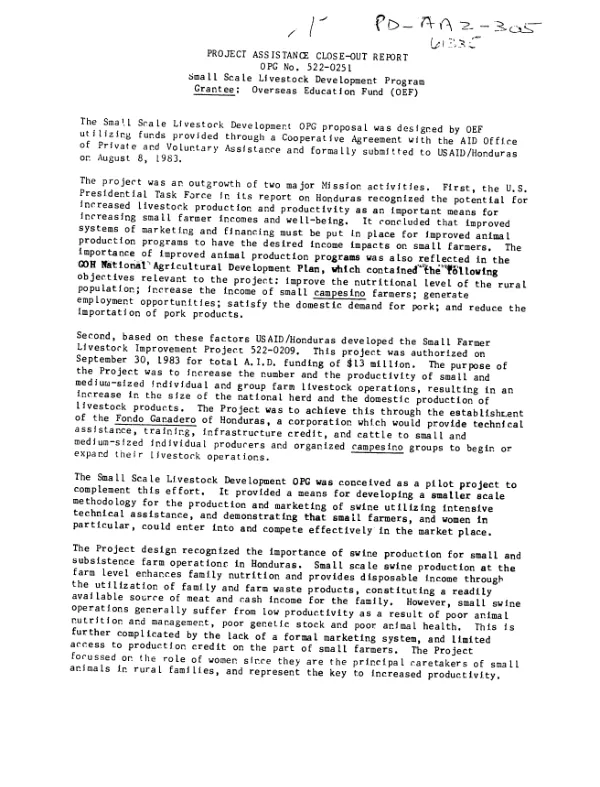
Project assistance close-out report, OPG no. 522-0251 : small scale livestock development program, grantee, overseas education fund (OEF)
Sign inUSAID. MISSION TO HONDURAS
Project assistance close-out report, OPG no. 522-0251 : small scale livestock development program, grantee, overseas education fund (OEF)
PACR of a project (3/84-12/87) to provide TA/training and a loan fund to assist women"s groups in rural Honduras in establishing small-scale swine production operations.
1970
Sign in to readA free account is required to download.
Abstract
The project was implemented in cooperation with two successive local PVO"s, Fundacion Horizontes de Amistad and Organizacion de Desarrollo Empresarial Feminino. Results were impressive. Nine groups, with a total of 106 members, were targeted in nine different communities on the northern coast, directly benefiting an estimated 742 family members. The groups marketed a total of 1,258 piglets and 1,253 fat hogs, generating L410,894 in gross income sales. The average income received per member was L378, a substantial amount when compared with participants" annual family income of L500. The project also increased the capabilities of the group members in such areas as: (1) general management and recordkeeping; (2) technical expertise in enterprise operations; (3) development of commercial relationships with businesses, banks, and processors; and (4) decisionmaking on both the individual and group level. Moreover, the project substantially increased the self-confidence of the participants. On the negative side, certain problems hindered project effectiveness. (1) Two groups completed the training and technical service process, but could not receive financing due to water availability problems. (2) Ten additional groups expressed an interest in joining the program, but were not included due to the scarcity of credit funds. (3) Delays in project implementation occurred due to changes in the original design. As a result, the actual output was less than expected in certain areas, including the number of beneficiaries, groups involved, and gross sales. Several lessons were learned. (1) Initial project design for productive projects must establish targets for financial feasibility and self-sufficiency if these objectives are to be achieved. (2) While it is difficult to work with disadvantaged groups in commercial activities, the project demonstrated that it is possible when beneficiary participation is properly conditioned and activities are pragmatically implemented. (3) In a project of this type, staged growth in activities must take place in a manner consistent with resource availability, and be carefully managed and monitored to achieve different objectives. (4) Project design should focus more on pragmatic, operational issues and less on social benefit aspects and include participation requirements, not waiting for these to be worked out over time. (5) Long-term viability of the project will depend on the viability of the implementing agency.