USAID. MISSION TO PHILIPPINES
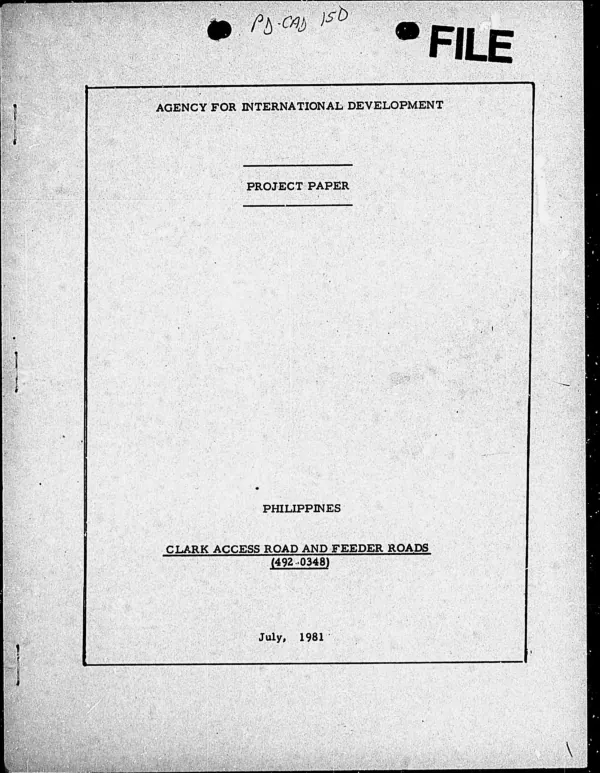
Project assistance completion report : Clark access and feeder roads project
PACR of a project (1981-87) to promote economic development in the lands surrounding Clark Air Force Base, including the Sacobia resettlement area, in the Philippines by constructing access roads and testing pilot soil and water conservation techniques.
1990
Sign in to readA free account is required to download.
Abstract
The project completed approximately 7 km of asphalt-paved road (built to national highway standards), and approximately 5 km of all-weather gravel road, complete with slope protection and drainage facilities. A portion of the reverted baselands at Clark, including the Sacobia resettlement area, is now accessible, as planned. Less positively, however, the soil/water conservation component was terminated 12/31/86, with only 10% accomplishment. The component went through various redesigns. During its one year of operation with funding, it concentrated on field testing of soil and eater conservation techniques on approximately 20 has, planting fruit and forest tree species along contour lines with mulching and stone retaining walls halfway around each tree. Overall, the component was considered expensive ($50,000/ha) in comparison with other A.I.D. projects of this kind ($15,000/ha). The following lessons were learned. (1) The primary constraint to the implementation of the access road component was the awarding of contracts to contractors without adequate resources. Other issues to be addressed are the need to review project plans before they are bid on and implemented, overhaul payment procedures to ensure up-to-date payment of progress billings, and improve project monitoring. (2) Activities under the soil and water conservation component were inappropriate; when a developing country is suffering from an economic crisis, the construction of new research facilities outside the context of existing agricultural research structure, which requires equipment, personnel and maintenance, should be seriously questioned. It may have been more cost-effective and administratively sound to strengthen existing research stations. In general, research should be conducted at operating research stations, while field demonstrations should be conducted by researchers on field sites and/or by farmers on farmers' fields.