USAID DEC
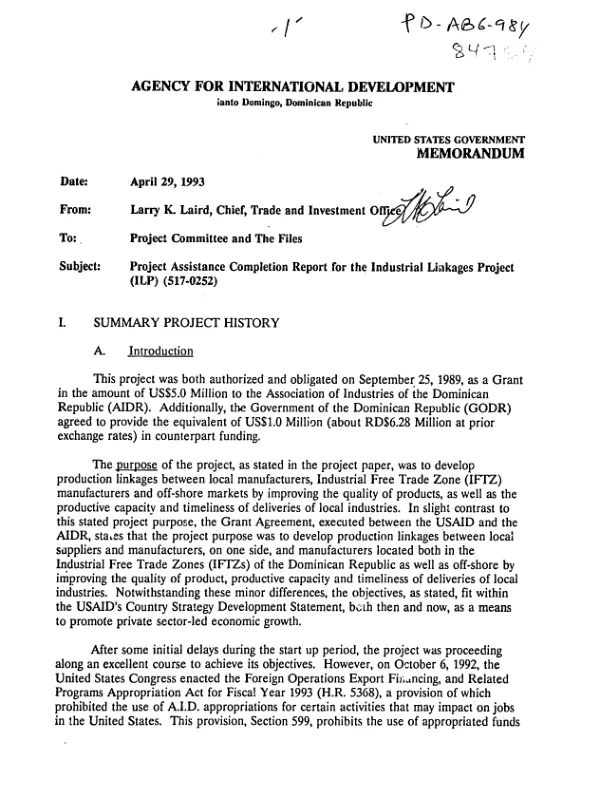
Project assistance completion report for the industrial linkages project (ILP) (517-0252)
Sign inUSAID. MISSION TO DOMINICAN REPUBLIC
Project assistance completion report for the industrial linkages project (ILP) (517-0252)
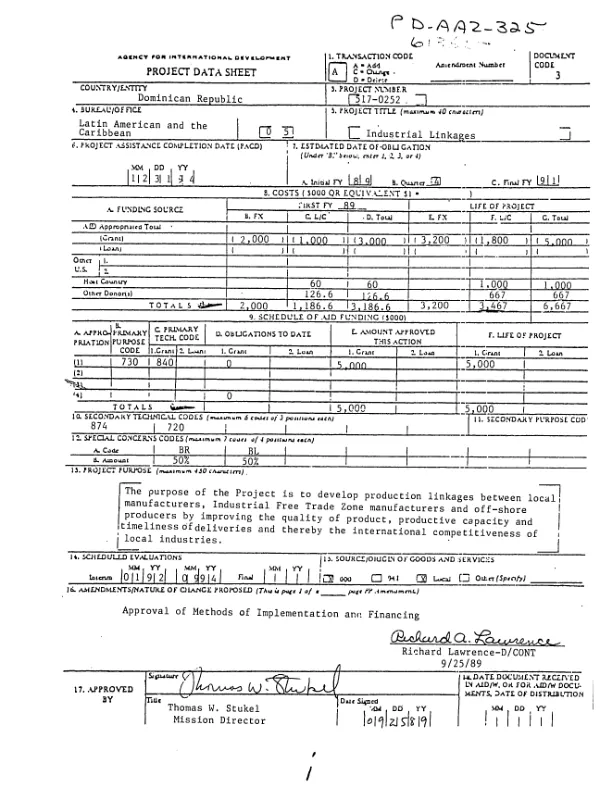
PACR of a project (9/89-2/93) to help local manufacturers and suppliers in the Dominican Republic increase their sales to manufacturers located in the Industrial Free Trade Zone (IFTZ) and eventually to other offshore markets.
1993
Sign in to readA free account is required to download.
Abstract
The project was making excellent progress in linking indigenous companies and IFTZ firms and in preparing the former for export markets when it was terminated in 2/93 following enactment of the Foreign Operations Export Financing and Related Programs Appropriation Act for FY 93, a provision of which prohibits assistance to export processing zones if such assistance could negatively affect U.S. jobs. A total of 11 business linkages were formed in the sub-sectors of wire, packaging materials, labels, adhesives, sheet metal, and leather shoe soles, generating more than $2 million in annual sales. In addition, a total of 22 linkages were in the process of being formed in the above subsectors and the additional subsectors of transformer bobbins, alcohol, ceramic tiles, shoes, and untreated leather, with projected sales of more than $34 million. Over 200 business associations and individual firms attended seminars/workshops on topics such as World Class Manufacturing and Establishing an Export Promotion Law. The project also: produced monthly bulletins and a comprehensive database of buyers (IFTZ firms) and sellers (indigenous firms); drafted specific modifications to the Dominican Republic"s Temporary Admissions Law; and developed a proposal, openly endorsed by the private sector, for a comprehensive Export Promotion Law (now under review in the Dominican National Council for Industrial Restructuring). However, the project probably would not have achieved its overall targets even if it had been continued. First, project designers overestimated the demand for free trade zone and local firm sales and purchases. Second, contrary to what was expected, the project could not work around legal obstacles: the Lautenberg Amendment, which prohibited the development of some of the project"s highest demand products, e.g., loths; the 807 Assembly Law, which makes it economically advantageous for IFTZ firms in the free trade zone to import goods from the United States; and inadequate Dominican temporary admission laws. The following lessons were learned. (1) The project"s ability to establish successful linkages was due to selective targeting of firms that showed the most capability of using TA effectively; requiring firms to pay for project TA proved helpful in identifying such firms. (2) The amount of TA required to prepare Dominican firms for international competition is 6-8 weeks, rather than the 3 weeks predicted by the project. This is due to the need to upgrade their managerial and not merely their technical capabilities. (3) A proactive and cohesive marketing strategy is essential to project success. A basic flaw in the project design -- as evident in the project budget -- was to subordinate marketing expertise to communications. The resignation of theommunications Director, together with the inability to find a suitable replacement, exacerbated this situation.
Related documents