USAID. MISSION TO BOLIVIA
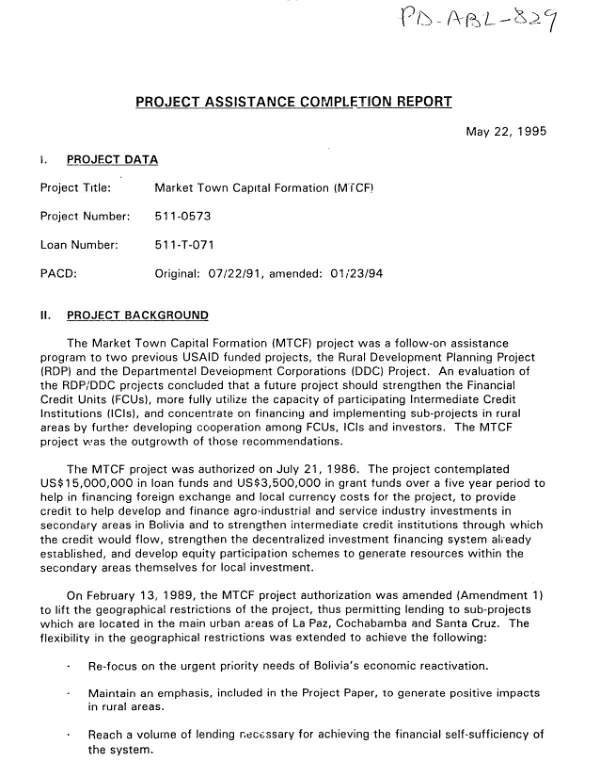
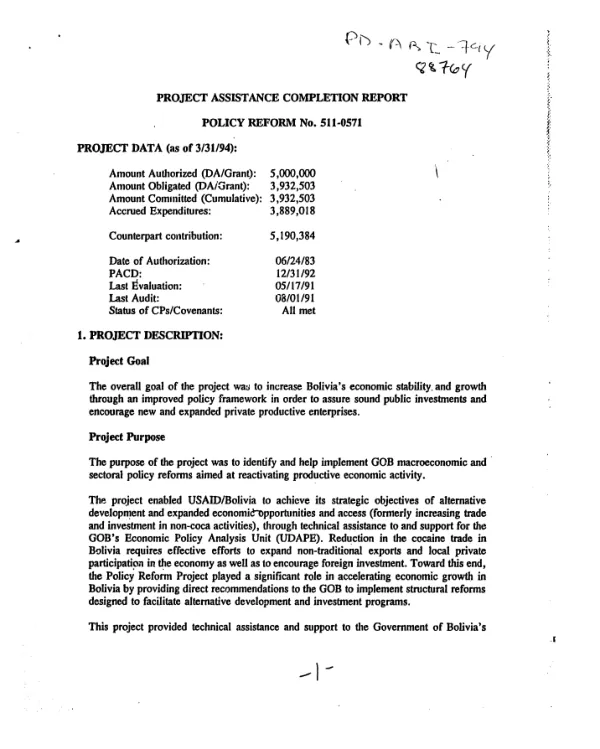
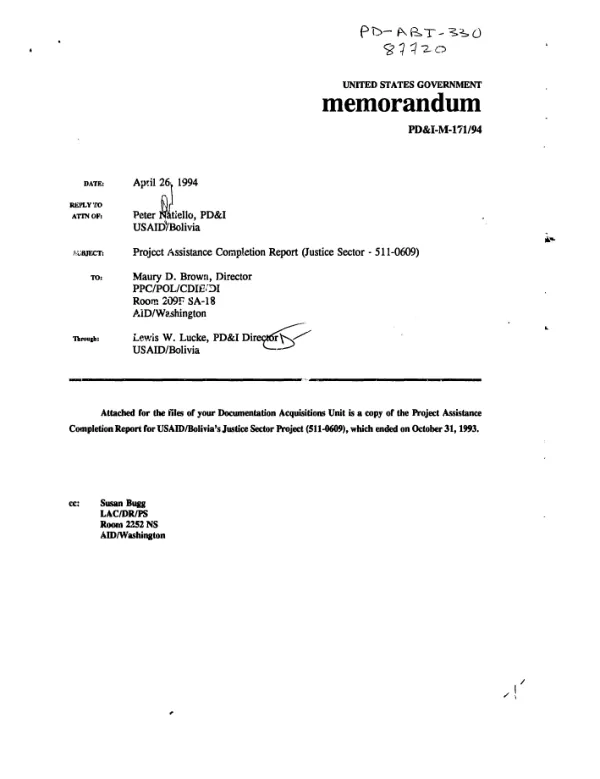
Project assistance completion report : justice sector - 511-0609
PACR of a project (9/88-10/93) to strengthen Bolivia's judiciary and public prosecution system.
1994
Sign in to readA free account is required to download.
Abstract
The project succeeded in strengthening the legal framework for judicial reform: it more than met its target to develop a legal framework for arbitration, and it appears to have met its technical training targets -- although it met by only half its goal to establish a uniform financial management system for the courts. Specifically, the project facilitated the promulgation of the landmark Public Ministry and Judicial Organization laws; established the National Council for Judicial Reform and Modernization, an Executive Branch organization that promotes judicial reform; funded legal clinics that were instrumental in gaining support for judicial reform (and particularly for the oral process) from judges, prosecutors, and law professors; installed legal libraries in 12 justice sector organizations; developed an Alternative Dispute Resolution Center under the auspices of the Bolivian Chamber of Commerce; modernized the printing capacities of the Supreme Court; and developed plans for the implementation of the SAFCO Law in the judiciary. The following lessons were learned. (1) Administration of justice interventions should be focused in specific areas of the justice sector where measurable impact can be assessed. (2) A judicial reform project should work in tandem with key justice sector personnel including judges, prosecutors, the police, and public defenders. (3) Project assistance should be delivered in a flexible manner since exogenous political variables can obstruct implementation plans. (4) Institution building activities should be complemented by activities that empower local citizens and professional groups so that judicial reforms can be sustained.