USAID. MISSION TO BOTSWANA
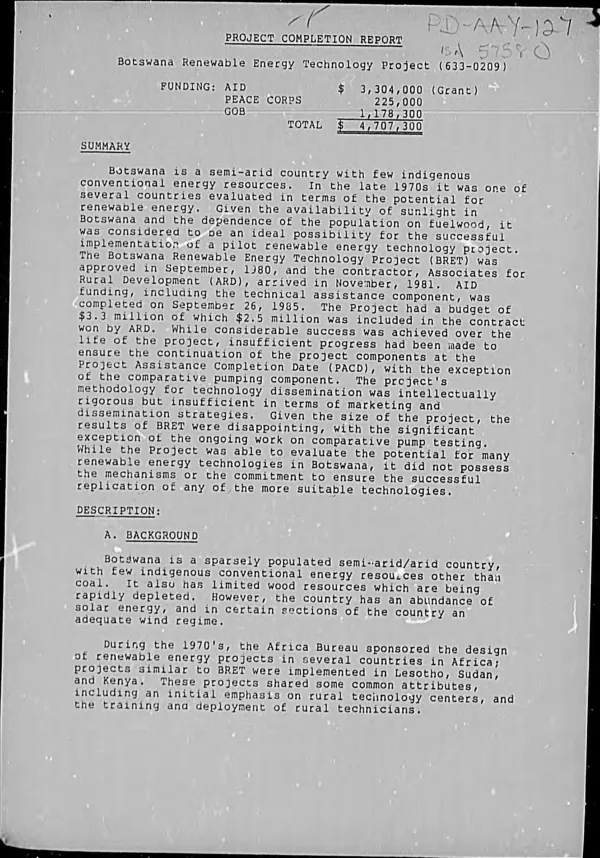
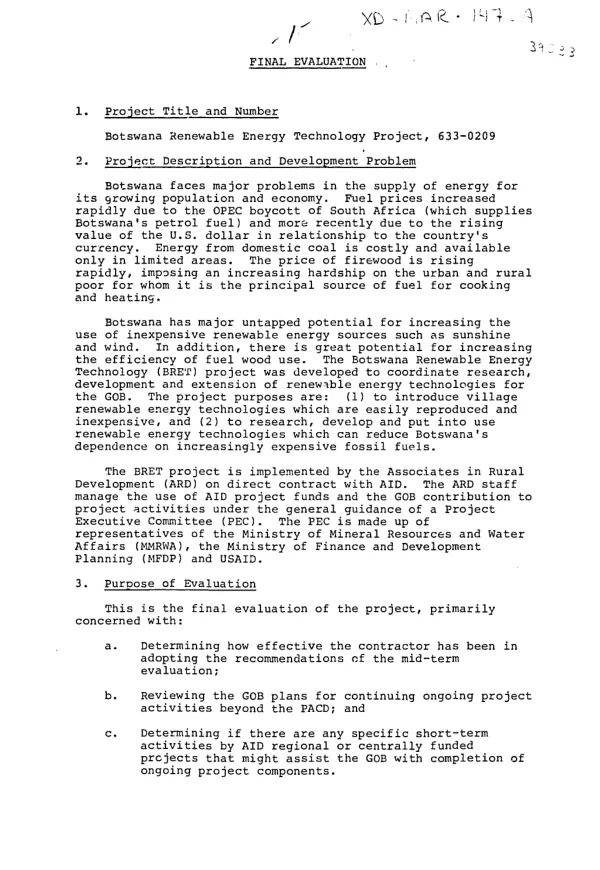
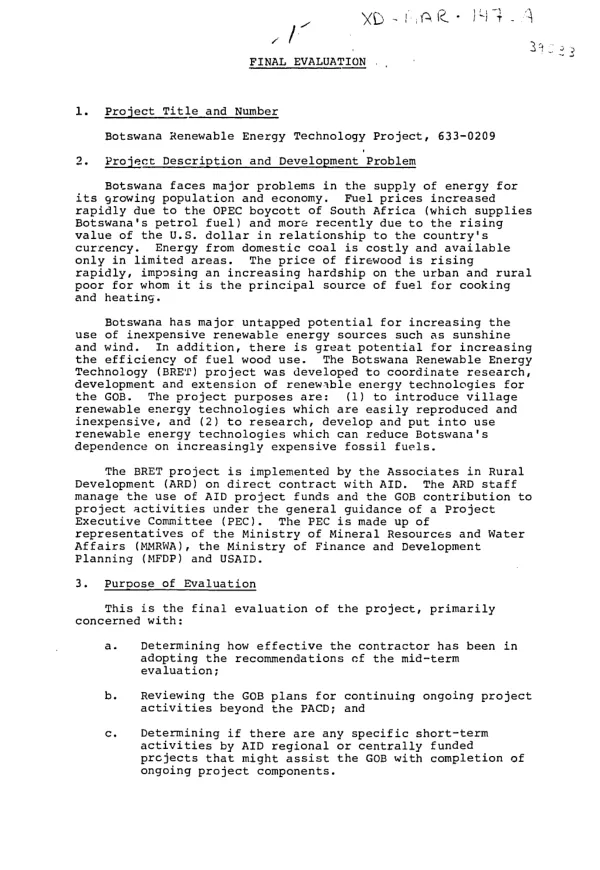
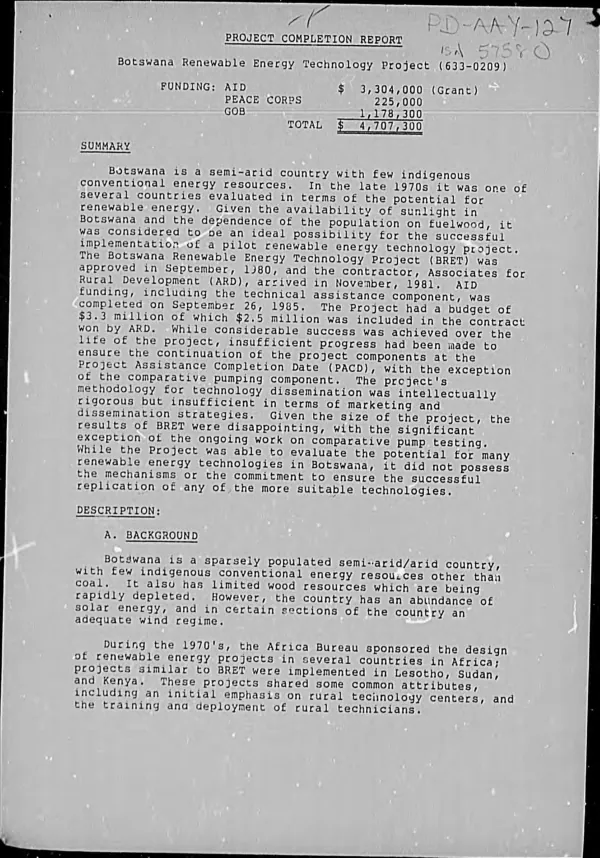
Project completion report : Botswana renewable energy technology project (633-0209)
PACR for project (9/81-9/85) to introduce renewable energy technologies in rural Botswana.
Sign in to readA free account is required to download.
Abstract
Results are disappointing. The project was able to identify, develop, and test appropriate technologies, and the technical competence of the TA staff was excellent, but the project's rural bias, its relatively poor focus on economic considerations, and its inability to successfully alter a poorly conceived project paper made it impossible to reach all objectives by the end of the project. For example, the PP's original emphasis on two pilot villages limited the project's ability to consider regional or national replicability, and limited as well its flexibility to act on recommendations, made in the midterm evaluation, to emphasize those issues. Implementation was further hampered by an ambiguous management structure, in which responsibility was shared by project staff and the Botswana Technology Center. This relationship, until removed after the midterm evaluation, seriously hurt the ability of the contractor to implement the project. In addition, not enough effort was made by either the contractor or the Government of Botswana (GOB) to incorporate project activities into ongoing GOB institutions. The project's management problems and its failure to address key economic and marketing issues teach several valuable lessons. First, Missions should be prepared to support projects involving technology development and field replication for at least five years; since this project was a pilot effort, there was no room in the USAID/B portfolio for a follow-on activity. Second, this project demonstrates that in technology projects technical concerns should not outweigh economic, replication, and market issues. Third, management arrangements should obviously be clearer than in this project, and cross-cutting responsibilities should be avoided. Management concerns also extend to the selection of Chiefs-of-Party, whose managerial qualifications should be as strong as their technical credentials. Ultimately, though, this project's failure teaches that energy projects limited specificially to renewable energy technologies should never be financed by A.I.D. Projects which examine specific activities and end uses, and which are not limited to renewable energy, could be considered if adequate attention has been given to economic and institutional barriers. For information on the project's technologies and outputs, see the abstracts of the final contractor report (PD-AAW-030) and the final evaluation (XD-AAR-147-A).
Related documents