USAID. MISSION TO INDONESIA
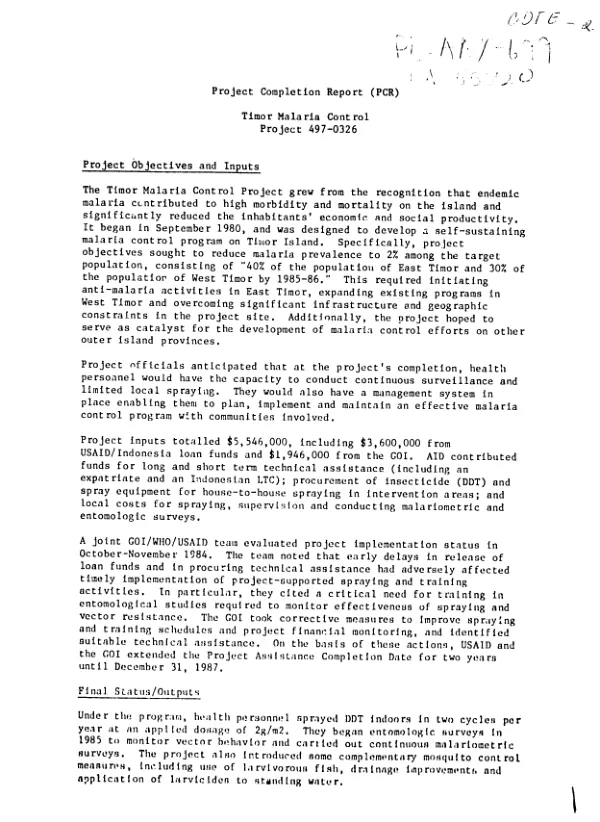
Project completion report (PCR) : Timor malaria control project, 497-0326
Project Completion Report on a project (9/80-12/87) to control malaria and create an ongoing control program in East and West Timor, Indonesia.
McDonald, K. · 1970
Sign in to readA free account is required to download.
Abstract
Overall, the project (which was extended 3 years following a 1984 evaluation) has had a positive impact on malaria control in the short run and has made progress toward building long-run disease management capabilities. In addition to house-to-house applicaton of DDT, other project interventions included use of larvivorous fish, drainage improvements, and application of larvicides to standing water. Quantifiable targets regarding spraying and incidence reduction have been exceeded. In fact, a 9/87 evaluation found that: (1) the protected population in East Timor increased from 11.8% in 1982 to 42.1% in 1986, slightly exceeding the target of 40%; (2) in West Timor the gain was from 14.2% to 31.9%, again slightly above the 30% target; (3) malaria no longer ranked first among reasons for treatment at health centers as it had in 1982, the percentage dropping from 18.2% to 12.01% in East Timor and from 18.9% to 14.2% in the West; (4) in four of ten districts visited, prevalence reduction from 1982 to 1986 ranged from a high of 28.1-69% to a low of 1.4-7.3% in East Timor and a high of 17.2-41.7% to a low of 0.6-4.9% in West Timor. On the other hand, the malariometric and entomologic surveys which found reduced incidence also suffered from very high error rates in reading slides by field microscopists, and monitoring of malaria prevalence was still inadequate. The discovery of chloroquine-resistant falciparum malaria, not yet observed in the West, is a disturbing aspect. The evaluators concluded that despite the progress made, Timor will continue to suffer from malaria. Given the severe resource constraints facing health activities on the island, they recommended: (1) reducing spraying to one application in areas already covered or with low incidence; (2) sending Ministry of Health teams from Jakarta to Timor to measure the disease more precisely; (3) increasing use of drug control measures, including radical treatment of positive cases; (4) conducting field operations trials on ways of promoting greater community involvement in malaria control. While expensive spraying can control malaria in the short run in selected areas, long-term control depends on the development of a self-sustaining program, a major aspect of which must be strong community involvement in alternative control measures, including case finding, treatment, and source reduction through improved sanitation and drainage. USAID/I is now testing community activities of this type in West Timor through the Comprehensive Health Improvement Program (497-0325).
Related documents