USAID. MISSION TO THAILAND
Project completion report : village fish pond I
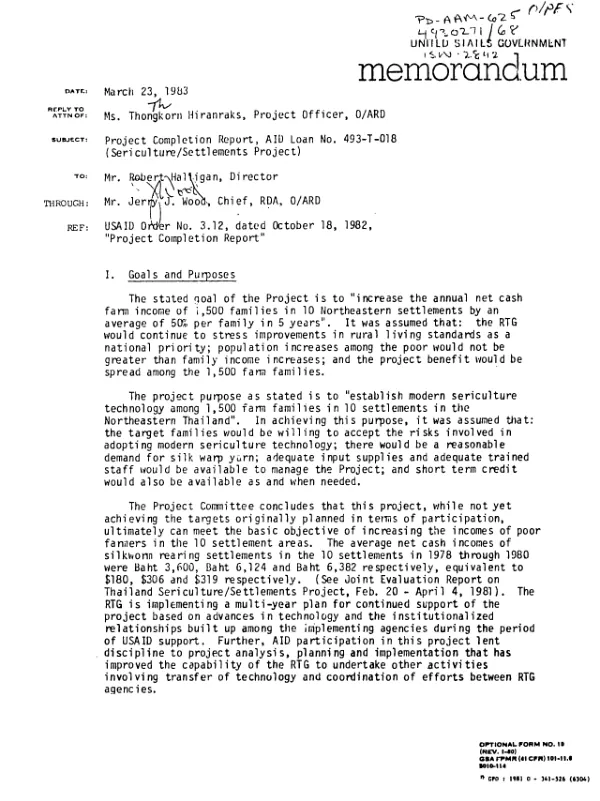
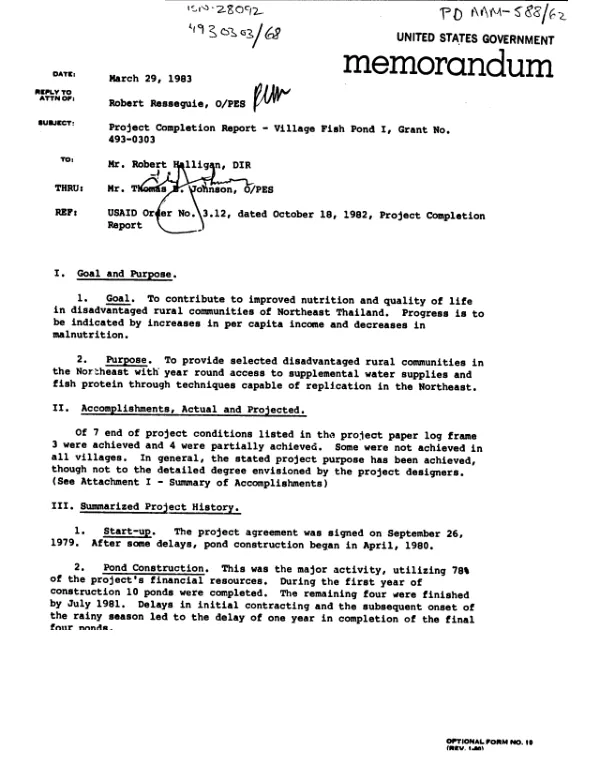
Provides final Mission report (9/79-10/82) on a project to establish fish ponds in selected disadvantaged rural communities in Northeast Thailand.
Johnson, Thomas E. · 1983
Sign in to readA free account is required to download.
Abstract
Most project objectives were achieved. During the first year, 10 ponds were completed; contracting problems and the rainy season delayed completion of 4 more ponds by one year. An average of 265,000 fingerlings (provided by provincial fishery stations) were released in each pond. Thirteen villages constructed nursery ponds adjacent to the larger ponds. Fingerling production training took place in some villages and 2 villages had produced fingerlings by the project's end. Most ponds have been harvested once and some twice; 3 ponds have not been harvested yet due to construction delays. Yields were low (approximately 40 kg per rai versus a projected 80 kg per rai) because ponds were not completely drained and cleared of fish; low nutrient availability also constrained yields. Tickets sold to fishermen on harvest day generated about THB Baht which was used for pond maintenance, road and school repair, and other development activities. Operations research activities, though limited by managerial and organizational delays and villager unreadiness, included a study of composted water hyacinth as fish feed, a village sanitation and health program, and a very successful combination of duck and fish ponds. As a result of project-stimulated interest in development, one village held workshops to discuss such activities as vegetable production, silkworm raising and mulberry tree production, biogas systems, nonformal education, and fish sauce production. While project management by the Department of Fisheries was not as intensive as planned, the provinicial fisheries stations provided adequate technical assistance to villagers. Village committees, formed early in the project, proved very effective in managing ponds and regulating water use. Lessons learned are: fish pond site selection should be based on such factors as proximity to market towns, villagers's development experience and income levels, water flows, and soil texture; management and operations should be decentralized to the provincial level; yield projections should be based on social and technical research; and more attention should be given to operations research.
Related documents