USAID DEC
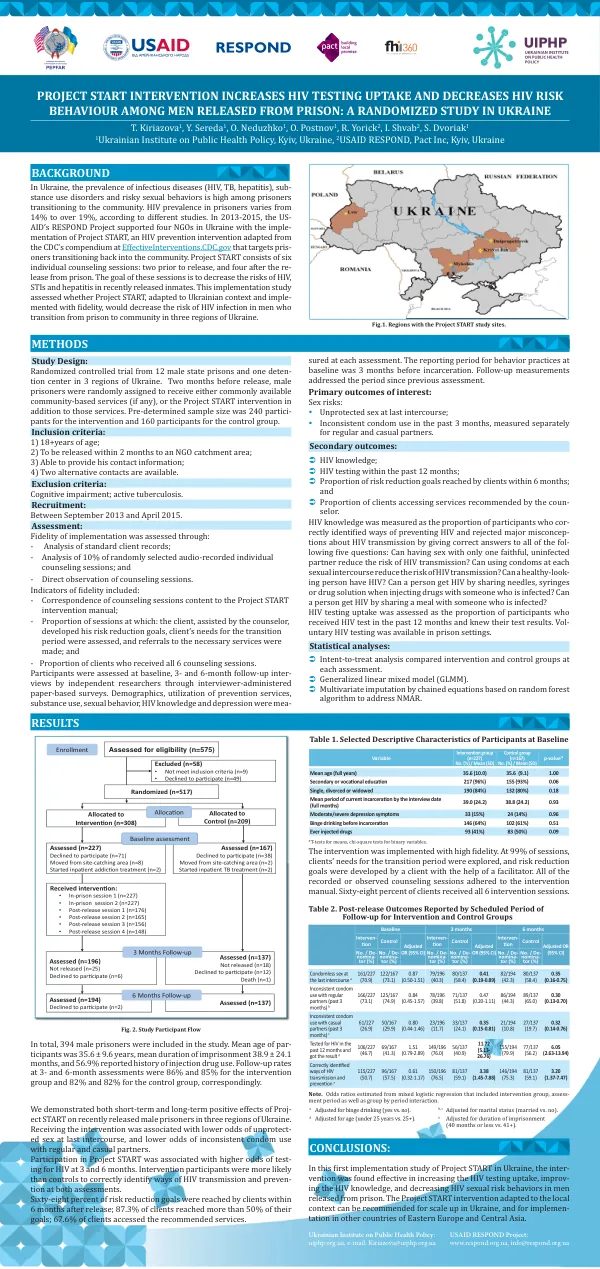
PROJECT START INTERVENTION INCREASES HIV TESTING UPTAKE AND DECREASES HIV RISK BEHAVIOUR AMONG MEN RELEASED FROM PRISON: A RANDOMIZED STUDY IN UKRAINE
Sign inPACT
PROJECT START INTERVENTION INCREASES HIV TESTING UPTAKE AND DECREASES HIV RISK BEHAVIOUR AMONG MEN RELEASED FROM PRISON: A RANDOMIZED STUDY IN UKRAINE
In Ukraine, the prevalence of infectious diseases (HIV, TB, hepatitis), substance use disorders, and risky sexual behaviors is high among prisoners transitioning to the community.
2016 · 1 pages
Sign in to readA free account is required to download.
Abstract
HIV prevalence in prisoners varies from 14% to over 19%, according to different studies. The US-AID's RESPOND Project supported four NGOs in Ukraine with the implementation of Project START, an HIV prevention intervention adapted from the CDC's compendium. Project START consists of six individual counseling sessions: two prior to release, and four after the release from prison. The goal of these sessions is to decrease the risks of HIV, STIs, and hepatitis in recently released inmates. This implementation study assessed whether Project START, adapted to Ukrainian context and implemented with fidelity, would decrease the risk of HIV infection in men who transition from prison to community in three regions of Ukraine. A randomized controlled trial was conducted from 12 male state prisons and one detention center in three regions of Ukraine. Male prisoners were randomly assigned to receive either commonly available community-based services or the Project START intervention in addition to those services. Pre-determined sample size was 240 participants for the intervention and 160 participants for the control group. The intervention was implemented with high fidelity. At 99% of sessions, clients' needs for the transition period were explored, and risk reduction goals were developed by a client with the help of a facilitator. All of the recorded or observed counseling sessions adhered to the intervention manual. Sixty-eight percent of clients received all 6 intervention sessions. Receiving the intervention was associated with lower odds of unprotected sex at last intercourse, and lower odds of inconsistent condom use with regular and casual partners. Participation in Project START was associated with higher odds of testing for HIV at 3 and 6 months. Intervention participants were more likely than controls to correctly identify ways of HIV transmission and prevention at both assessments. Sixty-eight percent of risk reduction goals were reached by clients within 6 months after release; 87.3% of clients reached more than 50% of their goals; 67.6% of clients accessed the recommended services. The study demonstrated both short-term and long-term positive effects of Project START on recently released male prisoners in three regions of Ukraine.
Related documents