SOCIEDAD PERUANA DE DERECHO AMBIENTAL
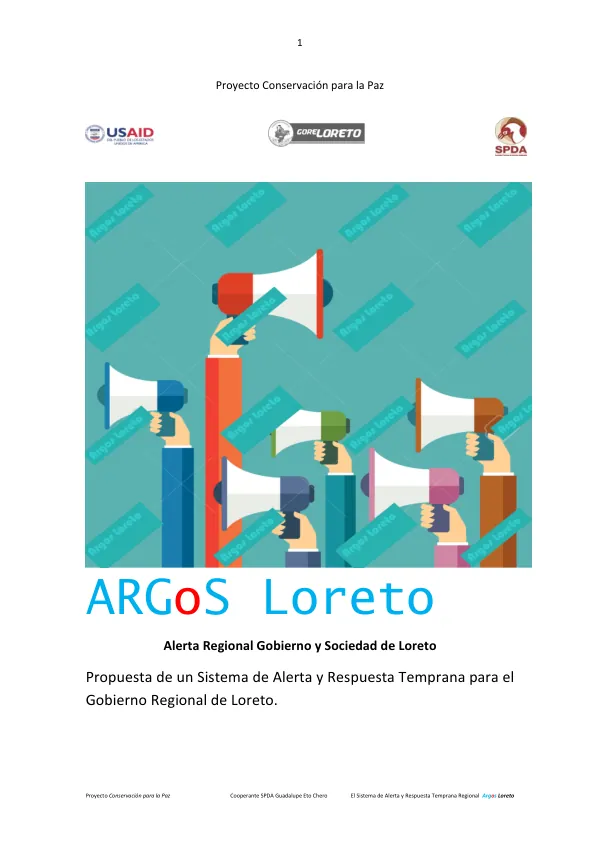
Propuesta de un Sistema de Alerta y Respuesta Temprana Regional Argos Loreto
The Sistema de Alerta y Respuesta Temprana Regional, or Argos Loreto, is a project aimed at preventing conflicts in the Loreto region of Peru.
51 pages
Sign in to readA free account is required to download.
Abstract
The project is designed to be in line with the government's policy of preventing conflicts. The Argos Loreto system is intended to provide early warning and response to potential conflicts, allowing for timely intervention and prevention of violence. The Argos Loreto system is structured around five phases: registration, analysis, intervention, monitoring, and evaluation. The system involves the participation of various stakeholders, including government agencies, civil society organizations, and local communities. The project also includes a reporting mechanism to track progress and identify areas for improvement. The project is based on the principles of participation, transparency, and accountability. It is inspired by the concept of early warning and response systems, which have been implemented in other regions of Peru. The project aims to contribute to the prevention of conflicts in the Loreto region by providing a platform for early warning and response. The project has been designed to be sustainable and self-sufficient, with a focus on building the capacity of local stakeholders to manage and maintain the system. The project also includes a component for the validation of the proposal, which involves the review and approval of the project by relevant stakeholders. The project has been supported by various organizations, including the Sociedad Peruana de Derecho Ambiental (SPDA) and the USAID. The project has also received technical assistance from the Instituto de Investigaciones de la Amazonía Peruana (IIAP) and the Instituto Geofísico del Perú (IGP). The project has been implemented in various communities in the Loreto region, with a focus on areas that are prone to conflicts. The project has involved the participation of local stakeholders, including community leaders, government officials, and civil society organizations. The project has also included a component for the training of local stakeholders on the use of the Argos Loreto system. The project has been designed to be flexible and adaptable to the needs of the local communities. The project has also included a component for the evaluation of the project's impact and effectiveness. The project has been implemented in a phased manner, with a focus on building the capacity of local stakeholders and ensuring the sustainability of the project. The project has been supported by various organizations, including the Presidencia del Consejo de Ministros (PCM) and the Ministerio del Ambiente (MINAM). The project has also received technical assistance from the Organismo de Evaluación y Fiscalización Ambiental (OEFA) and the Organismo de Supervisión de los Recursos Naturales y de Fauna Silvestre (OSINFOR).
Related documents