WORLD WILDLIFE FUND INTERNATIONAL
Protecting biodiversity
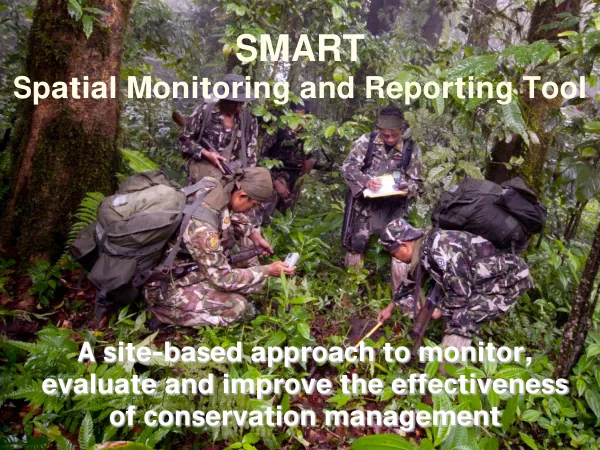
The SMART system is a site-based approach to monitor, evaluate, and improve the effectiveness of conservation management.
2013 · 24 pages
Sign in to readA free account is required to download.
Abstract
This approach focuses on community-based management, involving indigenous and local people in the decision-making process. Frontline conservation staff and protected area managers benefit from more effective protection and coordination through the use of SMART. The SMART system utilizes a Spatial Monitoring and Reporting Tool to facilitate data input, mapping, and reporting. Ranger patrols play a crucial role in collecting data, which is then entered into the system. This data is analyzed to evaluate patrol performance and enforcement effectiveness. The results of this analysis inform strategic planning and decision-making. One of the key benefits of the SMART system is its ability to provide real-time data and insights. This enables conservation efforts to be more targeted and effective. For example, in areas where the SMART system has been implemented, hunting has been stabilized, and tiger density has started to increase. Additionally, patrol effort has increased, resulting in reduced poaching of prey and increased prey populations. This, in turn, has led to increased tiger populations. The SMART system is designed to be adaptable to local contexts and languages, making it a flexible and effective tool for conservation management. It is also extensible, allowing it to be integrated with other aspects of conservation area management. Furthermore, the system is community-owned, open-source, and supported, ensuring a long-term vision for conservation efforts. The SMART system also provides a suite of training materials and a growing cadre of trainers, enabling the capacity of conservation staff to be built. The SMART system has been implemented in various regions, including Africa, Asia, Latin America, Europe, and North America. Its effectiveness has been demonstrated through the stabilization of hunting, increase in tiger density, and growth in prey and tiger populations. The system's ability to provide real-time data and insights has enabled conservation efforts to be more targeted and effective, ultimately contributing to the success of conservation management initiatives.