TRAFFIC INTERNATIONAL
Pangolin Species Identification Guide: A Rapid Assessment Tool for Field and Desk
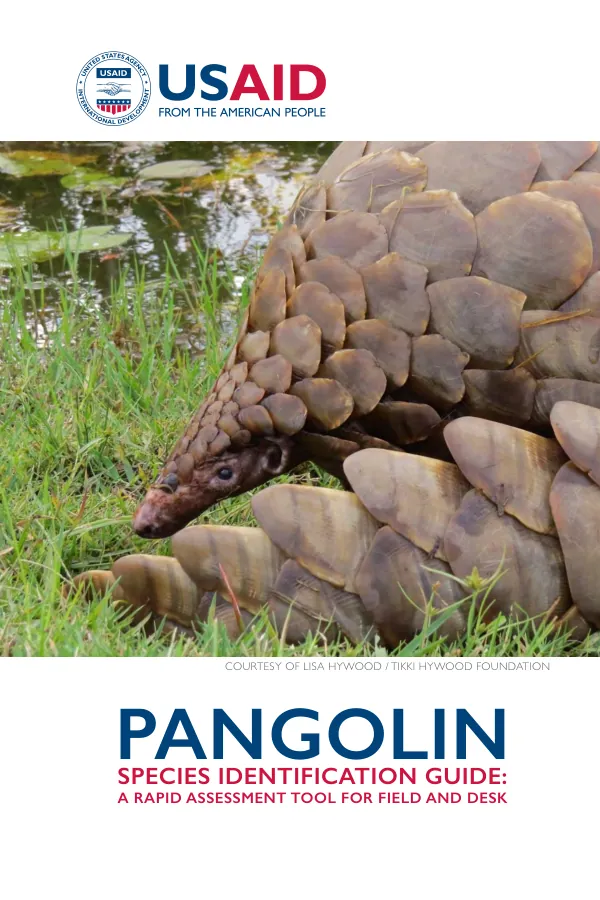
Pangolins are the only mammals covered in scales, which are made of keratin, the same material as human hair and nails.
2017 · 32 pages
Sign in to readA free account is required to download.
Abstract
These scales are a key characteristic used to identify the eight species of pangolins. Pangolins are primarily found in Africa and Asia, with four species in each continent. They are not widely known outside of their native regions, and all eight species are listed on Appendix I of the Convention on International Trade in Endangered Species of Wild Fauna and Flora (CITES), the highest level of protection. The eight species of pangolins are: 1. Chinese Pangolin (Manis pentadactyla) 2. Indian Pangolin (Manis crassicaudata) 3. Philippine Pangolin (Manis culionensis) 4. Sunda Pangolin (Manis javanica) 5. Black Bellied Tree Pangolin (Phataginus tetradactyla) 6. Giant Ground Pangolin (Smutsia gigantea) 7. Ground Pangolin (Smutsia temminckii) 8. White Bellied Tree Pangolin (Phataginus tricuspis) Each species has distinct physical characteristics that can be used for identification. The Asian pangolins have bristles between their scales, while the African pangolins do not. The scales of the pangolins are also used for identification, with each species having a unique pattern. The range maps for the Asian and African pangolin species are provided to help identify the species based on the country of origin. The maps show the countries where each species is found, including their native habitats and distribution. The species summaries provide detailed information on the physical characteristics of each species, including their head length, tail length, tail length in proportion to body length, and claw size and shape. The summaries also note the unique features of each species, such as the partially prehensile tail of the Indian Pangolin and the fully prehensile tail of the Sunda Pangolin. The species summaries also provide information on the habits and habitats of each species, including their diet, behavior, and social structure. The summaries note that pangolins are primarily found in forests and grasslands, and that they are solitary animals that are active at night. The guide also provides information on the conservation status of each species, including their listing on CITES and their protection by national legislation in their range countries. The guide notes that all eight species are listed on Appendix I of CITES, the highest level of protection, and that they are protected by national legislation in their range countries. The guide also provides information on the regional rescue centers and contact information for each species, including their location, phone number, and email address. The guide notes that the regional rescue centers are responsible for rescuing and rehabilitating pangolins that have been injured or orphaned, and that they provide education and outreach programs to raise awareness about pangolin conservation. Overall, the Pangolin Species Identification Guide is a comprehensive resource for identifying and understanding the eight species of pangolins. The guide provides detailed information on the physical characteristics, habits, and conservation status of each species, as well as information on the regional rescue centers and contact information for each species.