FAMILY HEALTH INTERNATIONAL
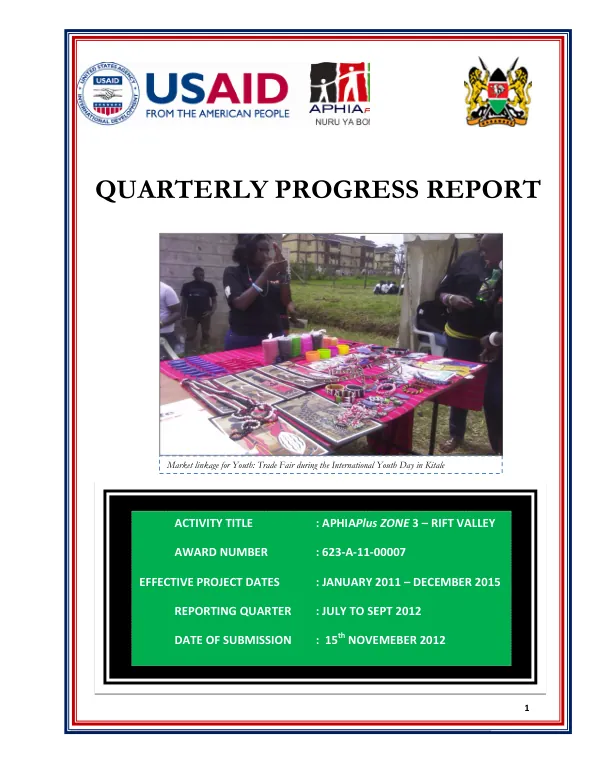
Quarterly Progress Report: APHIAPlus ZONE 3 – RIFT VALLEY
The APHIAPlus Zone 3 – Rift Valley project, funded by the United States Agency for International Development (USAID), aims to improve health service delivery in the region.
2012 · 140 pages
Sign in to readA free account is required to download.
Abstract
The project operates from January 2011 to December 2015, with the quarterly progress report for July to September 2012 submitted on November 15, 2012. The project focuses on increasing the use of quality health services, products, and information, with a particular emphasis on addressing social determinants of health. Key interventions include improving the capacity of public sector facilities to provide high-quality health services, increasing the availability of laboratory services, and strengthening the capacity of district health management teams to plan and manage service delivery. The project also targets social determinants of health, including increasing access to economic security initiatives, improving accessibility to local markets, and enhancing access to improved water supply and sanitation. Additionally, the project aims to increase participation of marginalized groups in the design, delivery, and monitoring of interventions. Laboratory strengthening is a critical component of the project, with a focus on increasing the availability of malaria prevention and treatment services, tuberculosis screening and treatment, and family planning services. The project also aims to increase the availability of skilled birth attendants and essential newborn care services. The project's monitoring and evaluation activities include ensuring standard reporting tools are available and used at data collection points, improving data quality, and creating demand for the use of data for decision-making. Environmental compliance and cross-cutting issues, such as gender, youth, equity, and whole market, are also addressed. The project has made significant progress in increasing the availability of high-impact interventions, including HIV/AIDS treatment services, malaria prevention and treatment services, and family planning services. The project has also improved the capacity of public sector facilities to provide high-quality health services and strengthened the capacity of district health management teams to plan and manage service delivery. In terms of social determinants of health, the project has increased access to economic security initiatives, improved accessibility to local markets, and enhanced access to improved water supply and sanitation. The project has also increased participation of marginalized groups in the design, delivery, and monitoring of interventions. The project's success is evident in the increased availability of high-impact interventions, improved health service delivery, and enhanced social determinants of health. The project's progress is a testament to the effectiveness of the APHIAPlus Zone 3 – Rift Valley project in improving health outcomes in the region.