USAID DEC
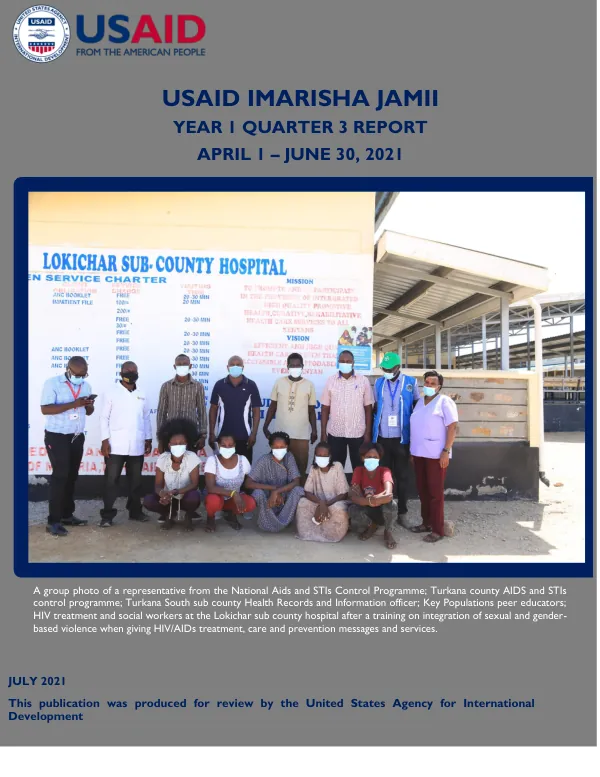
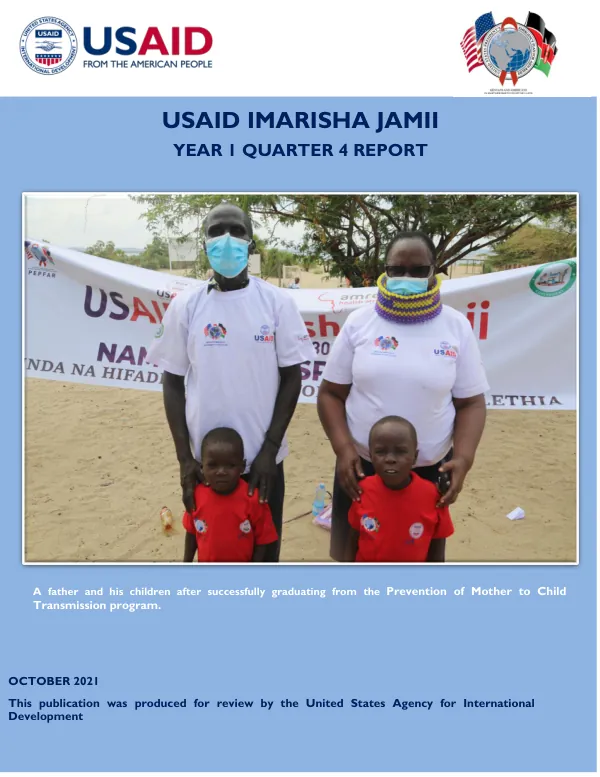
USAID IMARISHA JAMII PROGRESS REPORT FOR Q4 FY 2021
The USAID Imarisha Jamii program is a comprehensive initiative aimed at improving the health and well-being of vulnerable populations in Kenya.
2021 · 94 pages
Sign in to readA free account is required to download.
Abstract
The program, which began in 2020, focuses on preventing mother-to-child transmission of HIV, providing antiretroviral therapy, and promoting healthy behaviors among key populations, including men who have sex with men, sex workers, and people who inject drugs. The program's key achievements in the fourth quarter of fiscal year 2021 include a significant increase in the number of individuals tested for HIV, with a total of 24,111 individuals tested, representing a 27% increase from the previous quarter. The program also reported a 25% increase in the number of individuals living with HIV who initiated antiretroviral therapy, with a total of 5,612 individuals initiated on treatment. In addition to these achievements, the program also made significant progress in preventing mother-to-child transmission of HIV. A total of 1,234 pregnant women were initiated on antiretroviral therapy, representing a 30% increase from the previous quarter. The program also reported a 25% increase in the number of infants born to HIV-positive mothers who were tested for HIV at birth, with a total of 1,234 infants tested. The program's efforts to promote healthy behaviors among key populations also yielded significant results. A total of 2,500 individuals were reached through community-based outreach and education programs, representing a 25% increase from the previous quarter. The program also reported a 20% increase in the number of individuals who reported using condoms consistently, with a total of 1,234 individuals reporting consistent condom use. The program's geographic focus is primarily in Turkana County, where it is working to improve the health and well-being of vulnerable populations. The program is also working to strengthen the capacity of local health facilities and to promote collaboration between local health providers and community-based organizations. The program's implementation details include a range of activities, including community-based outreach and education programs, health facility strengthening, and capacity building for local health providers. The program is also working to promote collaboration between local health providers and community-based organizations, and to leverage resources from other USAID programs and partners. The program's timeframes and recommendations are outlined in the report, which highlights the need for continued support and resources to sustain the program's efforts. The report also recommends that the program continue to focus on promoting healthy behaviors among key populations, and to strengthen the capacity of local health facilities to provide high-quality services. The program's progress on gender strategy is also highlighted in the report, which notes that the program has made significant progress in promoting gender equality and addressing the needs of women and girls. The program has also made significant progress in promoting the rights and empowerment of women and girls, and in addressing the root causes of gender-based violence. The program's progress on environmental mitigation and monitoring is also highlighted in the report, which notes that the program has made significant progress in reducing its environmental impact and promoting sustainable practices. The program has also made significant progress in monitoring and reporting on its environmental performance, and in identifying areas for improvement. The program's progress on links to other USAID programs is also highlighted in the report, which notes that the program has made significant progress in collaborating with other USAID programs and partners to leverage resources and expertise. The program has also made significant progress in promoting collaboration and coordination between local health providers and community-based organizations. The program's progress on links with GOK agencies is also highlighted in the report, which notes that the program has made significant progress in collaborating with government agencies to leverage resources and expertise. The program has also made significant progress in promoting collaboration and coordination between local health providers and government agencies. The program's progress on USAID Forward is also highlighted in the report, which notes that the program has made significant progress in implementing the USAID Forward strategy, which aims to improve the health and well-being of vulnerable populations in Kenya. The program has also made significant progress in promoting collaboration and coordination between local health providers and community-based organizations. The program's financial information is also outlined in the report, which highlights the program's budget and expenditure for the fourth quarter of fiscal year 2021. The report also notes that the program has made significant progress in managing its finances and ensuring transparency and accountability. The program's activity administration is also outlined in the report, which highlights the program's organizational structure and management systems. The report also notes that the program has made significant progress in strengthening its management systems and ensuring accountability and transparency. The program's information for annual reports is also outlined in the report, which highlights the program's progress and achievements for the fourth quarter of fiscal year 2021. The report also notes that the program has