SOCIAL IMPACT, INC.
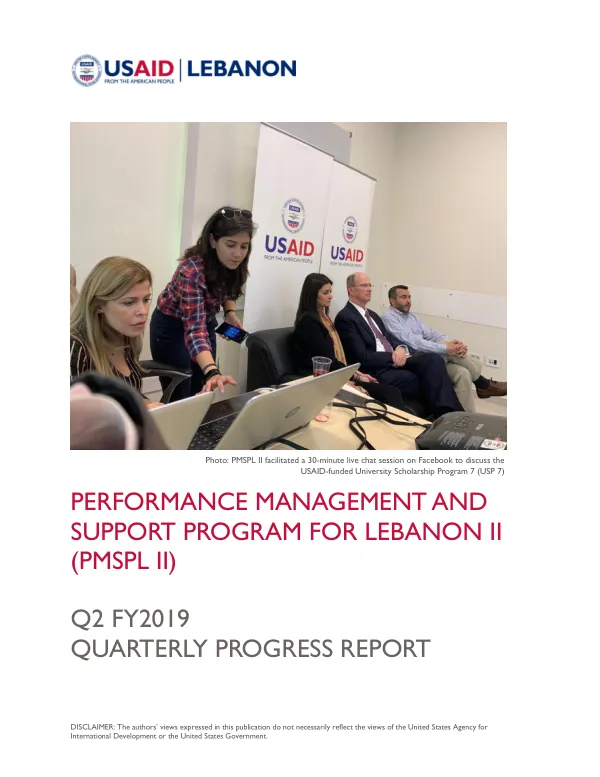
Quarterly Progress Report PMSPL II: Q4FY18
The Country Development Cooperation Strategy (CDCS) for Lebanon, approved in May 2015, outlines a results framework and development objectives for the United States Agency for International Development Mission for Lebanon (USAID/Lebanon) from 2014 to 2018.
2018 · 71 pages
Sign in to readA free account is required to download.
Abstract
The overarching goal of the CDCS is to improve accountability and credibility of public institutions, and to promote broader economic prosperity. This goal aligns with the broader U.S. foreign policy objectives for the region. The CDCS identifies several key development objectives, including improving the business environment, promoting economic growth, and enhancing the capacity of public institutions. To achieve these objectives, the CDCS proposes a range of activities, including support for private sector development, infrastructure development, and institutional strengthening. The Performance Management and Support Program for Lebanon II (PMSPL II) is a key component of the CDCS, aimed at enhancing the performance management and support functions of USAID/Lebanon. The program is designed to improve the effectiveness and efficiency of USAID's activities in Lebanon, and to support the achievement of the CDCS development objectives. The PMSPL II program is implemented by Social Impact, Inc., under a contract with USAID/Lebanon. The program is managed by a team led by the Chief of Party, who is responsible for overseeing the implementation of the program and ensuring that it meets the requirements of the CDCS. The PMSPL II program has three main purposes: to enhance USAID's Monitoring, Evaluation, and Learning (MEL) activities; to provide direct support to USAID's program management; and to enhance USAID's Architecture and Engineering Services. The program is implemented through a range of activities, including training and capacity building, technical assistance, and infrastructure development. The PMSPL II program has made significant progress in achieving its objectives, particularly in the areas of MEL and program management. The program has also made notable contributions to the development of USAID's architecture and engineering services, including the development of a new GIS database and the implementation of a range of infrastructure projects. Despite the progress made, the PMSPL II program has faced several challenges, including delays in the implementation of certain activities and difficulties in accessing certain areas of the country. However, the program has demonstrated its ability to adapt to these challenges and to continue making progress towards its objectives. The PMSPL II program is expected to continue making significant contributions to the achievement of the CDCS development objectives, particularly in the areas of economic growth and institutional strengthening. The program will continue to work closely with USAID/Lebanon and other stakeholders to ensure that its activities are aligned with the CDCS and that it is making a meaningful impact in the country.
Related documents