SOCIAL IMPACT, INC.
Quarterly Progress Report PMSPL II: Q2 FY18
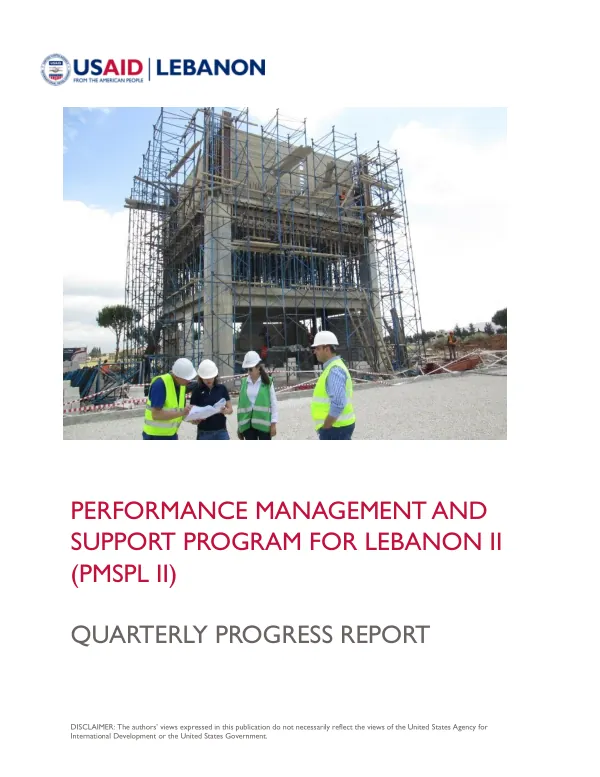
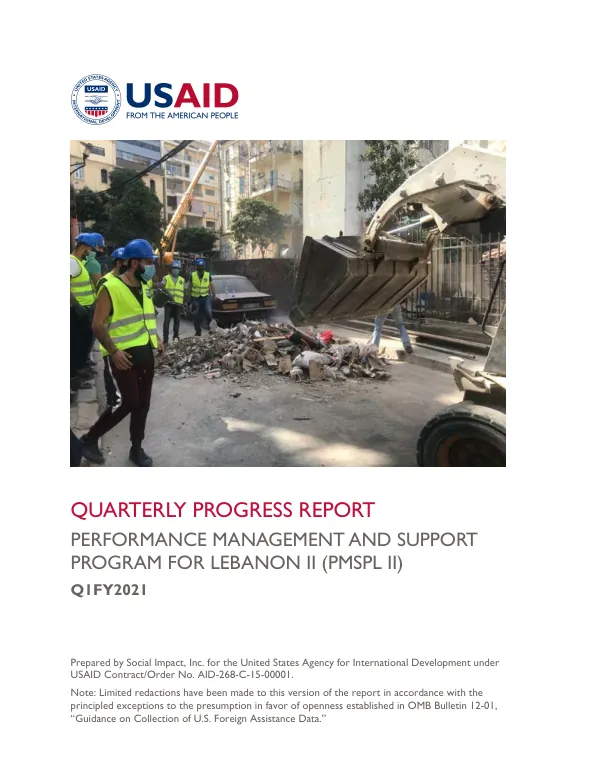
The Performance Management and Support Program for Lebanon II (PMSPL II) is a USAID-funded initiative aimed at enhancing the performance management and support capabilities of the United States Agency for International Development (USAID) in Lebanon.
2018 · 58 pages
Sign in to readA free account is required to download.
Abstract
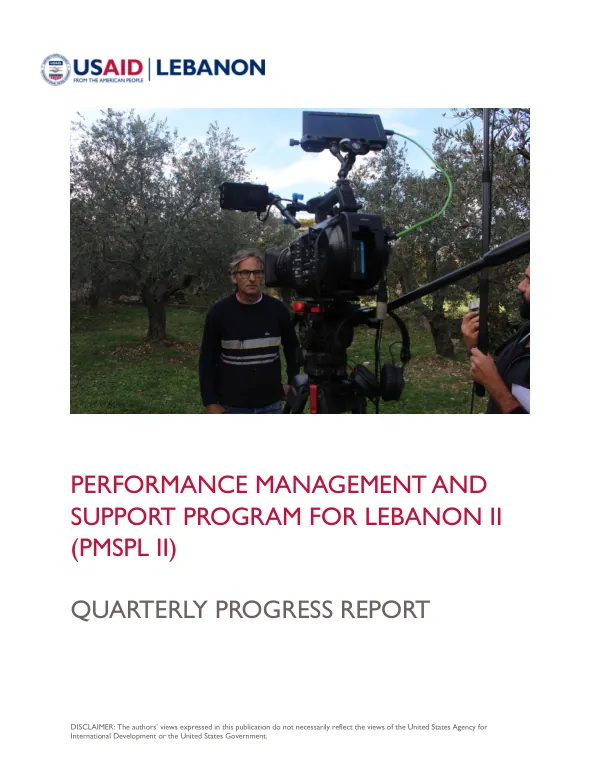
The program is implemented by Social Impact, Inc. and is designed to support the implementation of USAID's Country Development Cooperation Strategy (CDCS) for Lebanon. The program has three main purposes: to enhance USAID's Monitoring, Evaluation, and Learning (MEL) activities; to increase direct support to USAID's program management; and to enhance USAID's architecture and engineering services. To achieve these purposes, the program focuses on several key activities, including the development of a performance management plan, the implementation of a results framework, and the provision of technical assistance to USAID's program management team. During the second quarter of FY2018, the program made significant progress in achieving its objectives. The program team conducted a series of focus group discussions (FGDs) with local stakeholders, including mayors and municipal officials, to gather feedback on the program's activities and to identify areas for improvement. The team also conducted key informant interviews (KIIs) with government officials and other stakeholders to gather information on the program's impact and to identify potential challenges. The program's implementation progress was also monitored and evaluated during the second quarter. The program team conducted a data quality assessment (DQA) to ensure that the data collected was accurate and reliable. The team also conducted a design review (DR) to ensure that the program's design was aligned with USAID's CDCS for Lebanon. The program's financial report for the second quarter of FY2018 indicates that the program has made significant progress in achieving its financial objectives. The program has received funding from USAID and has utilized these funds to support the implementation of its activities. The program's financial report also indicates that the program has made significant progress in achieving its budget objectives, with expenditures totaling $X million during the second quarter. The program's quarterly progress report also highlights several challenges and lessons learned during the second quarter. The program team encountered several challenges, including delays in the implementation of some activities and difficulties in accessing some of the program's target areas. However, the program team was able to overcome these challenges through effective communication and coordination with local stakeholders. The program's quarterly progress report also highlights several critical assumptions that underpin the program's design and implementation. These assumptions include the assumption that the program's activities will have a positive impact on the performance management and support capabilities of USAID in Lebanon, and the assumption that the program's target areas will be able to access and utilize the program's services. The program's quarterly progress report also highlights several planned activities and upcoming events for the third quarter of FY2018. These activities include the implementation of a series of training programs for local stakeholders, the conduct of a series of focus group discussions with local stakeholders, and the provision of technical assistance to USAID's program management team. In conclusion, the PMSPL II program has made significant progress in achieving its objectives during the second quarter of FY2018. The program's implementation progress was monitored and evaluated during the quarter, and the program's financial report indicates that the program has made significant progress in achieving its financial objectives. However, the program team encountered several challenges during the quarter, and the program's quarterly progress report highlights several critical assumptions that underpin the program's design and implementation.