USAID DEC
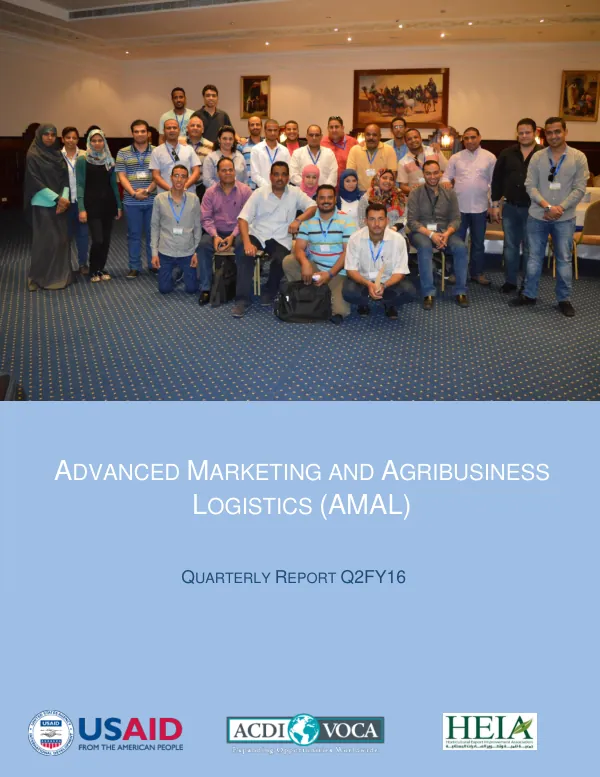
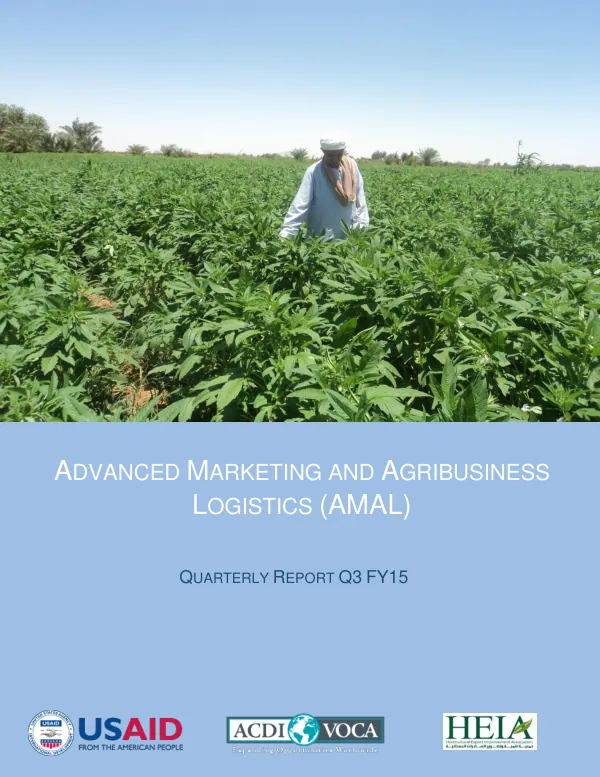
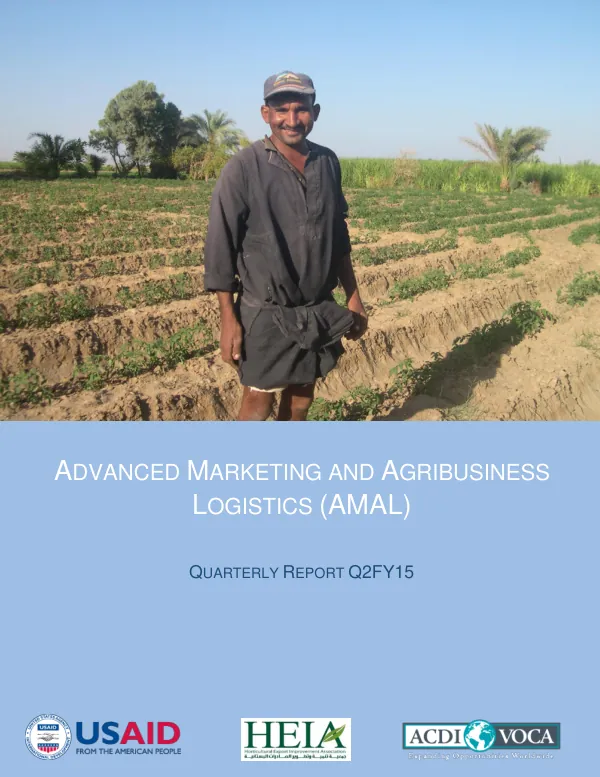
Quarterly Progress Report Q2FY15: Advanced Marketing and Agribusiness Logistics (AMAL) Global Development Alliance
Sign inACDI/VOCA
Quarterly Progress Report Q2FY15: Advanced Marketing and Agribusiness Logistics (AMAL) Global Development Alliance
The Advanced Marketing and Agribusiness Logistics (AMAL) project, a Global Development Alliance, aims to increase the integration of smallholder farmers into high-value commercial horticulture markets in Upper Egypt.
2015 · 18 pages
Sign in to readA free account is required to download.
Abstract
The project is funded by the United States Agency for International Development (USAID) and is implemented by ACDI/VOCA in partnership with the Horticulture Export Improvement Association (HEIA). The project's primary goal is to improve the livelihoods of 4,300 household members in Upper Egypt by building their capacity to integrate into high-value commercial horticulture markets. The project's activities are divided across four components: improving access and use of market intelligence, facilitating value chain linkages, catalyzing market-oriented production practices, and organizing and strengthening producer organizations. The project staff will implement activities in close coordination with HEIA to ensure sustainability of project interventions. These activities will complement infrastructure, such as the perishable terminal, and integrate smallholder farmers into commercial horticulture production systems. During the first quarter of project implementation, the focus was on planning and procurement activities. ACDI/VOCA received the formal award in the final days of Q2FY15. Key personnel and support staff were hired in Cairo and Qena, and an office and a guesthouse were identified in Qena. An initial meeting was held with four associations from the governorates of Aswan, Luxor, Qena, and Suhag to gather information on the prevailing patterns followed in the region. The project also identified an initial group of 60 South Valley University graduates from the three most recent graduating classes for training and in-field services. The group consists of 50% female representation. Procurement activities were also initiated, with four items required to establish the packhouse and the Center of Excellence being procured. The project's sustainability approach includes the integration of agricultural university graduates into project training across all components. This approach creates employment opportunities for graduates and creates a sustainable resource base for horticulture value chain actors. The project will collaborate with the Agricultural Technical Schools (ATS) to identify promising graduates to attend training at the Center of Excellence. The project's progress report highlights the following achievements: the hiring of key personnel and support staff, the identification of an office and a guesthouse in Qena, and the initiation of procurement activities. The report also mentions the challenges faced by the project, including the time leading up to the formal award and the need to ensure sustainability of project interventions. The project's focus on improving the livelihoods of smallholder farmers in Upper Egypt is a critical aspect of the report. The project's activities are designed to increase the integration of smallholder farmers into high-value commercial horticulture markets, which will improve their incomes and improve their livelihoods. The project's sustainability approach, which includes the integration of agricultural university graduates into project training, is also a key aspect of the report. The project's progress report highlights the importance of collaboration with HEIA and the need to ensure sustainability of project interventions. The report also mentions the challenges faced by the project, including the time leading up to the formal award and the need to ensure sustainability of project interventions. Overall, the project's progress report provides a comprehensive overview of the project's activities and achievements. The project's focus on improving the livelihoods of smallholder farmers in Upper Egypt is a critical aspect of the report. The project's activities are designed to increase the integration of smallholder farmers into high-value commercial horticulture markets, which will improve their incomes and improve their livelihood