USAID DEC
Quarterly Progress Report: West Africa Energy Program (WAEP) FY21 Ghana – CLIN 2 Quarter 3 Progress Report
Sign inDELOITTE CONSULTING, LLP
Quarterly Progress Report: West Africa Energy Program (WAEP) FY21 Ghana – CLIN 2 Quarter 3 Progress Report
The West Africa Energy Program (WAEP) in Ghana continued to implement its activities during the period from April 1, 2021, through June 30, 2021.
2021 · 65 pages
Sign in to readA free account is required to download.
Abstract
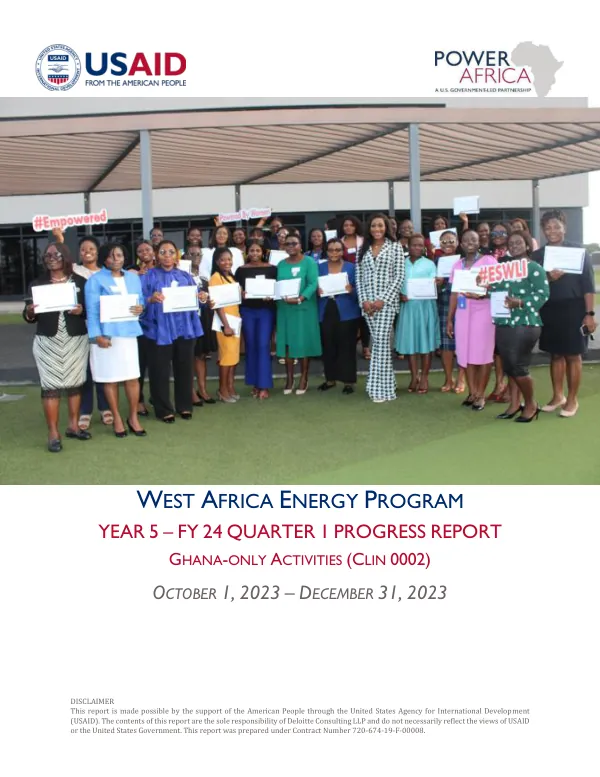
The program's main objective is to reduce the cost of electricity generation by 19 percent, develop the policy framework for distributed energy resources (DER), and provide capacity-building support to private and public sector officials. The WAEP team continued to work with energy sector stakeholders to achieve these objectives. Key activities during this period included continued engagement with the Ministry of Energy, the Electricity Company of Ghana, and other stakeholders to develop the policy framework for DER. The team also provided capacity-building support to private and public sector officials, including training and technical assistance. The WAEP team successfully implemented its Work-from-Home (WFH) system, which involved remote work and communication with all stakeholders. Management monitored the progress and impacts of the COVID-19 pandemic across the program, and the team took steps to mitigate the effects of the pandemic on program activities. The program's financial performance during this period was also reviewed. The WAEP team managed to meet its financial obligations, and the program's budget was executed in accordance with the approved plan. The WAEP team also continued to engage with the Ghanaian government and other stakeholders to support the development of the energy sector. Key activities during this period included continued engagement with the Ministry of Energy, the Electricity Company of Ghana, and other stakeholders to develop the policy framework for DER. The program's performance was also monitored against its indicators. The WAEP team tracked its progress against key performance indicators, including the development of the policy framework for DER, the provision of capacity-building support to private and public sector officials, and the reduction of the cost of electricity generation. The program's success stories during this period included the successful implementation of the WFH system, the provision of capacity-building support to private and public sector officials, and the development of the policy framework for DER. The WAEP team also continued to engage with the Ghanaian government and other stakeholders to support the development of the energy sector. The WAEP team also continued to monitor the risks and challenges facing the program. Key risks and challenges during this period included the impact of the COVID-19 pandemic on program activities, the need to develop a robust policy framework for DER, and the need to provide capacity-building support to private and public sector officials. The program's success stories during this period included the successful implementation of the WFH system, the provision of capacity-building