USAID DEC
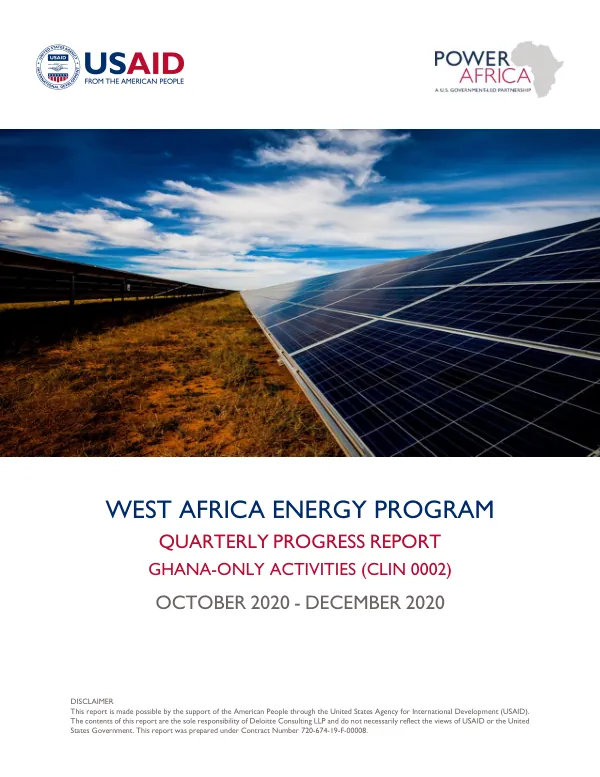
FY21 Ghana – CLIN 2 Quarter 1 Progress Report: Power Africa West Africa Energy Program (WAEP)
Sign inDELOITTE CONSULTING, LLP
FY21 Ghana – CLIN 2 Quarter 1 Progress Report: Power Africa West Africa Energy Program (WAEP)
The West Africa Energy Program (WAEP) is a USAID-funded initiative aimed at promoting energy access and security in West Africa.
2021 · 52 pages
Sign in to readA free account is required to download.
Abstract
The program is implemented by Deloitte Consulting LLP under Task Order No. 720-674-19-F-00008. The quarterly progress report for the period from October 1, 2020, to December 30, 2020, highlights the program's activities and achievements during this period. The report emphasizes the program's support for the policy framework for Distributed Energy Resources (DER). WAEP worked closely with the Energy Commission of Ghana to develop a policy framework for DER, which is expected to promote the development of renewable energy sources and improve energy access in the country. The program also provided technical assistance to the Energy Commission to help them navigate the impacts of the COVID-19 pandemic on their operations. In addition to supporting the policy framework for DER, WAEP also focused on supporting institutions to navigate the impacts of the COVID-19 pandemic. The program provided technical assistance to the Electricity Company of Ghana (ECG) to help them develop a Business Continuity Plan (BCP) to mitigate the effects of the pandemic on their operations. WAEP also worked with the Public Utilities Regulatory Commission (PURC) to provide technical assistance on energy sector reform and regulation. The report highlights several key achievements of the program during the quarter. These include the development of a policy framework for DER, the provision of technical assistance to the Energy Commission and ECG, and the support for energy sector reform and regulation. The program also made significant progress in implementing its activities, with several deliverables submitted during the quarter. The report also highlights several challenges faced by the program during the quarter. These include the COVID-19 pandemic, which had a significant impact on the program's activities, and the need for additional resources to support the program's implementation. The program also faced challenges in engaging with stakeholders and building partnerships with local institutions. The report concludes by highlighting the program's key activities for the next quarter. These include the continued development of the policy framework for DER, the provision of technical assistance to the Energy Commission and ECG, and the support for energy sector reform and regulation. The program also plans to engage with stakeholders and build partnerships with local institutions to support its implementation. The program's organizational chart is provided in Appendix A, which shows the program's structure and key personnel. Appendix B provides information on program travel during the quarter, while Appendix C highlights several success stories from the program. Appendix D provides information on contractual and major technical deliverables submitted during the quarter, and Appendix E provides detailed activity progress. Finally, Appendix F provides a performance indicator tracking chart, which shows the program's progress against its key indicators. Overall, the quarterly progress report highlights the program's achievements and challenges during the quarter and provides a roadmap for the program's activities in the next quarter.