USAID DEC
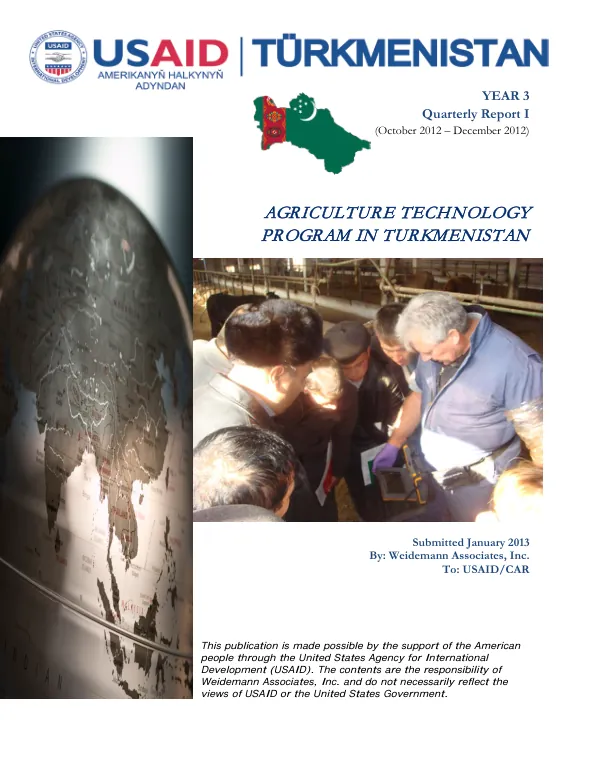
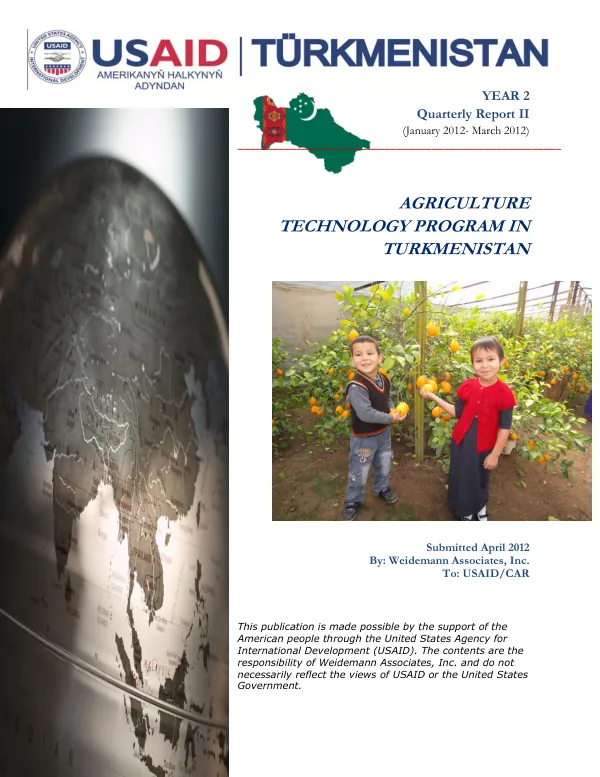
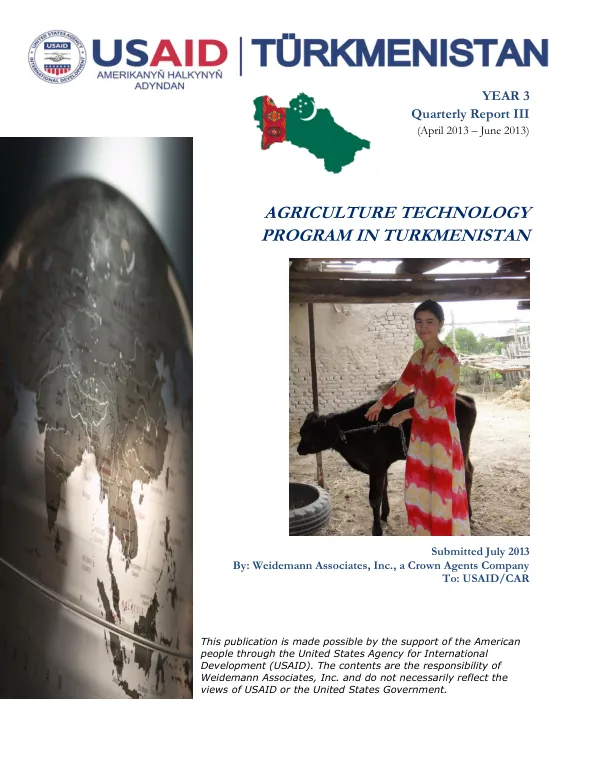
Quarterly Report III (April 2013 – June 2013) for the USAID Agriculture Technology Program in Turkmenistan
Sign inUSAID/ARD, INC.
Quarterly Report III (April 2013 – June 2013) for the USAID Agriculture Technology Program in Turkmenistan
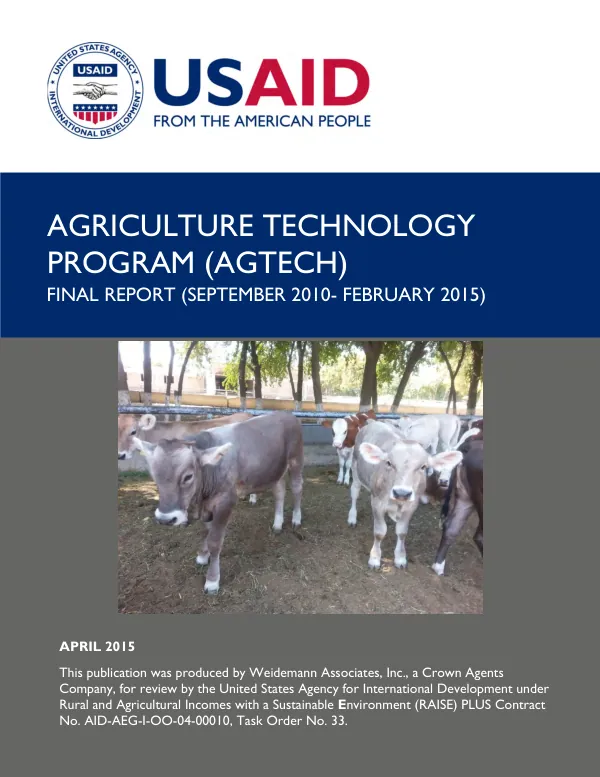
The Agriculture Technology Program in Turkmenistan is a USAID-funded initiative aimed at improving the country's agricultural sector.
2013 · 11 pages
Sign in to readA free account is required to download.
Abstract
The program's third quarterly report for year three, covering the period from April to June 2013, highlights several key activities and achievements. Despite delays in receiving approvals from the Ministry of Foreign Affairs, the program successfully carried out a business-to-business trip to Ukraine for its horticulture partners and producers. The trip provided an opportunity for the project's horticulture specialists to learn about best practices in greenhouse production and irrigation technologies. Additionally, the program participated in two government-organized conferences, the organization of a greenhouse production competition, and the publication of two field handbooks on greenhouse horticulture production. The program's livestock component continued to make progress, with the number of inseminated cows by project AI specialists reaching 3,029 by the end of the quarter. A total of 601 newborn calves were tracked, with an estimated 1,446 premium stock calves born across the country. The program also procured 6,000 doses of bovine semen from World Wide Sires, including two new breeds: Limousin and Jersey. These breeds are expected to meet the high local demand for beef and dual-purpose breeds. The artificial insemination centers in Ahal, Mary, and Dashoguz continued to receive support from the program, with marketing and promotional materials provided to the centers. The program also placed online advertisements and pictures of newborn calves in the local advertisement portal "Vestnik" to reach a wider audience. However, the creation of the National Livestock Union and a change in government policy on livestock sector development has had a direct impact on project activities, with one of the local project partners, Mr. Nepes Karayev, having to hand over his farm to the State. The program's horticulture component also made significant progress, with overall produce figures of the spring and summer harvests in line with expectations. Although farmers in Ahal and Dashoguz identified some diseased crops, favorable weather conditions ensured successes during the third quarter of the project's activities. The program's greenhouse production competition was also a success, with several farmers participating and showcasing their skills in greenhouse production. The program's next steps include expanding follow-on project activities from business-to-business initiatives in the livestock and horticulture sectors. The program also plans to use soil tensiometers to adopt best practices in greenhouse irrigation among project partners. Additionally, the program will begin collecting milk yields from next-generation dairy cattle to capture results.