USAID DEC
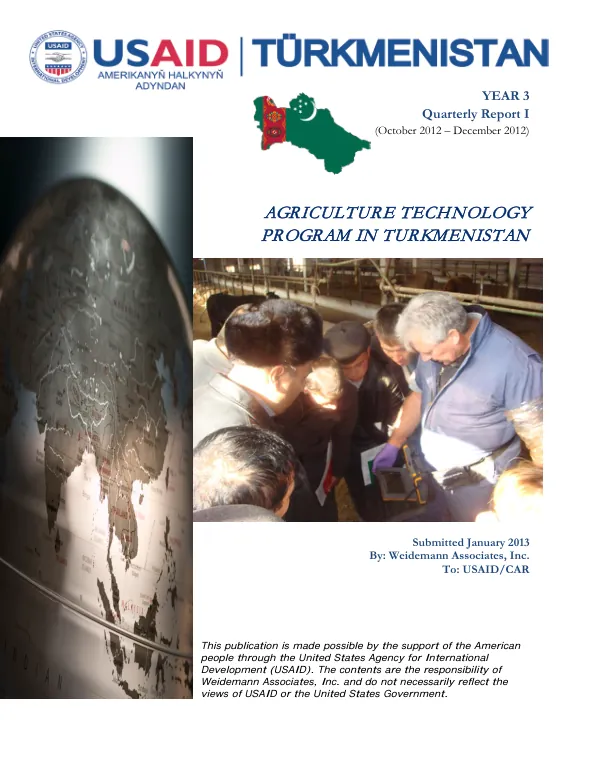
Quarterly Report I: Agriculture Technology Program in Turkmenistan (October 2012 – December 2012)
Sign inUSAID/ARD, INC.
Quarterly Report I: Agriculture Technology Program in Turkmenistan (October 2012 – December 2012)
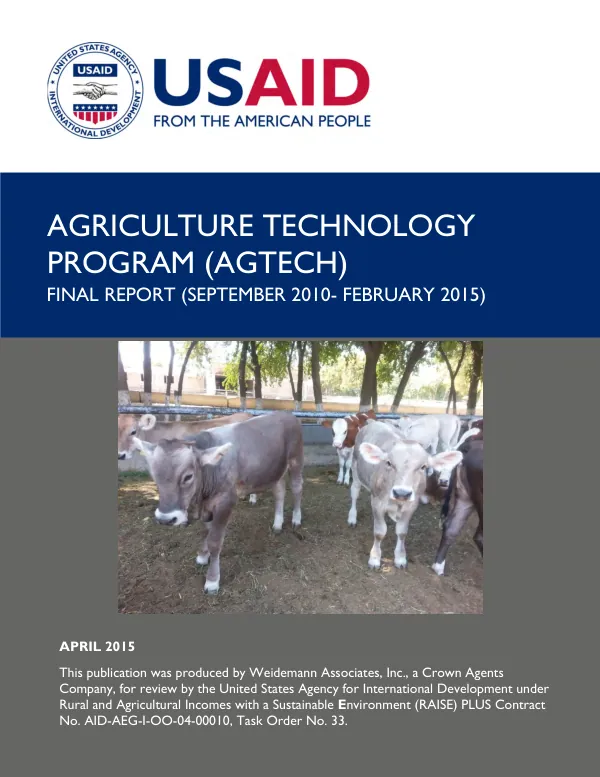
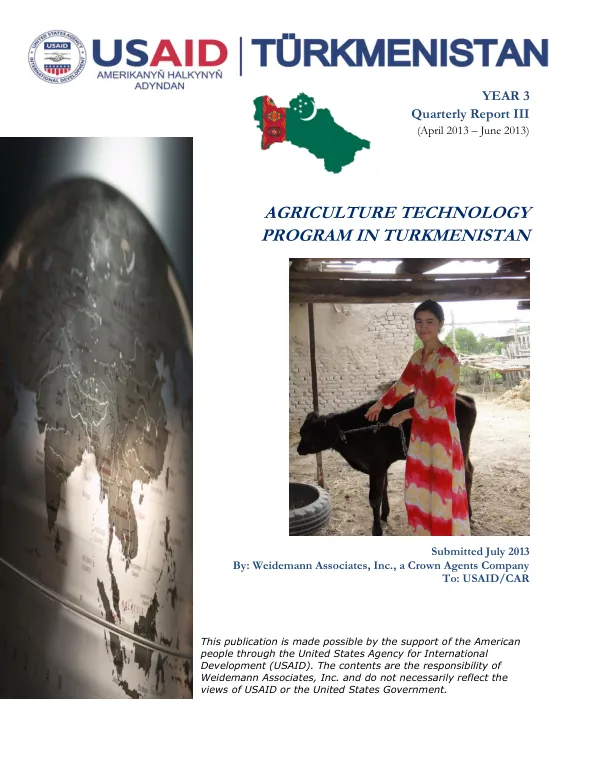
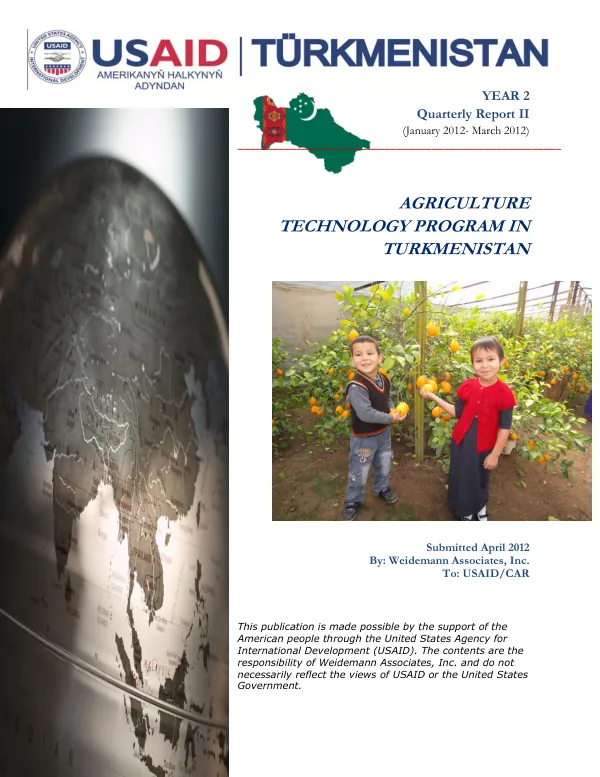
The Agriculture Technology Program in Turkmenistan, also known as AgTech, is a USAID-funded initiative aimed at improving the country's agricultural sector.
2012 · 15 pages
Sign in to readA free account is required to download.
Abstract
The program began in 2010 and is set to conclude in 2013. The project's primary objective is to enhance the productivity and efficiency of Turkmenistan's livestock and horticulture sectors. The livestock component of the program focuses on breeding improvement, with a particular emphasis on artificial insemination (AI) techniques. In the first two years of the project, over 1,900 cows were inseminated, resulting in improved milk production. However, challenges have emerged, including the availability of high-quality AI inputs, such as bull semen, and limited skills in heat and pregnancy detection. To address these issues, the project has established partnerships with organizations like World Wide Sires and Ege Vet to secure sustainable supplies of progeny-tested bull semen and other essential inputs. The project has also implemented a training program for AI specialists, led by Dr. Thomas Graham, CEO of Veterinarians Without Borders. The training aimed to enhance the skills of Turkmen AI specialists in heat detection and pregnancy detection using a combination of palpation and hand-held ultrasound equipment. The training scope was expanded to include various aspects of animal care, such as nutrition, calving assistance, and disease diagnostic methods. In addition to the livestock component, the AgTech project has also focused on the horticulture sector, with a particular emphasis on greenhouse training and seminars. The project has established partnerships with local organizations to provide training and support to horticulture farmers, with the goal of improving their productivity and efficiency. The project has also made significant progress in terms of management and personnel, with Mr. Farhat Orunov taking over as Chief of Party in October 2012. The project has developed a robust work plan with feasible activities designed to maximize project impact while minimizing exposure to risk. The project has also implemented a budget modification to realign the budget without a grants line item, taking into account the difficulty of registering grants in country. The AgTech project has made significant progress in its first three years, with a total expenditure of $2,141,268.80 as of December 31, 2012. The project's next steps include increasing imports of veterinary supplies, conducting country-wide trainings on breeding improvement skills, and leveraging the activities of the Government of Turkmenistan to support program objectives. The project has also identified several challenges, including licensing issues and limited skills in heat and pregnancy detection. However, the project has learned that a new law on registration of veterinary vaccines has been passed through the Ministry of Justice and will be adopted in the near future. This development is expected to provide a great income opportunity to those positioned in the market for this change in policy. Overall, the AgTech project has made significant progress in improving the agricultural sector in Turkmenistan, with a focus on breeding improvement, horticulture, and management and personnel. The project's next steps will be critical in determining its overall success and impact on the country's agricultural sector.