FHI 360
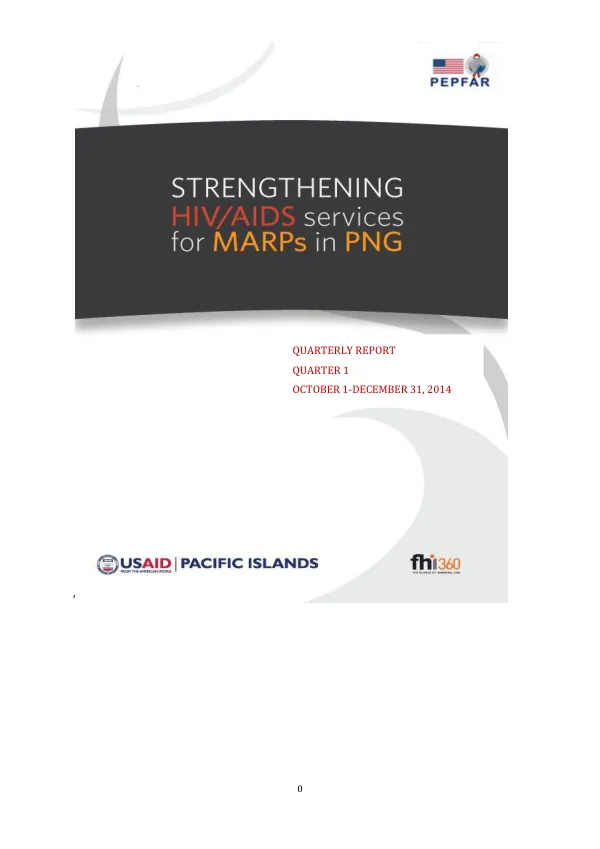
Quarterly Report: Quarter 1, October 1-December 31, 2014
The HIV/AIDS prevention and treatment program in Papua New Guinea, led by FHI 360, aimed to increase demand for HIV/AIDS services among most-at-risk populations (MARPs) and their families.
2014 · 42 pages
Sign in to readA free account is required to download.
Abstract
The program's first quarter report for fiscal year 2015 covers the period from October 1 to December 31, 2014. The program achieved several key milestones during this quarter. Coordinated and supported the first Site Improvement Monitoring System (SIMS) assessment at Kilakila clinic with Joan Atkinson, USAID Health Advisor, from December 10 to 12, 2014. The program reached 294 individuals at risk for HIV, including 133 key populations and 161 other high-risk population members, through individual and small group prevention interventions. This represents a 60.7% increase from the previous quarter. The program also conducted HIV counseling and testing (HCT) services to 1,190 individuals, including 254 key populations and 635 other high-risk populations, and 301 low-risk populations. The number of individuals accessing HCT services increased by 3.5% compared to the previous quarter, mainly due to increased testing among high-risk populations and the Enhanced Outreach Approach (EOA). The program detected 71 HIV-positive cases, including 3 infections among children under 15 years of age. The case-finding rate among all individuals tested remained unchanged from the previous quarter at 6.0%, while the rate among key populations, other high-risk populations, and low-risk populations was 7.9%, 5.7%, and 5.0%, respectively. The program also conducted STI diagnosis and screening for 372 new individuals, including 50 key populations and 172 other high-risk populations. Additionally, 150 individuals were provided STI management services on follow-up visits. The program initiated ART treatment for 53 new HIV-positive individuals, including 2 children below 15 years of age, and the number of clients initiated on ART remained high as in the previous quarter. The program recruited 2 lab technicians for Koki clinic in NCD and Id Inad Clinic in Madang, respectively. FHI 360 distributed a total of 5,690 communication materials promoting HIV and GBV prevention messages in various forms, including risk message cards, posters, pamphlets, T-Shirts, and brochures to project partners in Madang and NCD. The program also participated in several events, including the International Day for the Elimination of Violence Against Women, the International Day of Human Rights, and the World AIDS Day event. The program supported the distribution of IEC materials to the general public and facilitated a quiz show as part of the World AIDS Day event. However, the program faced several challenges during this quarter. Commencing home visits to track clients who have defaulted from treatment or are lost to follow-up remains challenging due to clients providing false or non-specific addresses of their places of residence and logistical challenges for the team to track the clients. The program also faced challenges in reaching more MARPs through the second and third wave of the EOA due to peer educators having no control over the referral processes. The program also lost its program officer responsible for prevention interventions, and FHI 360 will start the recruitment process for a replacement in the second quarter.