USAID DEC
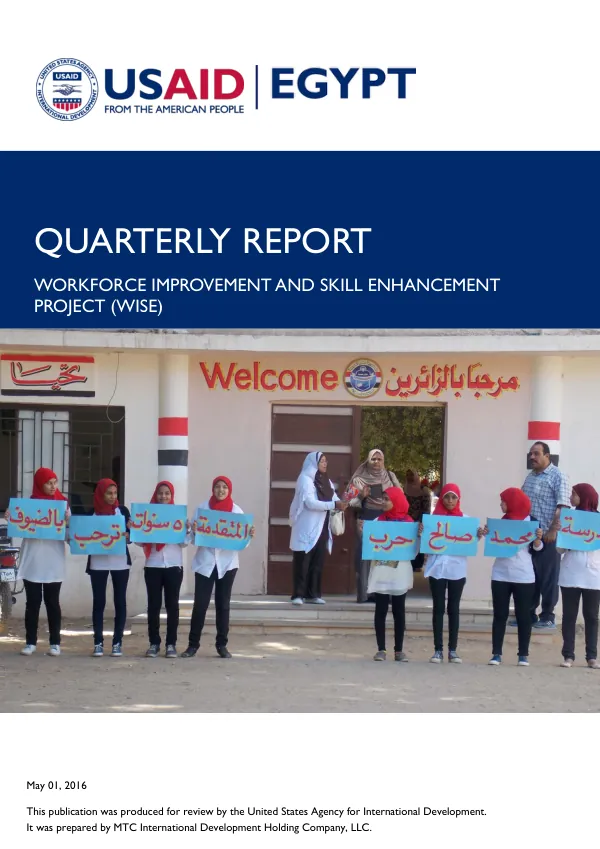
Quarterly Report: Workforce Improvement and Skill Enhancement Project (WISE) First and Second Quarter 2016
Sign inUSAID
Quarterly Report: Workforce Improvement and Skill Enhancement Project (WISE) First and Second Quarter 2016
The Workforce Improvement and Skill Enhancement Project (WISE) in Egypt began in 2016 with the goal of improving the employability of students and the labor market efficiency.
2016 · 32 pages
Sign in to readA free account is required to download.
Abstract
The project was launched on May 1, 2016, with funding from the United States Agency for International Development (USAID). The project's main objective is to enhance the technical, practical, entrepreneurial, innovation, and soft skills of students to meet the demands of the labor market. The project's activities focused on improving the capacity of schools to provide students with the necessary skills, developing curricula that meet international standards, and improving school governance and management. The project also aimed to develop a pilot model for competency-based education and analyze labor skills, productivity, and HR management problems faced by private firms and major policy constraints contributing to restrictive labor regulations. Key accomplishments during the first and second quarters of 2016 include the development of curricula that meet international standards and address market needs, including entrepreneurship and innovation. The project also made progress in improving school governance and management, developing a pilot model for competency-based education, and analyzing labor skills, productivity, and HR management problems faced by private firms. The project's cross-cutting activities focused on sustainable transformation, gender integration, and environmental considerations. The project aimed to promote sustainable transformation by improving the capacity of schools to provide students with the necessary skills and by developing curricula that meet international standards. The project also aimed to integrate gender considerations by promoting equal opportunities for women and girls in the labor market. The project's accomplishments are reflected in the improved capacity of schools to provide students with the necessary skills, the development of curricula that meet international standards, and the improvement of school governance and management. The project's analysis of labor skills, productivity, and HR management problems faced by private firms and major policy constraints contributing to restrictive labor regulations has also provided valuable insights into the labor market. The project's next steps include continuing to improve the capacity of schools to provide students with the necessary skills, developing a pilot model for competency-based education, and analyzing labor skills, productivity, and HR management problems faced by private firms. The project also aims to promote sustainable transformation, gender integration, and environmental considerations in the labor market. The project's geographic focus is on Egypt, with a specific emphasis on the labor market in the country. The project's timeframes are quarterly, with the first and second quarters of 2016 being the focus of this report. The project's recommendations include continuing to improve the capacity of schools to provide students with the necessary skills, developing a pilot model for competency-based education, and analyzing labor skills, productivity, and HR management problems faced by private firms. Overall, the WISE project in Egypt has made significant progress in improving the employability of students and the labor market efficiency. The project's accomplishments reflect its commitment to promoting sustainable transformation, gender integration, and environmental considerations in the labor market.
Related documents