ABT ASSOCIATES
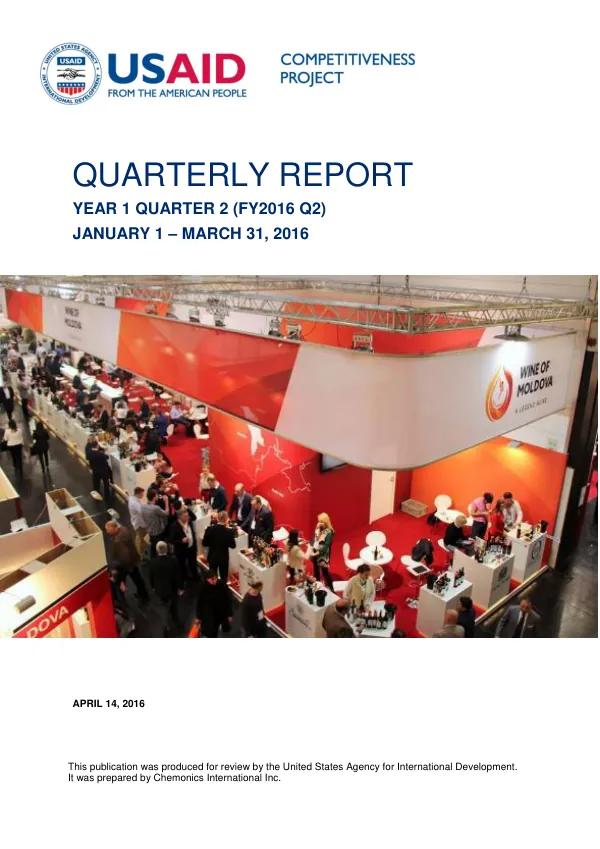
Quarterly Report: Year 1 Quarter 1 (FY2016 Q1)
However, this report focuses on a different project, the Wine and Tourism Development Project in Moldova, implemented by Chemonics International Inc.
2016 · 76 pages
Sign in to readA free account is required to download.
Abstract
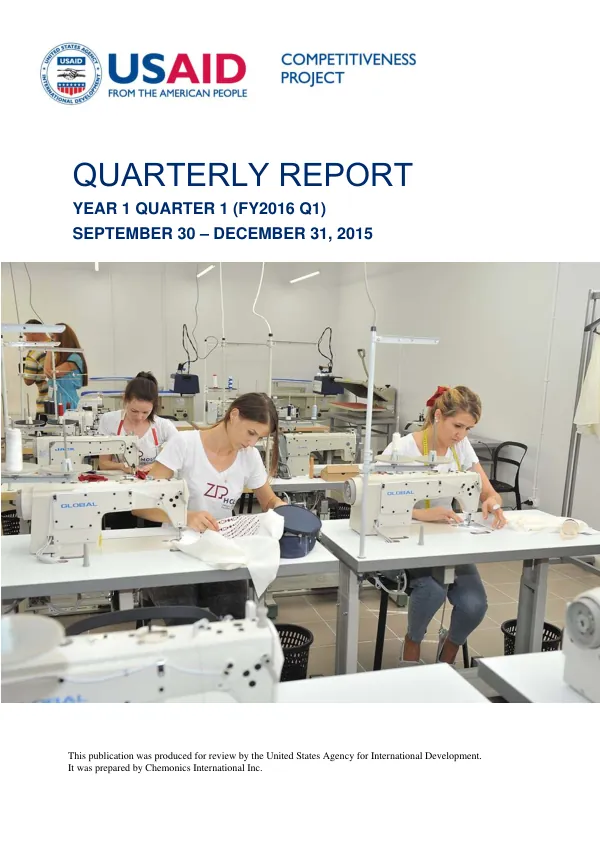
The project aims to improve the competitiveness of Moldova's wine and tourism industries. The project's technical activities during the first quarter of FY16 (September 30 – December 31, 2015) focused on upgrading wine quality and better training the workforce in the wine industry. Activity 1, Upgraded Wine Quality and Better Trained Workforce in the Wine Industry, involved upgrading wine quality and training a better workforce in the wine industry. This included upgrading wine production facilities, improving wine quality, and training wine producers and workers in modern wine production techniques. Another key activity was the development of the Stauceni Viticulture and Winemaking Excellence Center (SEC). The SEC aimed to provide training and capacity-building services to wine producers and workers, as well as to promote the development of the wine industry in Moldova. The project also supported the development of the Wine of Moldova brand and increased awareness about Moldovan wines. In addition to the wine industry, the project also focused on the light industry, particularly the textile and fashion sectors. Activity 1, Develop the ZIPhouse Accelerator and Raise Skills Through Education, aimed to develop the ZIPhouse accelerator and raise skills through education. This included providing training and capacity-building services to textile and fashion producers and workers, as well as promoting the development of the light industry in Moldova. The project also focused on the information and communications technology (ICT) sector. Activity 1, Adapt University-Level ICT Education to Industry Needs, aimed to adapt university-level ICT education to industry needs. This included providing training and capacity-building services to ICT professionals and promoting the development of the ICT sector in Moldova. The project's cross-cutting activities aimed to support implementation and included workforce and innovation, sector engagement, enhancement, and development (SEED) fund, local capacity building program, and increasing access to finance through development credit authority activity. The project's deliverables included the development of the Stauceni Viticulture and Winemaking Excellence Center (SEC), the Wine of Moldova brand, and the ZIPhouse accelerator. The project also supported the development of the light industry, particularly the textile and fashion sectors, and the ICT sector. The project's quantitative results included progress towards quantitative indicators targets, such as the number of wine producers and workers trained, the number of wine production facilities upgraded, and the number of textile and fashion producers and workers trained. The project's qualitative results included the development of the Wine of Moldova brand, the increase in awareness about Moldovan wines, and the improvement in the competitiveness of Moldova's wine and tourism industries. The project's highlights for FY16 Q2 (January – March 2016) included the continuation of the technical activities, the development of the ICT sector, and the support for the government of Moldova in implementing IT industry development policies. The project also planned to continue its cross-cutting activities and deliverables, including the workforce and innovation, SEED fund, local capacity building program, and development credit authority activity.