FLORIDA INTERNATIONAL UNIVERSITY
Reducing Aflatoxin Contamination to Increase Animal Performance
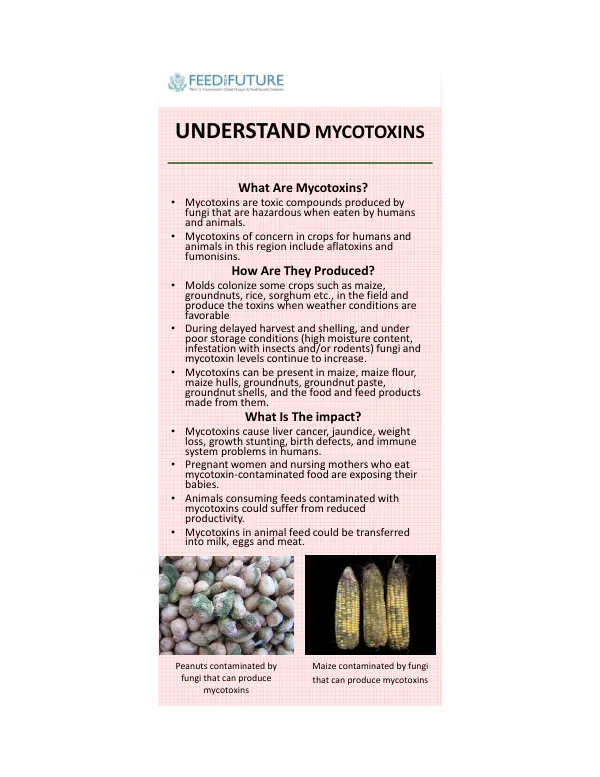
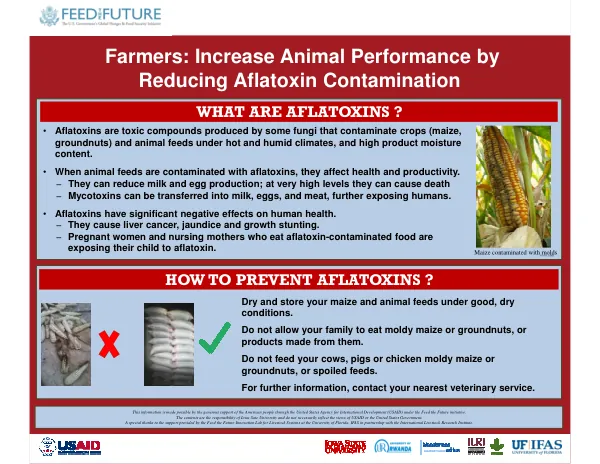
Aflatoxins are toxic compounds produced by certain fungi that contaminate crops such as maize and groundnuts, as well as animal feeds, under hot and humid climates and high product moisture content.
2017 · 1 pages
Sign in to readA free account is required to download.
Abstract
These contaminants can have significant negative effects on both animal and human health. When animal feeds are contaminated with aflatoxins, they can reduce milk and egg production, and at very high levels, can cause death. Furthermore, mycotoxins can be transferred into milk, eggs, and meat, further exposing humans to these toxins. Aflatoxins have been linked to various health problems in humans, including liver cancer, jaundice, and growth stunting. Pregnant women and nursing mothers who consume aflatoxin-contaminated food are also exposing their children to these toxins. Farmers can take steps to reduce aflatoxin contamination in their crops and animal feeds. One key strategy is to store maize and animal feeds under good, dry conditions. This involves preventing moisture from accumulating in the storage area and ensuring that the feeds are kept away from direct sunlight and heat sources. Additionally, farmers should not allow their family members to eat moldy maize or groundnuts, or products made from them, and should not feed their livestock moldy maize or groundnuts, or spoiled feeds. The consequences of aflatoxin contamination can be severe, and prompt action is necessary to mitigate these risks. Farmers who are concerned about aflatoxin contamination in their crops and animal feeds should contact their nearest veterinary service for further information and guidance. The Feed the Future initiative, supported by the United States Agency for International Development (USAID), has provided critical funding for research and development of strategies to reduce aflatoxin contamination in developing countries. The Feed the Future Innovation Lab for Livestock Systems at the University of Florida, in partnership with the International Livestock Research Institute, has played a key role in advancing our understanding of aflatoxin contamination and developing effective solutions to this problem. Their research has highlighted the importance of good storage practices and the need for further research into the development of aflatoxin-resistant crop varieties.
Related documents