PACIFIC CONSULTANTS
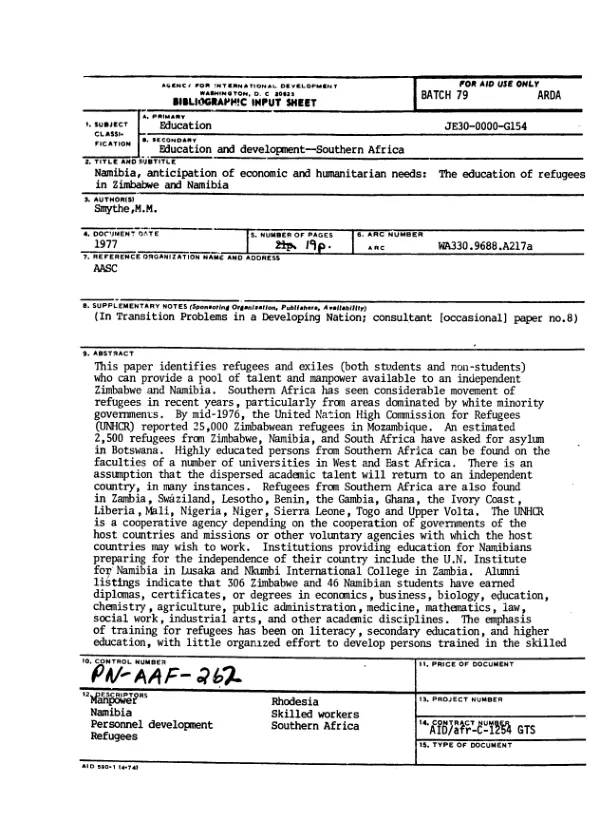
REFUGEES IN SOUTHERN AFRICA
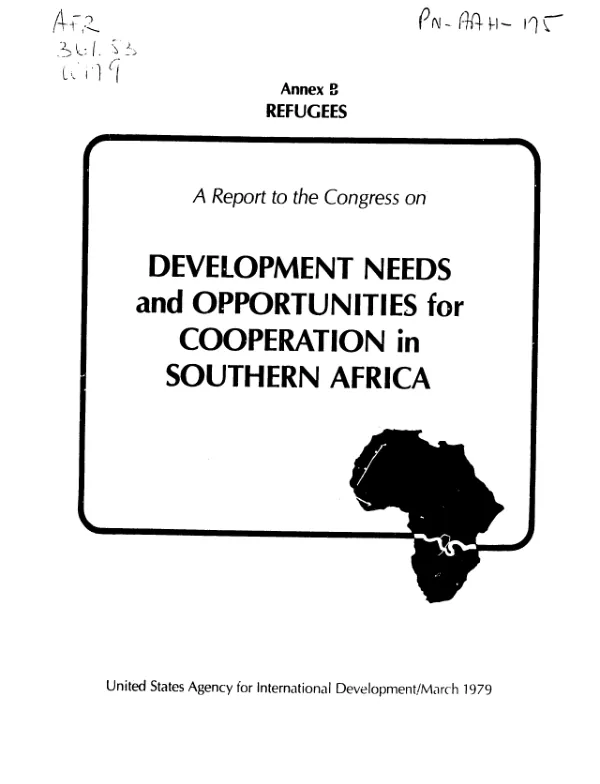
Reports on the problem of refugees in southern Africa and provides recommendations for a U.S.
WALKER, GARY A. · 1970
Sign in to readA free account is required to download.
Abstract
policy to alleviate the problem, especially in regard to training and employment. Report constitutes an annex to an AID report to Congress on development needs and opportunities in the region. At the end of 1978, there were approximately 200,000 refugees in southern Africa. More than 80% of these had fled from white minority-ruled countries (70% from the Republic of South Africa alone) to majority-ruled states, principally Mozambique (with 40% of all refugees) and Zambia (30%). This has caused political, economic, and social problems for host countries, such as military incursions from the home country, inter- and intra party strife between refugee parties, diversion of resources from host country citizens, overcrowding, and increased crime and disease. It is estimated that, except for Angola, the number of refugees in the region will increase to a half million or more within the next decade, and that the average refugee will be more literate, more urbanized, and more politically motivated than at present. This will have the result of raising the total per capita cost of refugee assistance. U.S. policy towards refugees should be based on the principles of non-discrimination, entailing a modification of current U.S. policy along the lines proposed in Senate Bill S.2751; depolitization, stressing humanitarian motives and encouraging reliance on multilateral channels of assistance; and comprehensiveness, providing assistance for relief, rehabilitation, and resettlement or return. Southern African refugees can be classified according to education as well-educated and less-educated, and each of these classes can be sub-classified into those likely to return to their home countries within three years and those likely to stay in the host country for the forseeable future. Program and project initiatives are specified for all four classes of refugees. Specific recommendations include assistance to Mozambique (currently prohibited by U.S. policy) and to Namibian refugees in Zambia. Seven appendices on report-related issues are included, along with a bibliography on the refugee problem and a list of contacts made by the author.