USAID DEC
Regional Afghan Municipalities Program for Urban Populations (RAMP UP) – RC East Monthly Report: June 2011
Sign inDAI
Regional Afghan Municipalities Program for Urban Populations (RAMP UP) – RC East Monthly Report: June 2011
Regional Afghan Municipalities Program for Urban Populations (RAMP UP) - RC East is a USAID-funded program aimed at strengthening municipal governance in urban areas of Afghanistan.
2011 · 39 pages
Sign in to readA free account is required to download.
Abstract
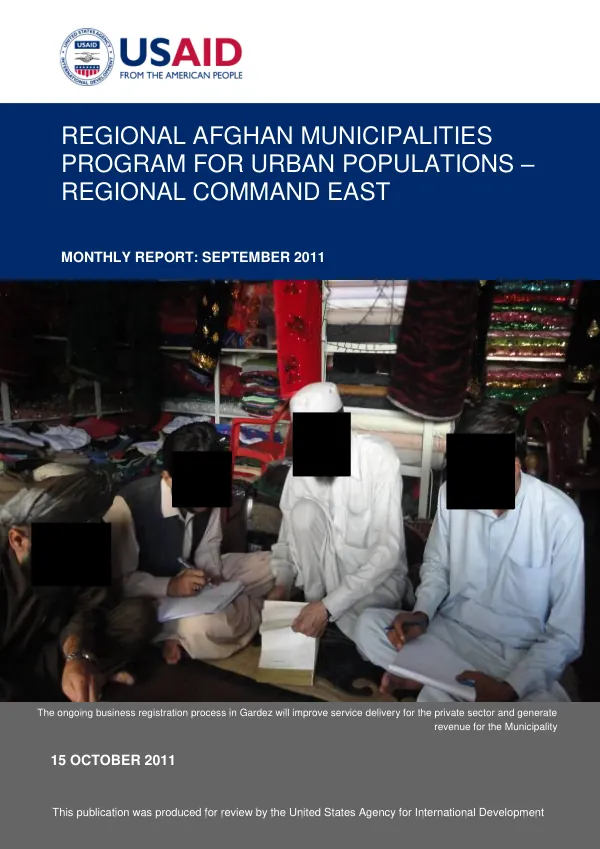
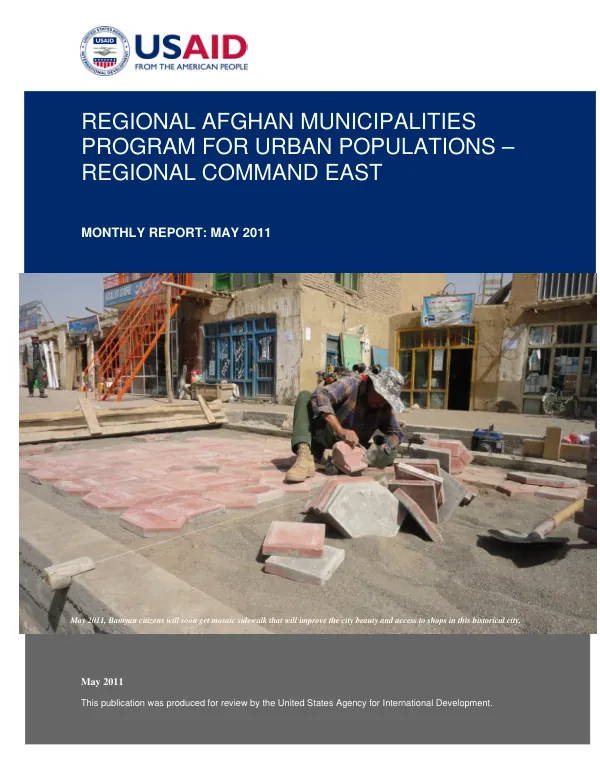
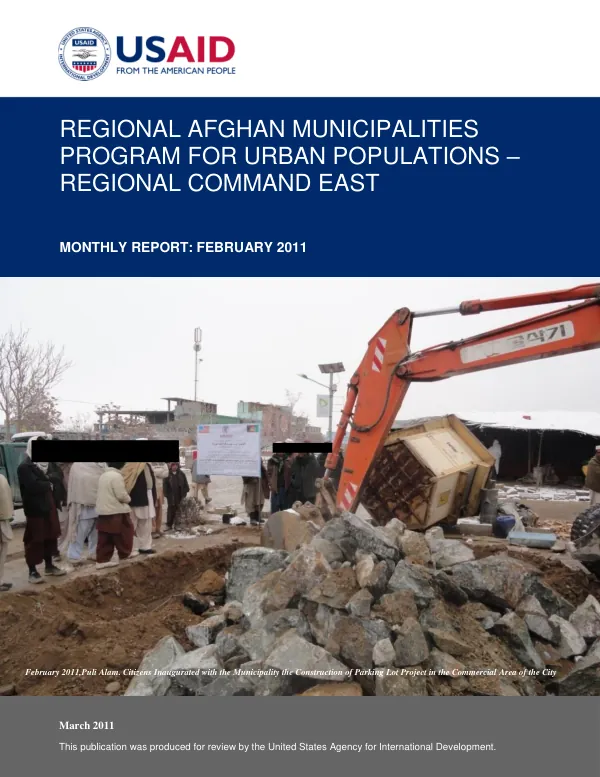
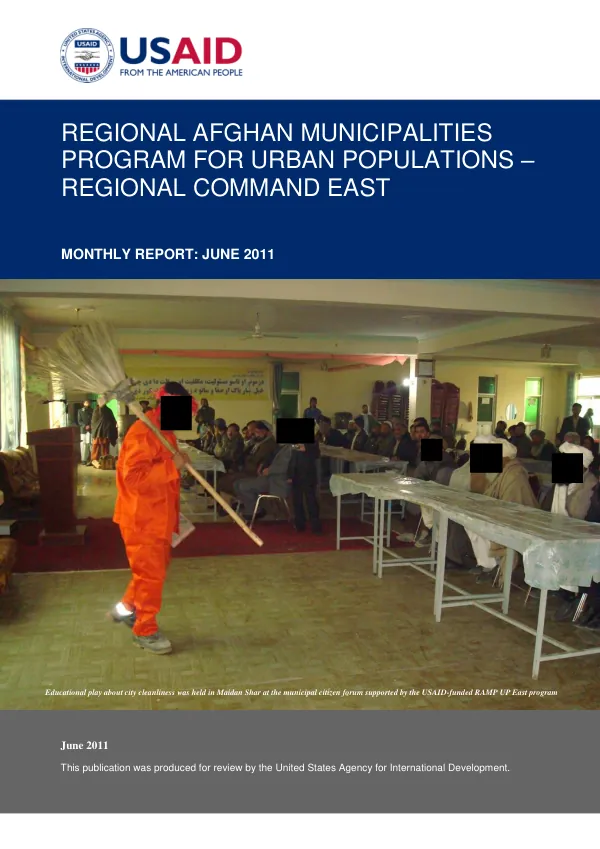
The program focuses on improving the capacity of municipalities to deliver essential services, increase revenue generation, and enhance citizen participation. In June 2011, the program achieved several milestones. In Khost city, the first municipal newspaper was printed, and the municipality published four pages of municipal news in the daily newspaper Milli Ehsan. The municipality also obtained commercial advertisements to subsidize production costs, enabling it to reach out to residents. In Puli Alam, the 7th monthly citizen forum was convened on June 14, where representatives from the shopkeeper's union, media, youth, and community elders participated. Citizens were urged to participate in the city cleaning drive and raise community awareness about city cleanliness. The sustainability of the solid waste management project was also discussed, with citizens encouraged to pay the municipal service fee to support regular trash collection. In Jalalabad, the municipality inaugurated the construction of 50 culverts projects in five districts of the city. Over 70 residents and GIRoA officials attended the inauguration ceremony, where the Head of Wakil Gozars cut the project ribbon and proclaimed that citizens could now walk on a dry road rather than a muddy one. In Sharana, construction work continued on the two public latrines projects inaugurated in May. Both projects are scheduled to be completed by the end of July, and 28 laborers benefited from temporary cash-for-work opportunities generated by the project. Operations and maintenance costs for the public toilets will be offset by charging user fees. In Gardez, the municipality's Revenue Generation Officer distributed business licenses to shopkeepers in the city, along with a distribution schedule and tax collection timeline. This improved business registration and licenses distribution will help the municipality generate further revenue. In Mahmud Raqi, the Mayor announced plans to establish municipal clubs at schools and educate children about governance practices and city cleanliness. In Charikar, 19 citizens, including 9 women, participated in the citizen forum on June 19. The retaining wall construction site in Asadabad was supervised by the municipal Public Works Engineer. In Mehtarlam, the side walk under construction was monitored, and in Bazarak, the Revenue Generation Officer conducted a review of the last 6 years of municipal income. The report will help the Mayor understand the strengths and weaknesses of municipal revenue generation activities, and an economic development plan will be drafted to stimulate local economic development and expand revenue generation opportunities. In Bamyian, the municipality began an analysis of the tax collection mechanism, which found that citizens in 7 of the 14 city districts do pay taxes because they have access to trash collection and other municipal services. The report urged the municipality to ensure equal services delivery to all districts and focus on economic development opportunities to increase revenue opportunities. Overall, the RAMP UP program continues to make progress in strengthening municipal governance in urban areas of Afghanistan, improving the capacity of municipalities to deliver essential services, increase revenue generation, and enhance citizen participation.