USAID DEC
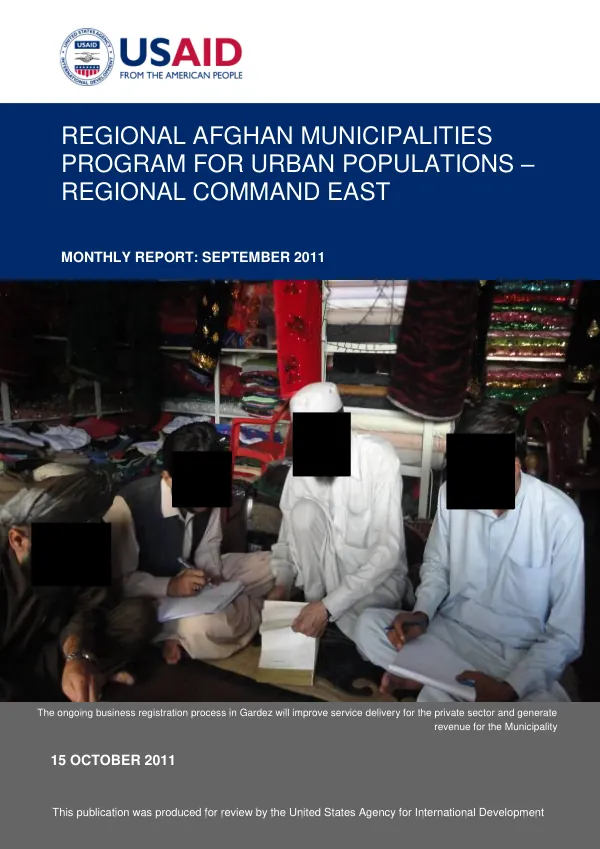
Regional Afghan Municipalities Program for Urban Populations – RC East Monthly Report: September 2011
Sign inDAI
Regional Afghan Municipalities Program for Urban Populations – RC East Monthly Report: September 2011
Regional Afghan Municipalities Program for Urban Populations – Regional Command East is a program aimed at improving municipal services and generating revenue for municipalities in Afghanistan.
2011 · 48 pages
Sign in to readA free account is required to download.
Abstract
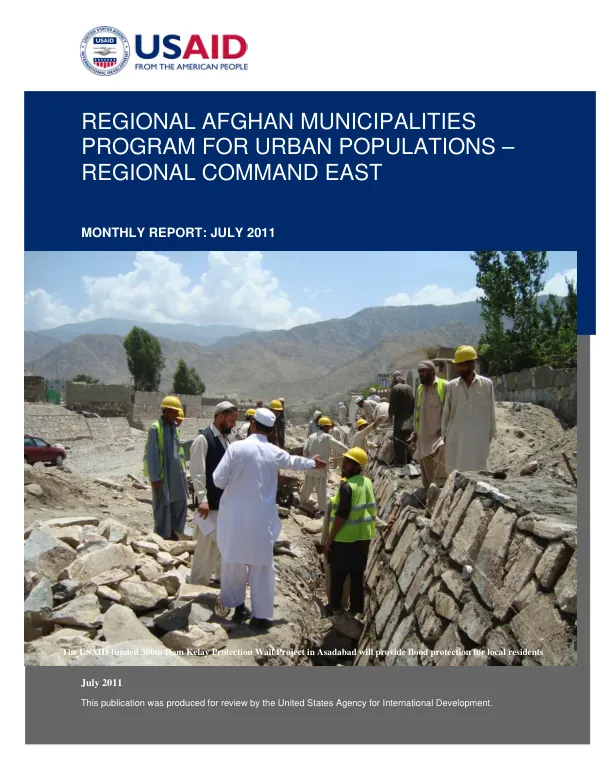
The program is sponsored by the USAID/Afghanistan office and is implemented by DAI. The program's main objective is to strengthen the capacity of municipalities to deliver public services and improve the quality of life for urban residents. To achieve this goal, the program focuses on three key areas: municipal governance, infrastructure development, and economic growth. In the Kabul Area, the program has been working with the Maidan Shar, Bamyan, and Ghazni municipalities to improve their service delivery and revenue generation. The program has implemented various interventions, including farmer training programs, infrastructure development, and market linkage facilitation. In the Charikar Area, the program has been working with the Charikar, Bazarak, and Mahmud Raqi municipalities to improve their service delivery and revenue generation. The program has implemented various interventions, including infrastructure development and economic growth initiatives. In the Jalalabad Area, the program has been working with the Jalalabad, Mehterlam, and Assadabad municipalities to improve their service delivery and revenue generation. The program has implemented various interventions, including infrastructure development and economic growth initiatives. In the Gardez Area, the program has been working with the Puli Alam, Khost, Sharana, and Gardez municipalities to improve their service delivery and revenue generation. The program has implemented various interventions, including infrastructure development and economic growth initiatives. The program has also been working on a flood protection project in Assadabad, which aims to protect the road and villagers from seasonal flooding. The project consists of constructing 18 culverts, improving the road, and building a 660-meter protection wall alongside the Peach River. The project has generated 1,715 person-days of local labor and has paid out AFN 614,428 in daily wages. In addition, the program has been promoting citizen engagement and participation in municipal decision-making processes. In Ghazni, the municipality convened a citizen forum to select and prioritize new service delivery projects for the Municipal Improvement Plan. The forum was attended by over 30 participants, including local business associations, youth associations, community elders, shopkeepers, citizens, and local government line directorates. The program has also been working on a children's drawing contest in Charikar, which aims to raise awareness about environmental issues and promote community involvement in keeping the city clean. The contest will provide opportunities for adolescents and children to become more aware of their environment through art with the theme "Let's Take Care of Our City."