USAID DEC
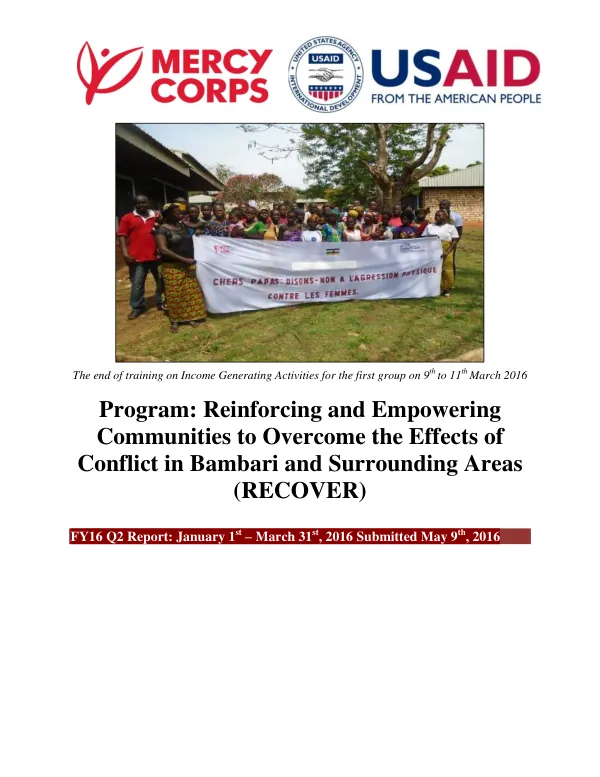
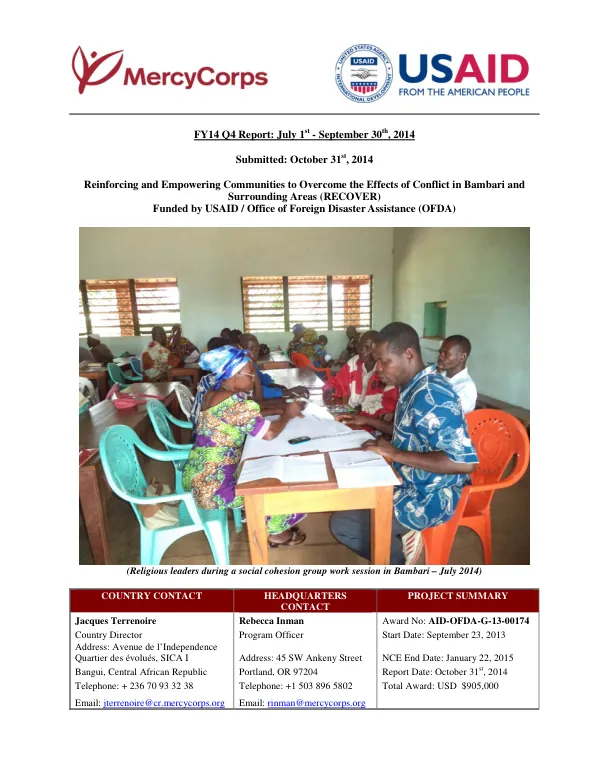
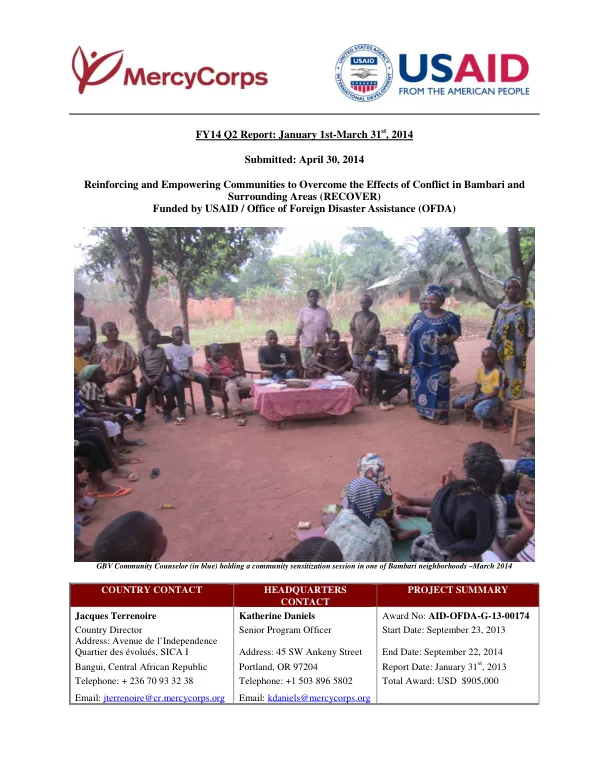
Reinforcing and Empowering Communities to Overcome the Effects of Conflict in Bambari and Surrounding Areas (RECOVER II) FY16 Q4 Report
Sign inMERCY CORPS INTERNATIONAL
Reinforcing and Empowering Communities to Overcome the Effects of Conflict in Bambari and Surrounding Areas (RECOVER II) FY16 Q4 Report
The Reinforcing and Empowering Communities to Overcome the Effects of Conflict in Bambari and Surrounding Areas (RECOVER II) project aims to mitigate the negative effects of persistent conflicts and strengthen community resilience in Bambari and its surrounding areas.
2016 · 9 pages
Sign in to readA free account is required to download.
Abstract
The project's goal is to provide support to internally displaced households in Bambari to meet their basic needs, recover livelihoods, and return to their former neighborhoods. During the reporting period from July 1st to September 30th, 2016, the project achieved significant results. The Listening Center responded to 121 cases of conflict-related violence and gender-based violence (GBV), supporting 12 men, 94 women, and 15 children. Community-based GBV prevention activities were organized, reaching 14,640 people, including 2,984 men, 4,644 women, 3,699 girls, and 3,313 boys. These activities focused on themes such as physical violence, GBV forms and consequences, and what to do when affected by violence. In addition to GBV prevention, the project also focused on providing livelihood support to vulnerable households. Mercy Corps continued to provide livelihood support to 200 beneficiaries, with 10 VSLAs organized among these beneficiaries. The average amount saved per member was 16,545 XAF ($26.57 USD), and the average amount accessed in credit was 17,704 XAF ($28.43 USD). The reimbursement rate was 70%, indicating a high level of trust and cooperation among the beneficiaries. The project also made significant progress in providing psychosocial support to vulnerable individuals, including children, women, and families affected by violence and displacement. The Listening Center received 121 new cases of GBV and conflict-related violence during the reporting period, in addition to serving 119 previously-identified cases. These 240 individuals received psychosocial support and referrals to locally available services as needed. Furthermore, the project implemented Play Therapy activities, which aimed to provide psychosocial support to children affected by conflict and displacement. During the reporting period, routine activities continued for the 17 Play Therapy clubs, with 34 coaches trained in "Sport for Peace" and "Sport for Development" methodologies. A total of 207 Play Therapy sessions were conducted with 4,053 children, including 720 members of Play Therapy Clubs and 3,333 other children from the community. The security situation in the Ouaka Prefecture remained unstable during the reporting period, with security incidents increasing in the areas just outside of Bambari town. Despite these challenges, the project continued to provide essential services to vulnerable households, including livelihood support, psychosocial support, and GBV prevention activities. The project's progress was marked by significant achievements, including the provision of livelihood support to 200 beneficiaries, the response to 121 cases of GBV and conflict-related violence, and the provision of psychosocial support to 240 individuals.