USAID DEC
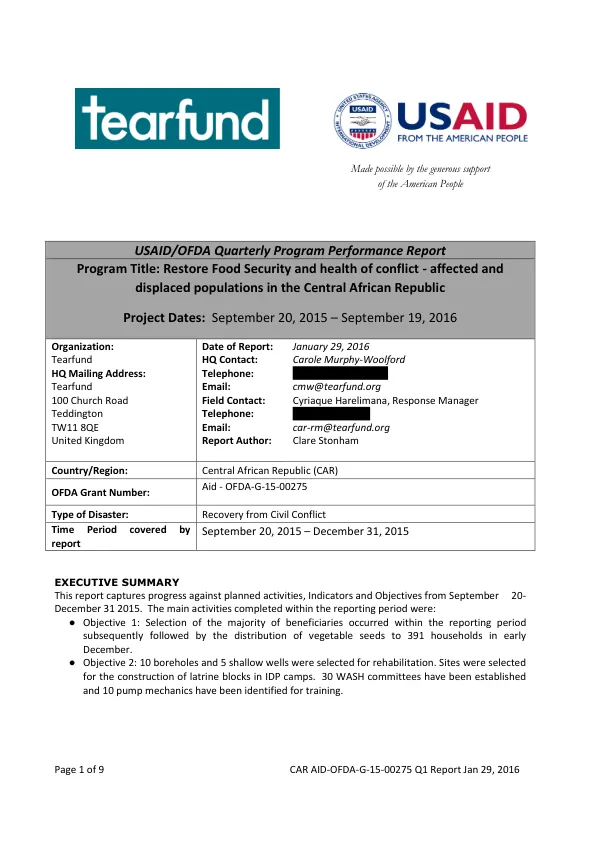
USAID/OFDA Performance Baseline Data Report: Restoring livelihoods and health of conflict-affected communities in South-western Central African Republic (IDPs, Returnees and Host Communities)
Sign inTEARFUND INTERNATIONAL
USAID/OFDA Performance Baseline Data Report: Restoring livelihoods and health of conflict-affected communities in South-western Central African Republic (IDPs, Returnees and Host Communities)
The prefecture of Lobaye in the Central African Republic was severely affected by the conflict that started in 2012.
2014 · 8 pages
Sign in to readA free account is required to download.
Abstract
The violent conflict between the anti-balaka and seleka militia groups led to a critical humanitarian situation in the region, with mass displacement, abandonment and/or destruction of livelihoods, health and educational infrastructure, looting, and violation of human rights. The conflict exacerbated a situation of already chronic poverty in the area. A baseline survey was conducted by Tearfund's Operational Response team between July and September 2014 to assess the needs in the sub-prefecture of Mbaiki, including the townships of Mbata, Lesse, Nola, and Bogongo-Gaza. The survey aimed to provide baseline data against which progress toward the project objectives could be monitored. The survey was based on a sample of 542 households, with a total of 481 households actually visited due to difficulties in accessing certain villages because of insecurity. The survey found that 52% of respondents were female and 48% were male, with 88% of households assessed being headed by men. Adult women represented 23% of the sample, with 8% being lactating women and 4% being pregnant at the time of the assessment. The average household size was 8, and 51% of adult women surveyed were widows, 33% were separated or divorced, and 11% had husbands who were in migrant laborers. The survey also found that 26% of respondents were internally displaced persons (IDPs), most having been displaced from the sub-prefecture of Boda as a direct result of the conflict. Among the respondents, 83% of children had completed school or were currently in school, and people with disabilities and the elderly represented 5% of the sample population. Livelihoods had been severely disrupted by the conflict and instability experienced in the region for the past 18 months. Many households had to flee to the bush to escape raids by militia, and when they returned, they found their homes looted, tools stolen, and crops and seed stores destroyed and emptied. Agricultural production in Lobaye was a principal source of food and income for households, complemented by produce that households bought in the market. The sale of agricultural produce represented 59% of income for households, while the selling of goods from hunting, fishing, and gathering of natural goods represented the second source of income. The monthly income of households in the sample varied between 200 and 205,000 XAF, with an average of 17,115 XAF (35 USD), while this was reported to be around 45,000 XAF (90 USD) before the conflict. 77% of household income went toward purchasing food, and families taking loans to cover their needs reported that 3% of their loan was used to cover children's educational needs. 74% of households had an income lower or equal to 45 USD, and the average household size of 8 meant that an individual's monthly income was around 6 USD per month. The effects of the conflict, displacement, looting, and destruction that communities had experienced meant that planting cycles had been disrupted, access to food supplies was currently severely limited, and diet diversity was on the decline. As a result, malnutrition was a mounting problem, particularly among children. In the selected households, 27% of children had been admitted to a therapeutic program in health centers during the last six months, and the time of treatment varied between 5 and 90 days. The baseline survey also found that diarrhoea was a major health issue in Lobaye, largely resulting from poor sanitation practices, lack of access to clean water, and lack of sanitation infrastructure. The household survey indicated that 31% of children under five had diarrhoea at least once during the previous 2 weeks. These issues had been exacerbated by the conflict and ongoing insecurity in the region, as many target beneficiaries had been displaced and access to what little facilities they had before had now been cut off completely. The baseline survey sought to investigate a range of factors that affect food security, including the number of months of food self-sufficiency, land use and agricultural activity, the number of beneficiaries with acceptable food consumption scores, and the state of local markets. All of these areas had been impacted by the conflict and insecurity in CAR and had served to severely undermine food security in the affected communities. 93% of households stated that their agricultural activities represented their primary source of food provision, while 6% of households would buy from the market.
Related documents