MERCY CORPS INTERNATIONAL
FY14 Q3 quarterly report
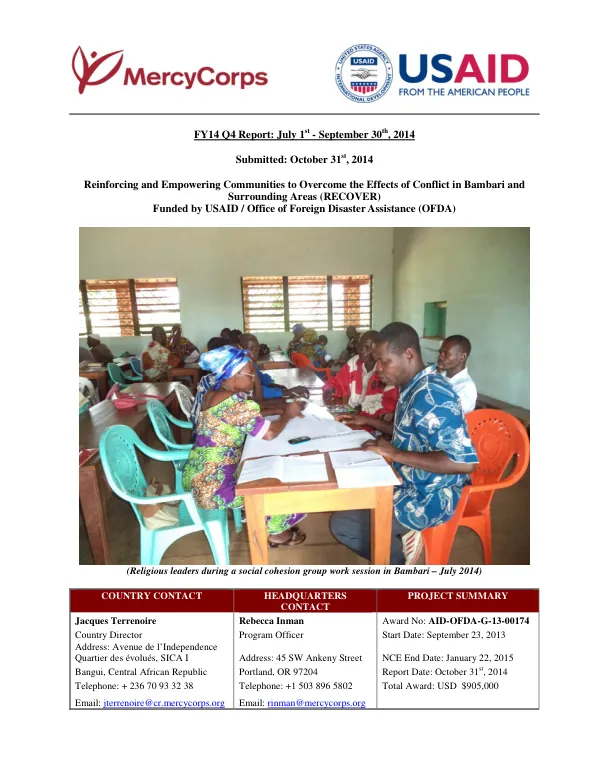
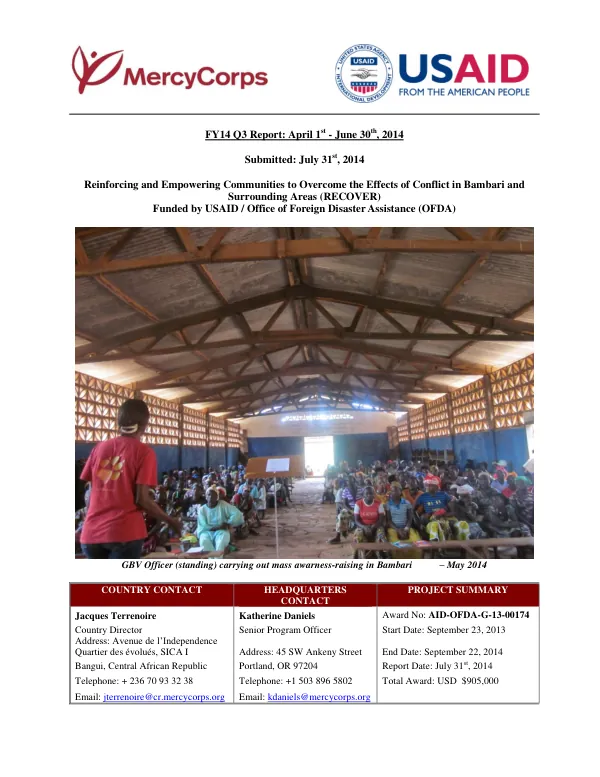
The RECOVER program in Bambari and surrounding areas was designed to mitigate the effects of conflict and reinforce community resilience.
2014 · 9 pages
Sign in to readA free account is required to download.
Abstract
The program was launched in September 2013 with funding from USAID's Office of Foreign Disaster Assistance (OFDA) and was implemented by Mercy Corps. The program aimed to provide protection services, including prevention and response to gender-based violence (GBV), as well as socio-economic interventions to support internally displaced persons (IDPs) and vulnerable communities. The Ouaka Prefecture, where the program was implemented, has been particularly affected by the conflict, with widespread insecurity and human rights abuses reported. The region is one of the most vulnerable prefectures in terms of food insecurity, and over 30% of those displaced by the conflict reside in the area. The RECOVER program was designed to address the urgent needs of those affected by the conflict, with a focus on psychosocial support, GBV prevention and response, health, and economic support. During the third quarter of 2014, the program made meaningful progress despite the volatile security situation in Bambari and its surroundings. The program launched livelihoods restoration and activities to support medium and small enterprises (MSEs), set up play therapy activities with children's clubs, and monitored protection activities through community-based mechanisms. Social cohesion activities were also implemented, with a strong commitment from relevant stakeholders. However, the security situation in Bambari and its surroundings continued to deteriorate during the reporting period. Several heavy battles between Anti-Balaka militia and Ex-Seleka elements took place, resulting in many casualties and the displacement of over 4,000 people. Anti-Balaka militias also perpetrated isolated killings in surrounding villages, and the increased presence of French troops in the area led to demonstrations by Muslim communities. The new Seleka coalition leadership was established, and violent clashes between French troops and Seleka forces resulted in the displacement of over 13,000 people. As a result of the security incidents, Mercy Corps staff working on the program suffered heightened levels of stress and fear, and the project team faced challenges in meeting targeted populations in their usual locations. In late June 2014, Mercy Corps made the decision to put program activities temporarily on hold and evacuate staff. Despite the challenges, the program was able to roll out all activities related to its two objectives in the economic recovery and market systems sector and the protection sector. The program aimed to address the urgent socioeconomic needs of vulnerable conflict-affected populations, particularly youth and women, in order to boost economic recovery and ease the impact of displacement. The geographic area of focus was Bambari and surrounding areas, Ouaka Prefecture, Central African Republic. The program's performance summary indicates that during the reporting period, Mercy Corps was able to reach a total of 2,836 beneficiaries, including 0 IDPs. The program's cumulative period target was 17,250, with 2,200 IDPs targeted. The program's progress to date indicates that it has not yet reached its targets in the economic recovery and market systems sector, with a cumulative period reached of 0. However, the program has made progress in the protection sector, with a cumulative period reached of 2,836. The program's indicators for new livelihoods development activities, including the number of people assisted through new livelihoods development activities, the number of new MSEs started, and the percentage of people continuing in their new livelihoods by program completion, were not met during the reporting period. However, the program did channel a total of $58,800 into the program area through sub-sector activities.