USAID DEC
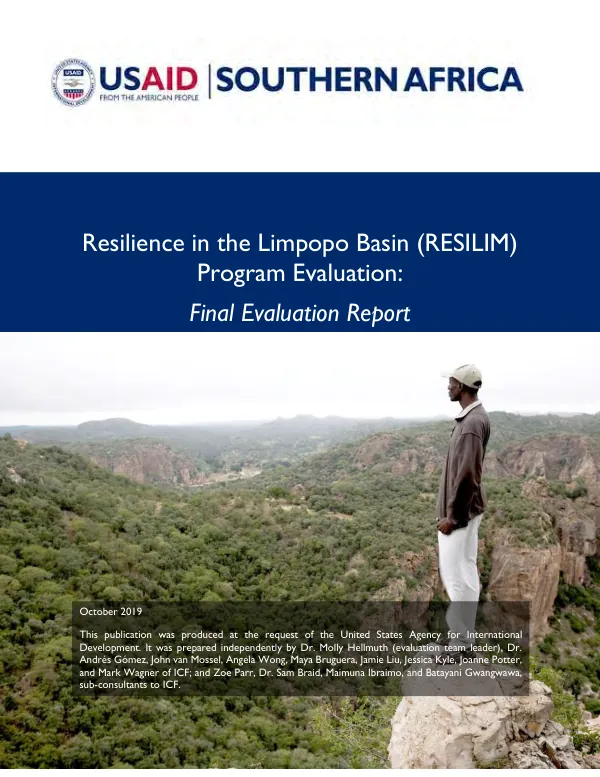
Resilience in the Limpopo Basin (RESILIM) Program Evaluation: Final Evaluation Report
Sign inCHEMONICS
Resilience in the Limpopo Basin (RESILIM) Program Evaluation: Final Evaluation Report
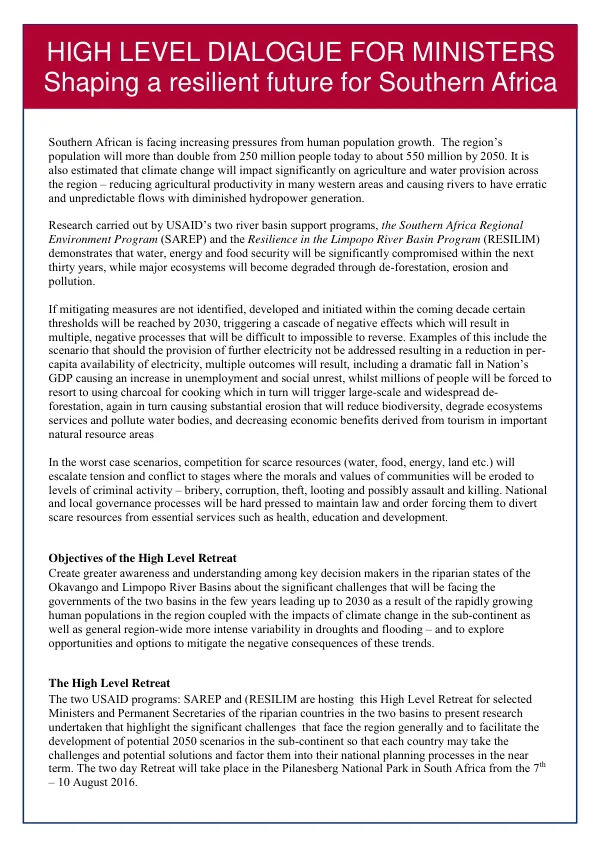
The Resilience in the Limpopo Basin (RESILIM) program is a transboundary water resource management initiative conducted by the United States Agency for International Development (USAID) to improve the resilience of the Limpopo Basin's communities and ecosystems to climate change impacts.
2019 · 93 pages
Sign in to readA free account is required to download.
Abstract
The program is composed of two implementing mechanisms: RESILIM-B and RESILIM-O. RESILIM-B, implemented by Chemonics International, ran from 2012 to 2017 in all four Limpopo Basin countries: Botswana, Mozambique, South Africa, and Zimbabwe. RESILIM-O, which began in 2012, focuses on the Olifants River Basin. Climate change is projected to stress water resources and exacerbate water quality and water supply deficits in the Limpopo Basin. The region may experience more frequent flooding and droughts, affecting livelihoods, agricultural productivity, and ecosystem health. Other stressors, such as poaching and land conversion, can further put the region's biodiversity at risk. The RESILIM program aims to address these challenges through transboundary water resource management and community-based initiatives. The program evaluation, conducted by ICF, used a theory-based, mixed-methods approach to analyze data from a desk study, key informant interviews, and questionnaires. The evaluation aimed to assess the program's effectiveness in improving resilience and inform future USAID programming. The evaluation findings and conclusions are presented in the report, highlighting key achievements and areas for improvement. The RESILIM-B program achieved significant results, including the establishment of a basin-wide water management framework and the development of a water resources management plan. The program also supported the implementation of water conservation measures and the promotion of sustainable agriculture practices. In contrast, the RESILIM-O program faced challenges in implementing its interventions, including delays in project implementation and limited community engagement. The evaluation identified several key findings and recommendations for future programming. These include the need for more effective community engagement and participation in program design and implementation, as well as the importance of strengthening partnerships with local institutions and stakeholders. The evaluation also highlighted the need for more robust monitoring and evaluation systems to track program progress and impact. The RESILIM program has contributed to improved water management practices and increased community resilience in the Limpopo Basin. However, the program's effectiveness has been limited by challenges in implementing its interventions and engaging with local communities. The evaluation's findings and recommendations provide valuable insights for future USAID programming and can inform the development of more effective and sustainable water resource management initiatives in the region.