USAID
High Level Retreat: Shaping a Resilient Future for Southern Africa
The Southern African region is facing significant pressures from human population growth.
2016 · 1 pages
Sign in to readA free account is required to download.
Abstract
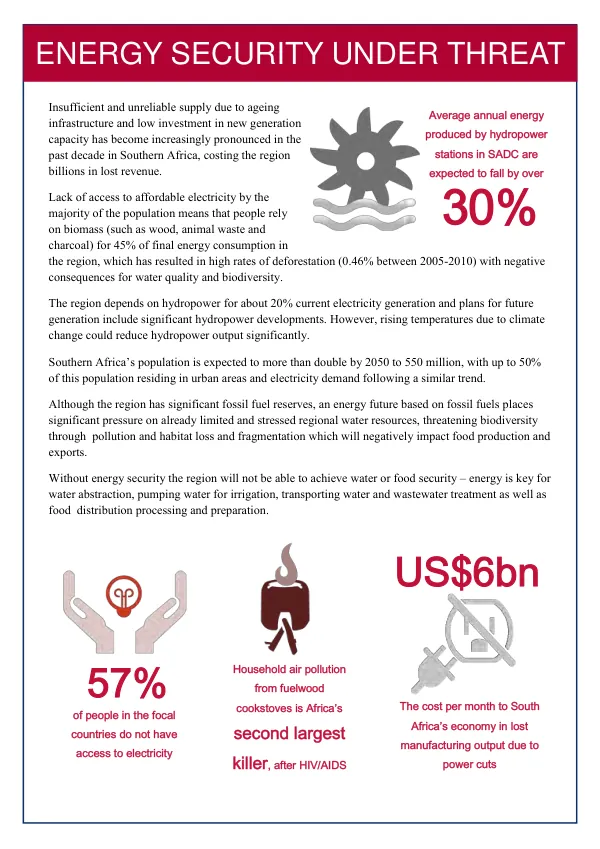
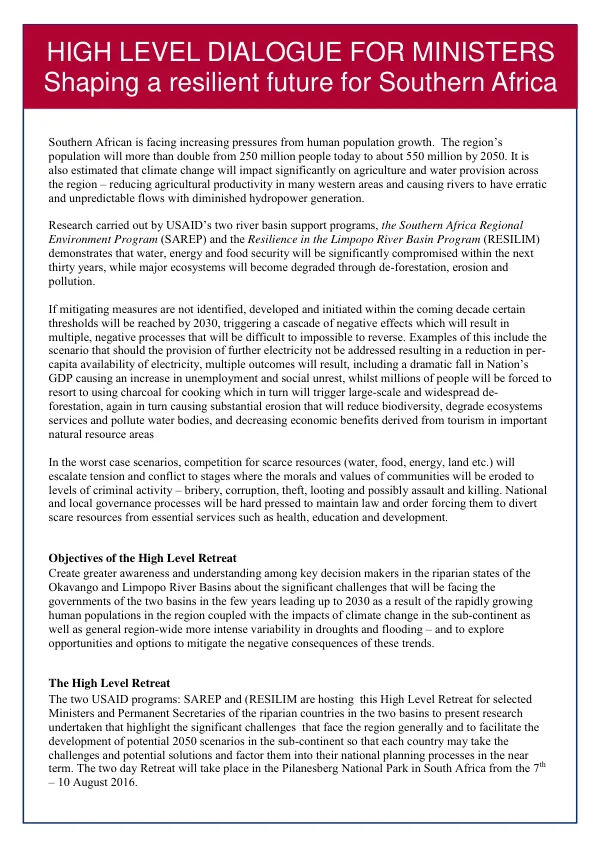
The population is projected to more than double from 250 million people today to approximately 550 million by 2050. Climate change is also expected to have a substantial impact on agriculture and water provision across the region, reducing agricultural productivity in many western areas and causing rivers to experience erratic and unpredictable flows with diminished hydropower generation. Research conducted by USAID's two river basin support programs, the Southern Africa Regional Environment Program (SAREP) and the Resilience in the Limpopo River Basin Program (RESILIM), indicates that water, energy, and food security will be severely compromised within the next thirty years. Major ecosystems are also expected to become degraded through deforestation, erosion, and pollution. If mitigating measures are not identified, developed, and initiated within the coming decade, certain thresholds will be reached by 2030, triggering a cascade of negative effects that will be difficult to reverse. Examples of these negative effects include a reduction in per-capita availability of electricity, leading to a dramatic fall in a nation's GDP, increased unemployment, and social unrest. Millions of people may be forced to resort to using charcoal for cooking, triggering large-scale and widespread deforestation, erosion, and pollution. This, in turn, will reduce biodiversity, degrade ecosystems services, and pollute water bodies, ultimately decreasing economic benefits derived from tourism in important natural resource areas. In the worst-case scenarios, competition for scarce resources will escalate tension and conflict to stages where the morals and values of communities will be eroded to levels of criminal activity, including bribery, corruption, theft, looting, and possibly assault and killing. National and local governance processes will be hard-pressed to maintain law and order, forcing them to divert scarce resources from essential services such as health, education, and development. The High Level Retreat aims to create greater awareness and understanding among key decision makers in the riparian states of the Okavango and Limpopo River Basins about the significant challenges facing the governments of the two basins in the few years leading up to 2030. The retreat will explore opportunities and options to mitigate the negative consequences of these trends, with the ultimate goal of shaping a resilient future for Southern Africa.
Related documents