CAROLINA POPULATION CENTER AT THE UNIVERSITY OF NORTH CAROLINA AT CHAPEL HILL
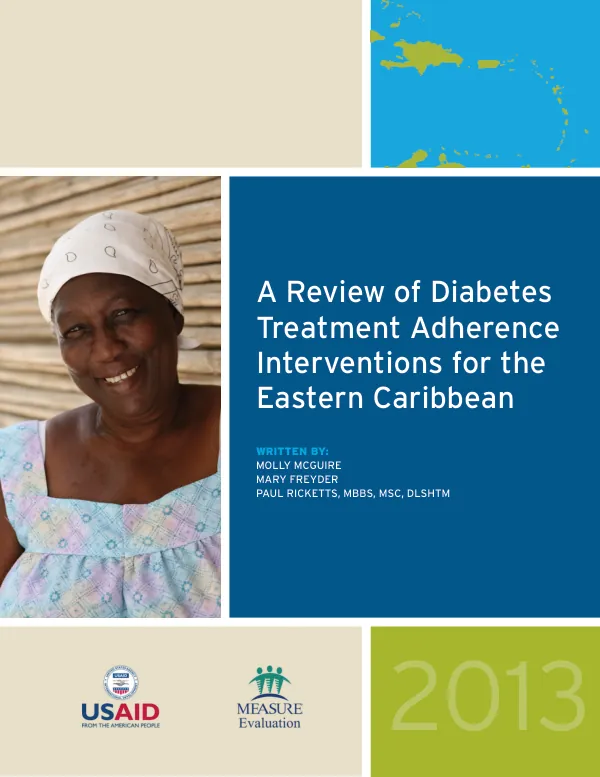
Review of Diabetes Treatment Adherence Interventions for the Eastern Caribbean
The Eastern Caribbean region is experiencing a significant burden of diabetes, with the disease being among the top four leading causes of death in the region from 1985 to 2000.
2013 · 25 pages
Sign in to readA free account is required to download.
Abstract
The Caribbean Epidemiology Center has assembled data on leading causes of death for women and men in the Caribbean Community (CARICOM) nations, showing increases in diabetes-related mortality from 2000 to 2004. Diabetes was identified as the major mortality risk factor for women older than 60 years in Tobago, attributing to 28% of deaths. The prevalence of diabetes in the Caribbean is high, with 95% of cases being Type 2 and only 5% having Type 1 diabetes. Risk factors for diabetes include modifiable (diet, physical activity) and non-modifiable (age, gender, ethnicity) risk factors. Modifiable risk factors specific to Type 2 diabetes in people living in the Caribbean include overweight (BMI ≥25 kg/m2), physical inactivity, lifestyle factors, low HDL-C or high triglyceride levels, and coronary artery disease, hypertension, and other vascular complications. Non-modifiable risk factors for Type 2 diabetes in the Caribbean include age 45+, diabetes in first-degree relative, prior gestational diabetes or history of delivering a baby >4 kg (9 lbs), polycystic ovary syndrome, history of Impaired Glucose Tolerance (IGT) or Impaired Fasting Glucose (IFG), and Asian or African descent. The Caribbean countries are the hardest hit areas in the Americas in terms of chronic disease, with diabetes being a major public health concern. The cost burden of diabetes in the Caribbean is significant, with direct costs attributed to diabetes amounting to U.S. $687 per capita in 2000. The overall costs—direct and indirect—to the region amounted to U.S. $1030.5 x 106. Non-adherence to diabetes treatment is also an economic burden, with studies suggesting that it can lead to increased healthcare costs and lost productivity. The Caribbean specifically experiences high loss of human workforce capacity compared to other regions due to complications of diabetes, such as diabetes-related amputation. The five-year survival rate for diabetic amputees was only 44%, compared to 82% among the control group of non-amputee diabetics. Researchers suggested increasing patient and professional education concerning footwear and foot care for diabetic individuals. Diabetes is burdensome for an already struggling health care system in the Caribbean, with indicators of economic strength by country including unemployment rates, health facility information, existence of NCD policy, and percentage of Internet users. The review of diabetes treatment adherence interventions in the Eastern Caribbean highlights the need for effective interventions to improve treatment adherence and reduce the burden of diabetes in the region. While good work has been published on the barriers to treatment and intervention models to support diabetes compliance in the Caribbean, there are many effective non-Caribbean models that could be culturally tailored and applied in the Eastern Caribbean for better diabetes outcomes.
Related documents