ABT ASSOCIATES
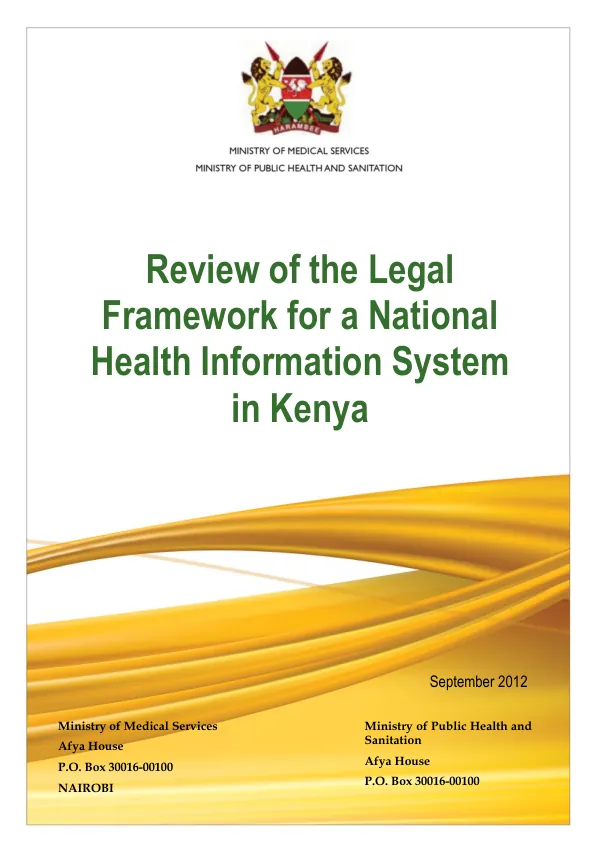
Review of the Legal Framework for a National Health Information System in Kenya
The Health Information System (HIS) in Kenya dates back to 1972, with the country's initial attempts to decentralize services.
2012 · 29 pages
Sign in to readA free account is required to download.
Abstract
Over the years, efforts to strengthen the HIS have been implemented through policy provisions, advances in information communication and technology, and increased donor funding. The Kenyan Constitution 2010 and other legislation have led to a review of the legal framework governing the HIS. The review aimed to determine whether the HIS has legal provisions to demand mandatory reporting from service providers. The exercise was guided by a team from AfyaInfo and the Ministries of Health Division of Health Information. Desk reviews of pertinent international, regional, and local literature were conducted, supplemented by key informant interviews. The review focused on provisions related to the Right to Health, Right to Information, privacy and confidentiality, and legal provisions on health reporting. Kenya has explicit obligations to report on matters pertinent to health, both nationally, regionally, and internationally. However, no mandatory requirements have been established for reporting on routine health service delivery. Several acts have established databases related to health, but these do not provide a comprehensive framework for the HIS. The review recommends specific amendments to the Health Law to strengthen the HIS and safeguard health-related data. It also suggests legislation to institutionalize the profession of health records and information management, maintain standards, compel reporting, and ensure the security of health data. The findings and recommendations highlight the need for an independent law to give locus standi to the HIS, in harmony with other acts and bills. The HIS plays a crucial role in strengthening health service delivery and promoting better health outcomes. Governments that invest in HIS benefit the health sector, and a nation's health improves. Decision- and policy-makers require timely and accurate health data to improve governance, mobilize resources, and ensure accountability in the health sector. Crucial health data includes birth, morbidity, and mortality rates from both private and public health care facilities at all levels. The agency responsible for the HIS needs a legal mandate to gather data from all pertinent sources effectively and efficiently. The Government of Kenya, with support from the United States Agency for International Development (USAID), is implementing a five-year program to strengthen the HIS through the Ministry of Public Health and Sanitation (MoPHS) and the Ministry of Medical Services (MMS). The goal is to enable the Division of Health Information Systems to discharge its strategic mandate, roles, and responsibilities efficiently and effectively. The program supports the Ministries of Health in creating an environment that supports the collection, analysis, interpretation, and use of health data and information from national, sub-national, and facility levels. The review of the legal framework for the HIS in Kenya is essential to ensure that the system is strengthened and that health-related data is safeguarded.