INTERNATIONAL RICE RESEARCH INSTITUTE (IRRI)
Rice : soil, water, land
The authors of this book strongly emphasize the need to study interrelationships between performance of the rice crop and its natural or man-modified environment.
Moormann, F. R.; Breemen, Nico V. · 1970
Sign in to readA free account is required to download.
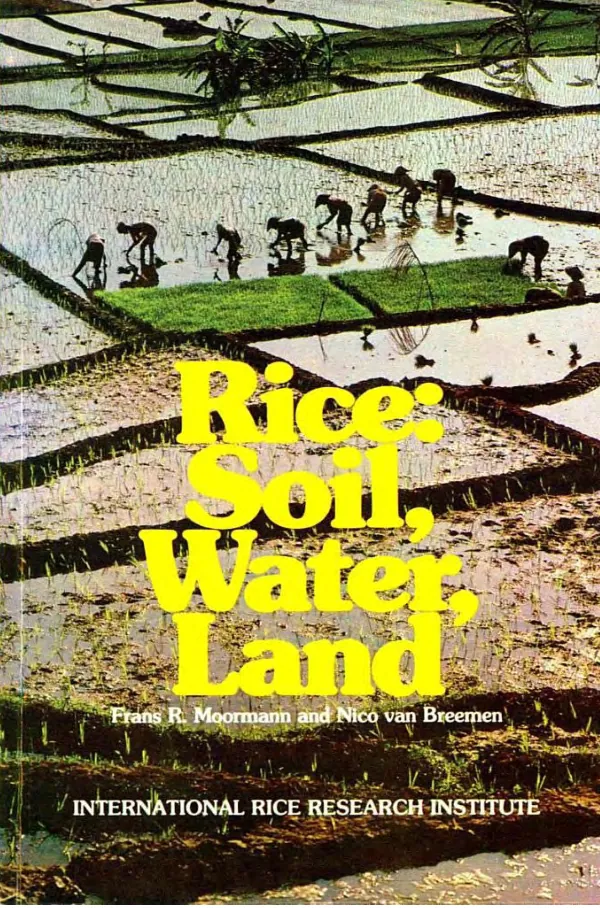
Abstract
The book focuses on the diversity of environments in which rice is, or can be, grown. It emphasizes the importance of environments -- soil, water, land -- to rice as a food crop and criticizes the misdirection of recent rice research, especially in its neglect of the needs of rice farmers and the locale-specific problems they face. The modern, highly productive rice varieties are not, and cannot be made, universally adaptable. Management techniques may lead to increased production in one environment, but may have less, or negative, results in another. Thus, the proposed terminology should help to improve communication among workers dealing with the world"s rice growing soils, whether on farms at 1,300 meters elevation, or on farms in lowland paddies. Specifically, the authors discuss the geography and hydrology of rice lands, soil-forming processes in aquatic rice lands, soil and land processes affecting rice growth, and the classification of rice-growing soils. The last chapter transposes the findings from the six preceding chapters in terms of practical evaluation of the qualities of a given field for growing an economically remunerative rice crop. The chapters contain many graphs, charts, and illustrations. The book also includes a list of international references, a glossary containing terms from several specialities including definitions from USDA"s 1975 Soil Taxonomy, and an index.
Related documents