USAID DEC
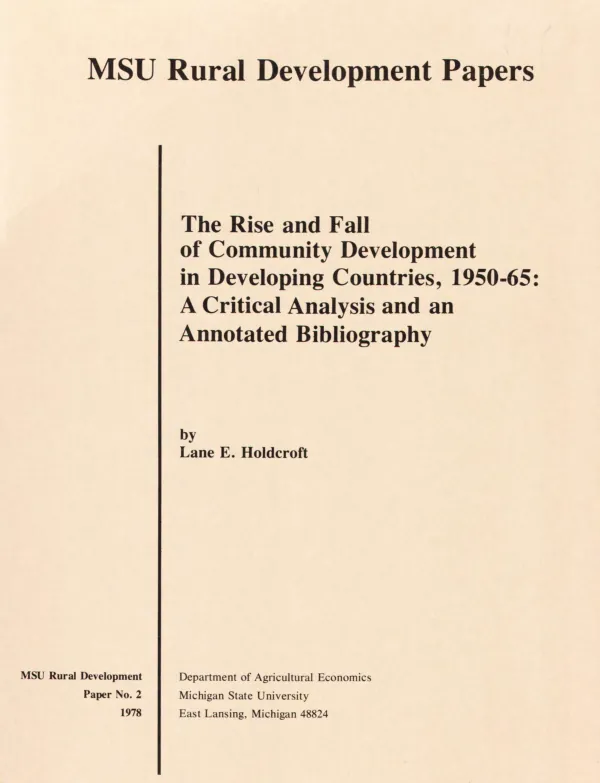
Rise and fall of community development in developing countries, 1950-65 : a critical analysis and an annotated bibliography
Sign inMICHIGAN STATE UNIVERSITY
Rise and fall of community development in developing countries, 1950-65 : a critical analysis and an annotated bibliography
Traces the recent history of community development movement, discussing its implications on current rural development programs for less developed countries (LDC) and reasons for its decline.
HOLDCROFT, LANE E. · 1970
Sign in to readA free account is required to download.
Abstract
The paper reviews the origins of community development and comments on the movement"s commitment to encouraging the growth of stable democratic nations. The report next describes the implementation of community development programs, emphasizing the role of the "multi-purpose village worker", a specially trained American civil servant sent to initiate programs in LDCs. The widespread flourishing of community development programs in the 1950"s and their subsequent dramatic decline in the 1960"s are discussed in detail. The report suggests that two main causes for the decline were disillusionment on the part of LDC leaders and sharp reductions in support by funding agencies. The report next specifies areas in which current and future rural development programs can benefit from lessons learned in community development experiences. Effective project coordination, emphasis on improving agricultural output, and the elimination of elitist tendencies in project leadership and participation are among the major recommendations. The remainder of the report reviews the significant literature on community development, training programs, specific country studies, and project evaluation methods. A bibliography concludes the report.