USAID DEC
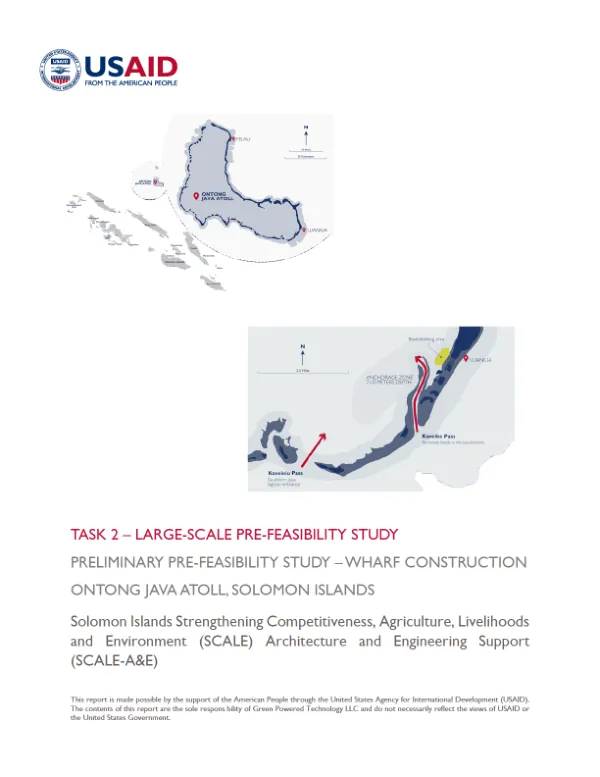
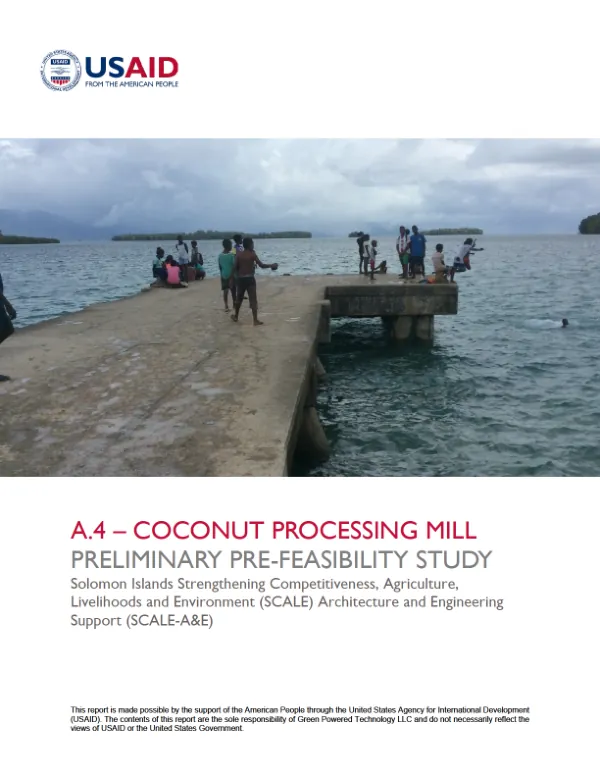
SCALE A&E Preliminary Pre-Feasibility Study for Building a Wharf at Ontong Java Atoll
Sign inUSAID
SCALE A&E Preliminary Pre-Feasibility Study for Building a Wharf at Ontong Java Atoll
The Ontong Java atoll, located in the Solomon Islands, is a remote and environmentally fragile location with a population of over 2,000 residents.
2021 · 51 pages
Sign in to readA free account is required to download.
Abstract
The atoll's economy is primarily dependent on the sale and export of bêche-de-mer, or sea cucumber, to Asian markets. However, market demand fluctuations and local and national prohibitions on harvesting this resource have resulted in turbulent income levels for residents. The atoll's residents live basic lives, relying on rainwater for drinking and solar panels for electricity. The construction of a wharf at Ontong Java atoll was recommended in a 2021 report by the USAID-funded Strengthening Competitiveness, Agriculture, Livelihoods and Environment – Architecture & Engineering (SCALE A&E) program. The report identified the wharf as one of two large-scale agribusiness infrastructure projects meriting further study. The proposed wharf would assist marine transportation and commerce, enabling residents to venture further out into the Pacific Ocean to fish and reducing their reliance on the uncertain economy associated with harvesting sea cucumbers. The wharf would also enhance security against illicit fishing and trawling by providing a location for police boats to dock and a structure for customs agents to be based. Additionally, the wharf could serve as a focal point for evacuations during cyclone warnings and assist with the offloading of emergency aid. The construction of a wharf, along with a cabin for wharf management and a storage structure for perishable goods, could improve economic security for Ontong Java's residents. The atoll's unique characteristics, including its massive size, remoteness, and vulnerability to natural disasters, make it an ideal location for a wharf. The construction of a wharf would require careful consideration of the atoll's ecology and natural systems, as well as its existing conditions, including its land use, climate change, and disaster risk. The proposed wharf would need to be designed to withstand the atoll's fragile environment and ensure the long-term sustainability of the project. The economic and financial case for the wharf project would need to be carefully evaluated, taking into account the atoll's socio-economic context, market conditions, and the potential impacts on societal groups. The project's feasibility would also depend on the availability of funding and the ability to mitigate potential risks and challenges. A thorough evaluation of the project's technical, economic, and financial aspects would be necessary to determine its viability and potential for success. The management case for the wharf project would involve ensuring compliance with national and provincial level permitting requirements, as well as obtaining approval from relevant authorities. The project would also require careful planning and coordination to ensure the successful implementation of the wharf and associated infrastructure. The SCALE A&E team's review of literature and interviews confirms that the construction of a wharf could improve economic security for Ontong Java's residents and enhance the atoll's overall development.
Related documents
Documents in this collection
USAID DEC
Pre-Feasibility Study – Coconut Processing Mill
Open record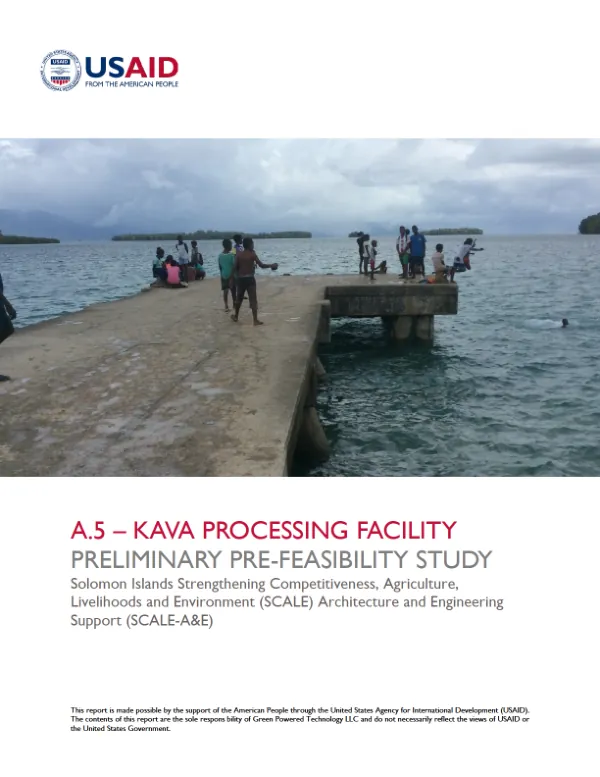
USAID DEC
Pre-Feasibility Study – Kava Processing Facility
Open record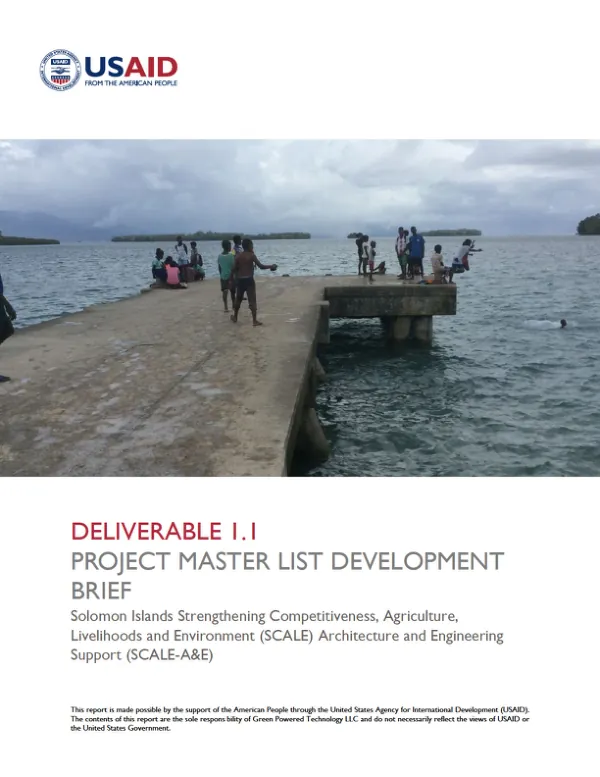 2021
2021USAID DEC